
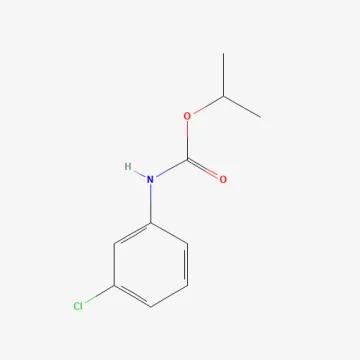
Chlorpropham
Description
Mode of action
Chlorpropham is a carbamate chemical compound primarily recognized for its potent ability to inhibit cell division within plant tissues.
The core mechanism of action involves the disruption of the spindle formation process, which halts growth in meristematic areas of the plant.
By interfering with nucleic acid and protein metabolism, the substance effectively prevents the development of young shoots and buds.
When utilized as a herbicide, it targets germinating weed seeds, suppressing their development during the critical early stages of growth.
The compound's capacity to penetrate deep into tissues allows for high efficacy when applied for long-term control of sprouting in storage facilities.
What it targets
The primary industrial use of chlorpropham is the inhibition of sprouting in stored potatoes to maintain quality over extended periods.
In agronomy, it is also applied as a herbicide to manage a wide range of broadleaf and certain grassy weeds in vegetable crop fields.
By preventing the growth of "eyes" on potato tubers, the substance reduces significant weight loss and nutrient depletion during warehouse storage.
It acts as a selective agent that can be used on various crops, provided that application timing and dosages are strictly controlled.
Controlling unwanted vegetation with chlorpropham ensures that cultivated crops receive adequate resources for healthy development without weed competition.
Rates and timing
Application rates for chlorpropham depend heavily on the specific target and the environment, such as the volume of a storage facility or soil characteristics.
In storage settings, it is commonly applied via thermal fogging or specialized dust formulations to ensure even distribution across the potato mass.
Field applications for weed control require careful timing relative to the crop growth stage and soil moisture levels for optimal effectiveness.
Strict adherence to manufacturer guidelines is necessary to prevent any potential phytotoxic damage to the treated crops.
Monitoring the residual concentration of the substance is a standard practice to ensure compliance with international food safety requirements.
Restrictions
Chlorpropham usage is subject to rigorous international regulations, with some regions implementing strict bans due to environmental and health safety concerns.
It is essential to prevent the contamination of water sources, as the chemical can pose risks to aquatic organisms if runoff occurs.
Workers must wear proper personal protective equipment (PPE) during handling and application to avoid respiratory exposure or skin irritation.
Productive storage must undergo ventilation cycles as prescribed to maintain safety standards for human consumption and subsequent marketing.
Storage of chemical stocks must occur in secure, ventilated, and clearly labeled areas to prevent unauthorized access and potential environmental hazards.
Status in the European Union
Not approved in the EU
- CAS number
- 101-21-3
- Category (EU)
- HB - Herbicide
- Approved from
- 01.02.2005
- Approval until
- 08.07.2019
- ADI
- 0.05 mg/kg bw/day
- ARfD
- 0.5 mg/kg bw
- AOEL
- 0.05 mg/kg bw/day
EU status is for reference only and does not replace national registration in your country.