

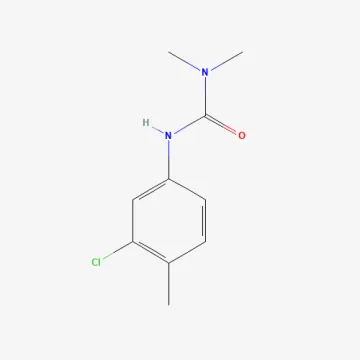
Description
Mode of action
Chlortoluron is a selective herbicide belonging to the phenylurea chemical class. It acts primarily through root and foliage uptake, providing systemic protection for crops.
The substance is translocated via the xylem to the plant's growing points, where it effectively disrupts the photosynthetic process by inhibiting the Hill reaction.
By blocking electron transport in the light phase of photosynthesis, the herbicide causes a metabolic crisis in the weed, leading to growth cessation, chlorosis, and eventual death.
The crop selectivity is achieved because cereals, particularly wheat and barley, possess the ability to metabolize the active ingredient into non-toxic compounds.
The efficacy of Chlortoluron is highly dependent on soil moisture levels, which facilitate the uptake of the active substance by the root systems of the target weeds.
What it targets
Chlortoluron is specifically formulated to control a variety of annual grass weeds and certain broad-leaved weeds in cereal crop production systems.
The primary target weed is black-grass (Alopecurus myosuroides), which remains a significant challenge in cereal production, along with loose silky-bent.
The herbicide is also effective against annual meadow grass, Italian ryegrass, and several brome species, making it a valuable tool for early-season weed management.
Broad-leaved weeds controlled by Chlortoluron include common lambsquarters, knotweed, and shepherd's purse, although tank mixtures are often used for broader spectrum control.
It is not effective against perennial weeds with deep root systems, thus requiring integrated agricultural practices to manage field-wide weed pressure effectively.
Rates and timing
Application rates typically range from 1.5 to 2.5 kg/ha of active ingredient, depending on soil type, weed species diversity, and the overall level of infestation in the field.
On light, sandy soils, it is recommended to use lower rates to minimize the risk of crop phytotoxicity, as the herbicide can leach into the root zone more easily.
The timing of application is critical; the best results are achieved when the crop is in the tillering stage and weeds are in their very early growth phases (2–3 leaf stage).
Fall application is considered highly effective for winter cereals, as it reduces weed competition early, which promotes better crop development before the winter dormancy.
Always ensure precise calibration of application equipment to maintain uniform distribution, as this significantly impacts the overall success of the herbicide treatment.
Restrictions
Avoid applying Chlortoluron to soils with low organic matter content, as this increases the potential for crop damage and phytotoxic effects.
Do not apply the herbicide if the cereal crop is under stress caused by drought, extreme temperatures, or recent pest attacks, as this hinders the plant's metabolic processes.
Crop rotation restrictions must be respected to prevent the potential accumulation of residues, particularly in regions with long periods of low precipitation.
Drift management is essential when applying the product; never spray under windy conditions to protect non-target vegetation and sensitive neighboring crops.
Operators must adhere to strict safety protocols, including the use of appropriate personal protective equipment and safe disposal methods for containers and washings.
Regulatory
Status in the European Union
Approved in the EU
- CAS number
- 15545-48-9
- Approved from
- 01.03.2006
- Approval until
- 15.08.2026
- ADI
- 0.04 mg/kg bw/day
- ARfD
- Not appl.
- AOEL
- 0.215 mg/kg bw/day
Hazard classification (CLP)
Aquatic Acute 1 - H400Aquatic Chronic 1 - H410Carc. 2 - H351Repr. 2 - H361d
EU legislation
EU status is for reference only and does not replace national registration in your country.
Content graph
Connections · Chlorotoluron
Most often together:
Marketplace
Products · 2

Trinity, CS (diflufenican, 40 g/l + chlorotoluron, 250 g/l + pendimethalin, 300 g/l)
Adam Aghan Ltd., Israel
Herbicides
0
0
·
30
No offers
—
Details