
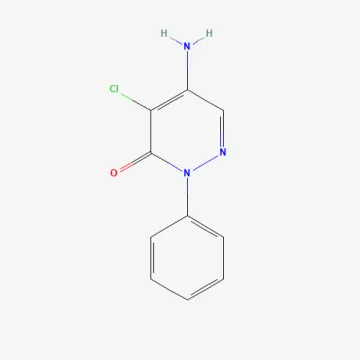
Chloridazon
Description
Mode of action
Chloridazon belongs to the pyridazinone chemical class. It is a selective herbicide that is primarily absorbed by the root system of weeds during their germination phase.
The mode of action involves the inhibition of photosynthesis. Chloridazon disrupts the electron transport chain in photosystem II, which effectively halts energy production in weed cells.
As a result of metabolic breakdown, sensitive plants stop growing, their leaves turn yellow, and tissue necrosis occurs. The substance demonstrates high selectivity, allowing the crop to metabolize the herbicide safely.
The application of chloridazon-based products is most effective under conditions of adequate soil moisture. Water facilitates the dissolution of the active ingredient and its movement into the weed germination zone.
The substance acts as a soil-applied herbicide, creating a protective barrier in the topsoil. This provides long-lasting control over emerging weeds following the initial application.
What it targets
Chloridazon is primarily used to control a wide range of annual broad-leaved weeds. It shows significant effectiveness against many difficult-to-control species.
The most sensitive weed species include:
- Chenopodium album (Common lambsquarters)
- Amaranthus retroflexus (Redroot pigweed)
- Sinapis arvensis (Wild mustard)
- Capsella bursa-pastoris (Shepherd's purse)
- Galeopsis tetrahit (Common hemp-nettle)
It is important to note that chloridazon exhibits weak activity against perennial weeds and grass species. Therefore, it is often used in tank mixtures with other herbicides.
The success of the treatment depends on the weed population density and species composition in the field. A thorough site assessment is recommended before application.
Optimal dosing allows for effective weed competition management during the early stages of sugar beet growth, ensuring a better final yield.
Rates and timing
Application rates for chloridazon vary based on soil type and organic matter content. Lighter, sandy soils typically require lower doses, while heavier clay soils may require higher concentrations.
Timing is determined by the development stage of the sugar beets. Pre-emergence application is aimed at creating a soil barrier before weed seeds germinate.
Post-emergence treatment is carried out when the beets are in the cotyledon or first-true-leaf stage. Weeds should also be in an early development stage for maximum effect.
When using tank mixtures, rates must be adjusted according to the partner product guidelines. Strict adherence to manufacturer compatibility instructions is essential.
It is best to conduct applications during morning or evening hours with low wind speeds. This ensures uniform distribution of the spray solution over the target area.
Restrictions
Chloridazon has specific rotational crop restrictions. Although most follow-up crops are tolerant, the potential for soil residues must be considered when planning the crop rotation.
Appropriate personal protective equipment must be worn during the handling of the herbicide. The substance can cause irritation to the skin and mucous membranes upon contact.
Applying the product during extreme weather conditions is not recommended, as it may reduce efficacy and increase the risk of phytotoxicity to the crop.
Store products in their original packaging in dry, cool facilities away from children and animals. Ensure that the chemical does not contaminate open water sources.
Disposal of empty containers must be carried out in compliance with local environmental regulations. Used containers should be returned to designated collection points.
Status in the European Union
Not approved in the EU
- CAS number
- 1698-60-8
- Category (EU)
- HB - Herbicide
- ADI
- 0.1 mg/kg bw/day
- ARfD
- Not appl.
- AOEL
- 0.2 mg/kg bw/day
EU status is for reference only and does not replace national registration in your country.