
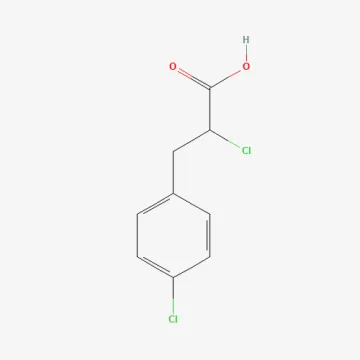
Chlorfenprop
Description
Mode of action
Chlorfenprop belongs to the phenylpropanoic acid derivative group, acting as a selective herbicide. Preparations based on this active ingredient affect physiological processes within plant cells, blocking the normal development of weed tissues.
The primary mechanism of action involves the inhibition of meristematic activity in the growth points of susceptible plants. Components within the molecule specifically influence hormonal metabolism, leading to a cessation of cell division and the gradual death of the weed.
The systemic movement of the substance through the xylem and phloem ensures effective suppression even of weeds with deep root systems. This makes chlorfenprop an important tool for controlling hard-to-eradicate species in sensitive crop fields.
Selectivity is based on the ability of crop plants to metabolize the active ingredient into non-toxic compounds faster than weeds can. Thus, crop protection is achieved without phytotoxic stress to the primary plant.
Optimal soil moisture conditions are necessary for the activation of the herbicidal effect. When following regulations, the product effectively penetrates the leaf surface, exerting a rapid effect on the vascular system development of the weed plants.
What it targets
Chlorfenprop is primarily used to control a wide spectrum of annual dicotyledonous weeds that infest cereal crops and other field crops. It is effective against species that exhibit resistance to other classes of herbicides.
The substance is of particular importance in controlling persistent weeds from the Polygonaceae, Chenopodiaceae, and Brassicaceae families. Applying these products helps clear fields of competitors that consume moisture and nutrients from crops during early vegetative stages.
The product shows high performance in combating weeds in the active growth phase (from cotyledons to the formation of the first pair of true leaves). This is a critical period when competition between the crop and weeds is most intense.
Using chlorfenprop helps prevent yield losses caused by weed infestation by 20–40%. Weed population control also facilitates harvesting operations by reducing moisture content in the grain mass due to the absence of impurities.
In integrated pest management systems, this component is used in tank mixes to expand the spectrum of action. Combining it with other herbicides allows for a wider range of weed species to be covered in a single application.
Rates and timing
Application rates for chlorfenprop are determined by the weed species composition, their developmental stage, and weather conditions during application. Typically, dosages are used that ensure a concentration sufficient for the irreversible damage of sensitive species.
The optimal timing for application falls during the period when weeds are most vulnerable. Applying during the active growth phase of young plants guarantees maximum biological efficiency at minimum doses of the active ingredient.
When planning an application, it is necessary to consider the temperature regime. Most products in this group require an air temperature between +10 and +25 degrees Celsius, which promotes intensive absorption by the plant.
The volume of the working solution should ensure complete and uniform coverage of the leaf surface of the weeds. The recommended water volume depends on the type of sprayer and plant density in the field, usually ranging from 200–300 liters per hectare.
Adherence to time intervals between herbicide application and subsequent agricultural activities is critical for obtaining the expected results. It is not recommended to cultivate or loosen inter-rows for 7–10 days after spraying.
Restrictions
When using chlorfenprop, it is necessary to strictly observe safety measures established for handling pesticides. Work should be carried out using personal protective equipment to prevent the solution from coming into contact with skin or mucous membranes.
Drift of the working solution onto neighboring crops sensitive to this herbicide is not permitted. It is vital to control wind speed and the height of nozzles above soil level to prevent damage to non-target objects.
Crop rotation restrictions are generally absent when regulations are followed; however, potential residual effects on subsequent sensitive crops should be considered if application rates are exceeded. It is important to thoroughly wash equipment after work.
The products must be stored in original packaging in cool, dry warehouse facilities inaccessible to children and pets. Storage together with food, animal feed, or fertilizers is strictly prohibited.
To prevent the formation of weed resistance, it is recommended to alternate chlorfenprop with active ingredients that have a different mechanism of action. This extends the useful life of the product in agricultural practice.
Status in the European Union
Not approved in the EU
- Category (EU)
- HB - Herbicide
EU status is for reference only and does not replace national registration in your country.