
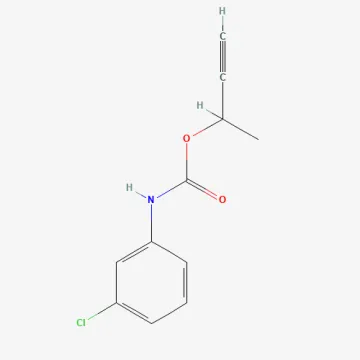
Chlorbufam
Description
Mode of action
Chlorbufam belongs to the carbamate chemical class. It is a systemic active ingredient that exhibits herbicidal activity by interfering with cell division processes in susceptible plant species.
The mechanism of action is based on the inhibition of mitosis in the meristematic tissues of seedlings. Once inside the plant, the substance blocks protein and nucleic acid synthesis, effectively stopping root and shoot growth.
The compound acts primarily during the pre-emergence period. It is absorbed by germinating weed seeds and their root systems, preventing their further development and emergence through the soil surface.
The efficacy of chlorbufam is highly dependent on soil moisture levels. Under drought conditions, the activity of the active ingredient decreases as its translocation to the root system is hindered.
The substance possesses selectivity, which allows for its use in specific crops that are capable of metabolizing the compound into non-toxic forms faster than the weed species targeted.
What it targets
Chlorbufam is designed to control a broad spectrum of annual broad-leaved weeds and certain grasses. It is particularly effective against species that actively absorb the herbicide during the germination stage.
In agronomic practice, the substance is most frequently employed to protect industrial crops, such as sugar beets, from early-season weed competition.
The controlled species spectrum includes typical weeds that compete with crop seedlings for water and nutrients during the most critical early growth phases.
Using this herbicide allows for reduced phytotoxic pressure on crops by preventing weed competition during the time when the seedlings are most vulnerable.
It is important to note that chlorbufam does not provide sufficient control over perennial weeds that propagate vegetatively, therefore it is often used in tank mixtures.
Rates and timing
Application rates for chlorbufam are strictly regulated and depend on soil type, its mechanical composition, and the potential weed infestation level of the specific field.
On light sandy soils with low organic matter content, application rates are typically kept at minimum levels to avoid detrimental effects on the development of the crop seedlings.
Application timing is scheduled for the pre-planting soil preparation period or immediately post-planting, but always before the emergence of the crop seedlings.
When used as part of complex formulations, application timelines may be adjusted based on the synergistic effects with other active ingredients present in the mixture.
Agronomists recommend ensuring uniform distribution of the working solution to establish a stable protective layer within the topsoil.
Restrictions
Chlorbufam requires strict adherence to safety protocols during the preparation of working solutions and spraying operations, including the use of personal protective equipment.
Drift of the working solution onto neighboring crops sensitive to carbamates must be prevented, especially during windy conditions.
There are crop rotation restrictions to consider, as the residual effects of the herbicide on subsequent crops must be evaluated during farm management planning.
Storage of the product must be in its original sealed containers within warehouses protected from moisture, direct sunlight, and extreme temperatures.
When handling the substance, it is essential to prevent runoff into water bodies and drainage systems, adhering to standard environmental safety regulations.
Status in the European Union
Not approved in the EU
- CAS number
- 1967-16-4
- Category (EU)
- HB - Herbicide
EU status is for reference only and does not replace national registration in your country.