
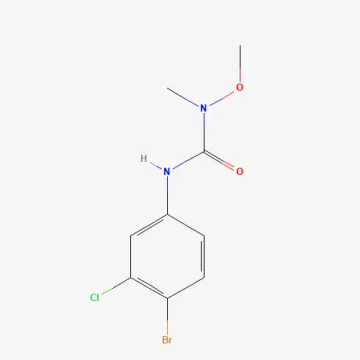
Chlorbromuron
Description
Mode of action
Chlorbromuron belongs to the chemical class of urea derivatives (phenylureas). It acts as a selective herbicide that disrupts vital physiological processes in target plants.
The primary mechanism of action involves the inhibition of photosynthesis by blocking electron transport in photosystem II, which leads to the cessation of growth and eventual plant death.
The active substance is absorbed through both root systems and foliage, after which it is translocated via the xylem to the meristematic tissues of the plant.
This compound demonstrates moderate stability in soil, providing a residual effect that helps manage subsequent flushes of weeds following the initial application.
Effective uptake by plants is highly dependent on soil moisture levels, as the presence of a sufficient soil solution is necessary for the substance to be absorbed effectively.
What it targets
Chlorbromuron is utilized to control a broad range of annual broadleaf weeds and certain grass weeds within agricultural crop systems.
Target weed species typically include common field weeds such as lamb's quarters, pigweed, knotweed, and shepherd's purse, which are susceptible to photosynthetic inhibitors.
The herbicide is most effective when applied during the early growth stages of weeds, ensuring the protection of crops during their most vulnerable developmental phases.
By effectively removing weed competition, Chlorbromuron enables crops to maximize resource utilization and improve overall yield potential.
While effective against many annuals, its efficacy may vary against some perennial weed species, often requiring it to be part of an integrated weed management strategy.
Rates and timing
Application rates of Chlorbromuron must be adjusted based on soil texture, organic matter content, and specific crop tolerances to ensure maximum efficacy without phytotoxicity.
Timing is critical, with application schedules typically ranging from pre-emergence to early post-emergence stages depending on the specific product formulation and crop requirements.
It is essential to ensure uniform distribution of the herbicide during application to avoid "hot spots" or areas with insufficient coverage, which could lead to weed escapes.
Producers must follow specific product label instructions regarding water volumes, nozzle types, and equipment calibration to achieve optimal coverage and results.
Weather conditions, particularly rainfall shortly after application, can influence the herbicide's mobility in the soil, requiring careful monitoring of forecasts.
Restrictions
Crop rotation restrictions may apply when using Chlorbromuron, as soil residues might impact sensitive subsequent crops if the plant-back interval is not strictly followed.
Operators must take strict precautions, including the use of Personal Protective Equipment (PPE), to prevent exposure to skin, eyes, or inhalation during handling and spraying.
Drift management is essential to prevent damage to non-target sensitive crops, particularly in areas with high vegetation diversity or bordering fields with sensitive produce.
Environmental safety must be prioritized by preventing herbicide runoff into aquatic systems, wells, or water bodies to avoid contaminating local ecosystems.
Users should always refer to the specific safety data sheets (SDS) and local agricultural regulations to ensure compliance with legal and safety standards for pesticide application.
Status in the European Union
Not approved in the EU
- CAS number
- 13360-45-7
- Category (EU)
- HB - Herbicide
EU status is for reference only and does not replace national registration in your country.