
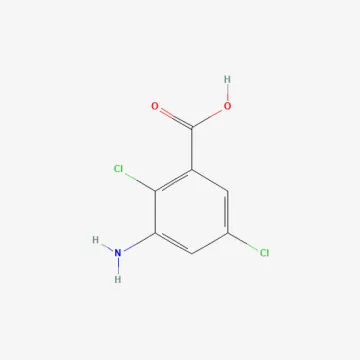
Chloramben
Description
Mode of action
Chloramben belongs to the chemical class of benzoic acid derivatives. It is a selective systemic herbicide that interferes with the growth processes of weed plants.
The mechanism of action is based on mimicking auxins, which are natural plant growth hormones. Upon entering the tissues of sensitive weeds, chloramben causes uncontrolled cell division, leading to metabolic disruption and subsequent plant death.
The substance is primarily absorbed by the root systems of germinating seeds and seedlings, effectively blocking their development at early stages before or shortly after emergence.
The application of chloramben is characterized by high selectivity. Due to the ability of many crop plants to metabolize (break down) the active ingredient, these crops remain safe, while weeds receive a lethal dose.
In the soil, the substance possesses moderate persistence, which allows for prolonged protection of crops against subsequent flushes of germinating weeds.
What it targets
The herbicide effectively suppresses a wide spectrum of annual broadleaf weeds and certain grasses in agricultural crop fields.
Primary targets include hard-to-control weeds such as pigweed, purslane, lamb's quarters, as well as various species of smartweed and nightshades.
In agricultural practice, chloramben has traditionally been used to clean fields of soybeans, sunflowers, corn, and various vegetable crops from early weed infestations.
The efficacy of the product directly depends on soil moisture: rainfall or irrigation is required to activate the active ingredient and facilitate its penetration into the weed root system.
It is important to note that chloramben has limited efficacy against perennial weeds with developed root systems, which is why it is often used in complex integrated programs.
Rates and timing
Application rates for chloramben vary depending on soil type; heavier clay soils require higher concentrations of the active ingredient compared to light sandy soils.
The product is primarily applied as a soil treatment prior to crop emergence. Strict adherence to timing is crucial to minimize phytotoxicity and achieve maximum weed control efficacy.
When using in tank mixes, preliminary compatibility testing is recommended to prevent precipitation and the reduction of herbicidal activity.
Overlapping during application must be avoided, as excessive concentrations in certain zones can cause growth suppression even in tolerant crop species.
It is recommended to carry out the treatment immediately after sowing, ensuring an even distribution of the product across the soil surface to create a protective barrier.
Restrictions
Restrictions on use are linked to the necessity of following crop rotation, as residual amounts of chloramben can negatively affect sensitive succeeding crops.
Application near bodies of water and drinking water sources is prohibited due to the risk of active ingredient migration via surface runoff.
When working with this herbicide, personal protective equipment is mandatory: use respirators, gloves, and protective clothing to prevent skin and mucous membrane contact.
Monitoring wind conditions during spraying is essential to prevent spray drift onto neighboring fields containing sensitive agricultural crops.
Storage of the product must be done in its original closed packaging in a dry, cool place, inaccessible to unauthorized persons and animals.
Status in the European Union
Not approved in the EU
- CAS number
- 133-90-4
- Category (EU)
- HB - Herbicide
EU status is for reference only and does not replace national registration in your country.