
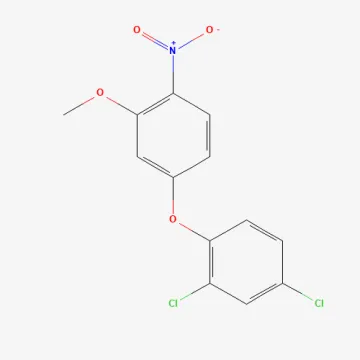
Chlomethoxyfen
Description
Mode of action
Chlomethoxyfen belongs to the diphenyl ether class of herbicides. Like other members of this chemical group, it exhibits herbicidal activity by interfering with plant photosynthesis and disrupting the integrity of plant cell membranes.
The active substance is absorbed primarily through the leaves and shoots. Once absorbed, the product rapidly causes damage to the tissues of susceptible weeds upon exposure to sunlight.
The mode of action is based on the inhibition of the enzyme protoporphyrinogen oxidase, which leads to the accumulation of porphyrins in weed cells. This results in rapid tissue desiccation, chlorosis, and subsequent plant death.
The product has a distinct contact effect, so the effectiveness of the treatment depends directly on the thoroughness of the spray coverage on the leaf surface.
In the soil, chlomethoxyfen has moderate persistence, but the primary role in weed control is played by direct contact with the vegetative parts of the plants.
What it targets
Chlomethoxyfen is effective against a wide range of annual broad-leaved and some grass weeds. It is particularly sought after for controlling hard-to-eradicate species in rice paddies and other crops.
Among the susceptible targets are species from the Amaranthaceae, Chenopodiaceae, Brassicaceae, and certain Solanaceae families that frequently infest agricultural fields.
The product shows high efficacy against weeds at early growth stages (2–4 true leaves), ensuring crop cleanliness during the critical period of development.
The application of the product helps reduce competition with the main crop for nutrients, light, and moisture, creating favorable conditions for growth.
It is important to consider that the spectrum of activity may vary depending on specific moisture conditions and the state of the crop at the time of treatment.
Rates and timing
Application rates for chlomethoxyfen are calculated based on the weed species composition and the density of infestation in the field. Typically, the product is applied post-emergence to actively growing weeds.
Optimal timing depends on the developmental stage of the weeds. Early application allows for maximum utilization of the product's contact effect before weeds develop higher tolerance.
Temperature conditions during application should be moderate. Extremes of low or high temperatures can reduce the weed's metabolic rate and slow down the herbicide's action.
It is recommended to use sufficient water volume for the working solution to ensure uniform wetting of all above-ground plant parts.
Exact dosages must strictly adhere to the regulations specified on the specific product label to eliminate the risk of phytotoxicity to the target crops.
Restrictions
Chlomethoxyfen requires strict adherence to safety precautions during handling. Like many other pesticides, it can pose a risk to aquatic fauna, so spraying near bodies of water is strongly discouraged.
When handling the product, personal protective equipment must be used, including gloves, safety goggles, and a respirator. Avoid direct skin contact and inhalation of the spray mist.
Restrictions include avoiding applications during strong wind to prevent drift of the working solution onto neighboring fields with sensitive crops.
After product application, it is necessary to observe required waiting periods before conducting manual or mechanical labor in the treated area, in accordance with local regulations.
Storage should be in the original packaging in cool, dry areas away from the reach of children, as well as separate from food and animal feed.
Status in the European Union
Not approved in the EU
- CAS number
- 32861-85-1
- Category (EU)
- HB - Herbicide
EU status is for reference only and does not replace national registration in your country.