
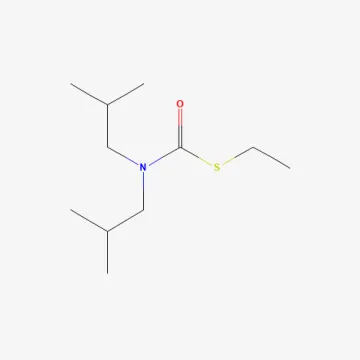
Butylate
Description
Mode of action
Butylate belongs to the thiocarbamate chemical class. It is a systemic herbicide characterized by strong soil activity, designed to inhibit weed growth at early developmental stages.
The mechanism of action involves suppressing lipid and protein synthesis processes, as well as blocking enzyme systems responsible for cell division within meristematic tissues.
The compound acts on weeds primarily during seed germination. The active ingredient is absorbed by the coleoptiles and hypocotyls of the seedlings, leading to weed death before emergence.
To activate its herbicidal properties, butylate requires immediate soil incorporation after application. This prevents losses due to high volatility and ensures the necessary concentration within the root zone.
When applied correctly, butylate demonstrates high selectivity, causing no inhibitory effects on the target crop, provided that application regulations and rates are strictly followed.
What it targets
Butylate is primarily used for the control of annual grass weeds and certain broadleaf species.
The target weed spectrum includes aggressive species such as barnyard grass, various foxtail species, annual bluegrass, and other annual grasses.
The herbicide effectively suppresses weed competition for essential nutrients, water, and sunlight during the critical early crop growth period.
Application of butylate significantly reduces weed infestation in fields during the early stages of crop development, which is vital for achieving optimal yields.
- Barnyard grass (Echinochloa crus-galli)
- Foxtail species (Setaria spp.)
- Large crabgrass (Digitaria sanguinalis)
Rates and timing
Application rates for butylate depend on soil type, weed pressure, and the specific crop, typically ranging from 4 to 6 liters of product per hectare.
Treatment must be performed strictly pre-planting or pre-sowing with mandatory mechanical incorporation into the soil at a depth of 5–8 centimeters using a cultivator or harrow.
The spray solution must be prepared immediately before use, ensuring uniform distribution across the entire treated area to achieve maximum effectiveness.
Waiting periods before conducting manual or mechanical field operations are strictly regulated by the safety instructions provided for each specific product.
It is not recommended to perform treatments during extreme weather conditions, such as severe drought or waterlogged soil, as these conditions reduce the product's performance.
Restrictions
A primary limitation is the high volatility of butylate, necessitating immediate soil incorporation within a very short time after spraying to prevent loss.
The product is not recommended for use on high-humus soils or peatlands, as these substrates actively adsorb the active ingredient, significantly reducing herbicidal efficacy.
Crop rotation must be carefully managed; despite its moderate persistence, recommended intervals between butylate application and the planting of sensitive follow-up crops must be observed.
Operators must wear appropriate personal protective equipment for skin, respiratory, and eye protection, as the substance can be irritating.
Storage should take place in dedicated chemical warehouses under controlled temperature conditions, avoiding moisture exposure and direct sunlight on the containers.
Status in the European Union
Not approved in the EU
- CAS number
- 2008-41-5
- Category (EU)
- HB - Herbicide
EU status is for reference only and does not replace national registration in your country.