
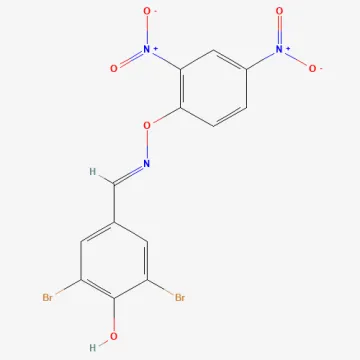
Bromofenoxim
Description
Mode of action
Bromofenoxim belongs to the nitrile chemical class (derivatives of benzonitrile). According to its physiological effect on plants, it is classified as a contact herbicide with selective action.
The main principle of the substance's work is blocking photosynthesis processes in the cells of sensitive plants. By reacting with chloroplast proteins, it disrupts electron transport, leading to a rapid cessation of weed metabolism.
The preparation is absorbed mainly by the green parts of plants upon direct contact with the spray solution. Due to the lack of pronounced systemic activity, it does not move through weed tissues, making full coverage of the treated surface critical.
The effectiveness of the action increases significantly under high solar activity and moderately high air temperatures. Light acts as a catalyst for processes that cause irreversible damage to weed cell membranes.
In the soil, the substance has moderate persistence, gradually breaking down under the influence of microorganisms. This allows avoiding negative effects on subsequent crops in the rotation when adhering to application regulations.
What it targets
The main purpose of bromofenoxim is to control a wide spectrum of broad-leaved weeds in cereal crops.
The most sensitive to this herbicide are species of the Polygonaceae family, including pale persicaria, black bindweed, and other smartweed species.
The product also effectively suppresses the development of common lambsquarters and amaranth, which often compete with cereal crops for moisture and nutrients during early growth phases.
The herbicide demonstrates high effectiveness against young weeds that are in the cotyledon stage or have their first pair of true leaves.
The use of bromofenoxim significantly reduces weed infestation in fields, creating favorable conditions for cereal tillering and high yield formation.
Rates and timing
The recommended application rates of the preparation depend on the weed species composition and their growth stage at the time of treatment.
The optimal time for spraying is the tillering phase of cereal crops, when weeds are most vulnerable to chemical exposure.
The spray volume should ensure uniform wetting of the vegetation mass, typically ranging from 200 to 300 liters per hectare, depending on the sprayer nozzle type.
It is not recommended to perform treatments during night frost warnings or in strong winds, which may lead to spray drift onto neighboring crops.
Intervals between repeat applications, if required by the regulation, must be strictly observed to prevent phytotoxicity to the grain crop.
Restrictions
Working with this substance requires strict adherence to safety measures: mandatory use of personal protective equipment for the skin, respiratory tract, and eyes.
The product is toxic to bees and other pollinators, so it is important to prevent it from reaching flowering plants near fields and during periods of high insect activity.
Applying bromofenoxim in tank mixtures with growth regulators is not recommended unless explicitly specified by the manufacturer's instructions, to avoid reducing selectivity.
When storing the preparation, it is necessary to maintain the temperature regime in dry, ventilated warehouse facilities, excluding access by unauthorized persons and animals.
Disposal of spray solution residues and containers must be carried out in accordance with local environmental regulations to prevent water pollution.
Status in the European Union
Not approved in the EU
- CAS number
- 13181-17-4
- Category (EU)
- HB - Herbicide
EU status is for reference only and does not replace national registration in your country.