

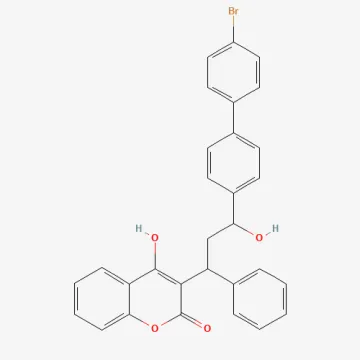
Description
Mode of action
Bromadiolone belongs to the chemical class of hydroxycoumarins and acts as a second-generation anticoagulant. It functions by inhibiting the synthesis of vitamin K1 in the liver, which prevents the blood from clotting.
Unlike first-generation products, bromadiolone is highly potent and requires only a small amount of bait ingestion to be lethal to rodents. It accumulates in the system, ensuring success even with minimal intake.
The lethal effect is delayed by several days, which is crucial for preventing bait shyness. Because rodents do not associate the consumption of the bait with the sudden death of their colony members, the entire population continues to consume it.
The active substance remains chemically stable and palatable for an extended period, making it suitable for both indoor warehouse use and outdoor agricultural applications in various climates.
While highly effective against target rodent species, the substance poses risks to non-target mammals and birds, requiring strict adherence to application safety measures.
What it targets
Bromadiolone is primarily used to control infestations of Norway rats, roof rats, and house mice. It is particularly effective against rodent populations that have developed resistance to earlier generations of anticoagulants.
It is extensively applied in grain silos, warehouses, food processing facilities, and livestock farms to protect stored goods, equipment, and structural integrity from rodent damage.
The product is also utilized in agricultural fields during rodent migration or peak population cycles to reduce damage to crops and prevent the spread of diseases such as leptospirosis.
By controlling rodent populations, bromadiolone helps maintain sanitary standards in industrial and agricultural settings, reducing the economic losses caused by animal pests.
It is an essential component of professional integrated pest management programs, providing long-term relief from severe rodent infestations in both urban and rural environments.
Rates and timing
Application rates depend on the rodent species and the bait formulation, such as paraffin blocks, grain pellets, or powders. Typical placement involves 20–50 grams per station for mice and up to 100 grams for larger rat infestations.
The timing of the application should align with the discovery of rodent activity, such as droppings, gnaw marks, or burrow entrances. Monitoring should continue until bait consumption ceases entirely.
Bait points should be inspected regularly, initially on a daily basis and later weekly, to replenish consumed quantities. It is vital to maintain a constant supply until the rodent population has been eliminated.
In outdoor environments, protective bait stations must be used to keep the product dry and prevent accidental ingestion by wildlife, pets, or domestic animals.
Placement spacing varies from 2 to 10 meters, depending on the level of infestation and the layout of the area to ensure maximum coverage of the rodent's natural travel paths.
Restrictions
Proper personal protective equipment, including chemical-resistant gloves and masks, is mandatory during handling and placement. Never handle the bait with bare hands, as human scent can deter rodents.
Do not place bait in areas accessible to children, pets, or non-target wildlife. All application sites should be clearly labeled to warn others of the presence of a hazardous substance.
In cases of accidental ingestion, Vitamin K1 (phytonadione) acts as the specific antidote. Seek medical attention immediately if exposure is suspected, as professional intervention is required.
At the conclusion of the treatment, all remaining bait, containers, and deceased rodents must be collected and disposed of safely, usually through incineration or approved hazardous waste management systems.
Avoid using bromadiolone in areas prone to water runoff or near water sources to prevent contamination of the environment and aquatic ecosystems.
Regulatory
Status in the European Union
Not approved in the EU
- CAS number
- 28772-56-7
- Category (EU)
- RO - Rodenticide
- Approved from
- 01.06.2011
- Approval until
- 31.05.2021
- ADI
- Not appl.
- ARfD
- Not appl.
- AOEL
- 0.0012 µg/kg bw/day
Hazard classification (CLP)
Acute Tox. 1 - H300Acute Tox. 1 - H310Acute Tox. 1 - H330Aquatic Acute 1 - H400Aquatic Chronic 1 - H410Repr. 1B - H360DSTOT RE 1 - H372
EU legislation
EU status is for reference only and does not replace national registration in your country.
Content graph
Connections · Bromadiolone
Most often together:
Marketplace