
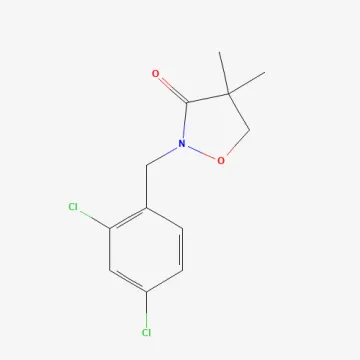
Bixlozone
Description
Mode of action
Bixafen belongs to the pyrazole-carboxamide chemical class and acts as a potent succinate dehydrogenase inhibitor (SDHI) in the mitochondrial respiratory chain of fungi.
The substance possesses high lipophilicity, which ensures rapid absorption through the leaf cuticle and consistent distribution throughout the plant tissues.
Bixafen is known for its excellent resistance to wash-off by rainfall, providing reliable protection even under unpredictable climatic conditions during the growing season.
Beyond its fungicidal properties, Bixafen provides physiological benefits to the crop, improving nitrogen uptake and enhancing tolerance to abiotic stressors like drought.
By disrupting fungal mitochondrial respiration, Bixafen effectively halts energy production, leading to the inhibition of mycelial growth and spore germination.
What it targets
Bixafen-based products are utilized to manage a wide array of diseases caused by fungi from the Ascomycete, Basidiomycete, and Deuteromycete groups.
Primary targets include septoria leaf blotch, tan spot, rusts, and various types of leaf spotting pathogens affecting wheat, barley, and other cereal crops.
It is also highly effective against pathogens in oilseed crops, ensuring robust crop health during critical stages of vegetative development.
The systemic activity of Bixafen allows it to control established infections, providing a therapeutic effect for crops already showing initial signs of disease.
Its broad-spectrum efficacy makes it a versatile tool for farmers looking to integrate advanced chemistry into their crop protection strategies.
Rates and timing
Application rates are determined by the severity of disease pressure, the specific crop variety, and the growth stage at the time of the spray application.
Typical application timing ranges from the tillering phase to the flag leaf stage in cereals, or stem elongation phases in oilseed crops.
Maximum protective efficacy is achieved when the product is applied as a preventative measure before disease symptoms become widespread in the field.
Treatment intervals should be managed based on local disease development models to ensure continuous coverage during periods of high environmental risk.
When mixing with other pesticides, it is essential to follow compatibility guidelines to ensure that the performance of the mixture is not compromised.
Restrictions
To mitigate the risk of resistance development in target pathogens, it is mandatory to rotate Bixafen with fungicides possessing different modes of action, such as triazoles.
Strictly adhere to the maximum number of applications per season as stipulated in the specific product label to maintain environmental and regulatory compliance.
Operators must wear appropriate personal protective equipment to prevent exposure to the skin, eyes, and respiratory system during handling and application.
Care must be taken to avoid drift into non-target areas, including water bodies, sensitive habitats, and residential zones, by respecting established buffer zones.
Disposal of containers and unused spray solution must be performed in accordance with local environmental regulations to prevent contamination of the soil and water.
Status in the European Union
Approved in the EU
- CAS number
- 81777-95-9
- Category (EU)
- HB - Herbicide
- Approved from
- 21.04.2026
- Approval until
- 21.04.2036
- ADI
- 0.29 mg/kg bw/day
- ARfD
- 0.75 mg/kg bw
- AOEL
- 0.2 mg/kg bw/day
EU status is for reference only and does not replace national registration in your country.