

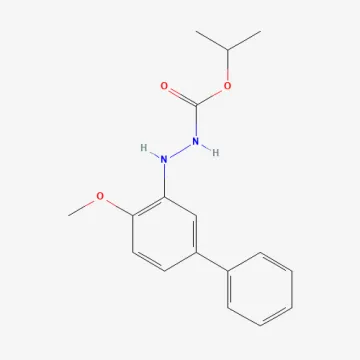
Description
Mode of action
Bifenazate belongs to the hydrazine carboxylate chemical class and functions as a highly selective acaricide. Its mode of action is distinct, primarily involving the disruption of the mite's nervous system via interaction with GABA-gated chloride channels.
The substance is effective against all developmental stages of spider mites, including eggs, nymphs, and adults. This broad-spectrum efficacy on the life cycle is crucial for managing infestations before they reach economically damaging levels.
Upon contact with the treated surface, mites experience rapid feeding cessation, followed by paralysis and eventual death within three to four days. This quick knockdown effect helps protect crops from further physical damage immediately after application.
Bifenazate offers a long residual effect, providing protection for up to two or three weeks under normal conditions. It possesses excellent stability on leaf surfaces, exhibiting good resistance to being washed off by rainfall or irrigation.
As it is not a systemic compound, thorough coverage of the foliage is essential for success. Growers are advised to target the underside of the leaves, where mite colonies typically reside and reproduce most actively.
What it targets
Bifenazate is specifically engineered to control phytophagous mites, particularly those belonging to the Tetranychidae family, including the common spider mite and the red spider mite.
It is widely utilized in professional agriculture for protecting various crops such as tomatoes, cucumbers, peppers, strawberries, and a variety of greenhouse-grown flowers and nursery stock.
The acaricide is also highly effective in orchards and vineyards, where it is used to manage spider mite populations that can cause defoliation and severe yield loss in fruit-bearing trees.
Due to its high level of selectivity, bifenazate is compatible with integrated pest management (IPM) programs, as it poses minimal risk to beneficial predatory mites and pollinating insects when used as directed.
It serves as an essential tool for growers struggling with mites that have developed resistance to traditional organophosphate or carbamate acaricides, offering a reliable alternative for resistance management.
Rates and timing
The application rates for bifenazate vary depending on the target crop, the density of the mite population, and the severity of the infestation. It is typically formulated as a suspension concentrate that requires dilution with water.
Monitoring is key; applications should be timed based on regular scouting of the fields or greenhouses. Applying the product before the mite population explodes is critical to maintaining high quality and yield.
Repeated applications may be necessary in extreme conditions, but a standard interval of at least 14 to 21 days between treatments is recommended to ensure efficacy and avoid excessive chemical pressure.
Proper calibration of spraying equipment is vital to ensure that the active ingredient reaches all parts of the foliage. Adding a high-quality surfactant can sometimes enhance the coverage of the spray solution.
While bifenazate is generally compatible with other common plant protection products, a jar test is always recommended before mixing it in a tank to ensure chemical stability and prevent incompatibility issues.
Restrictions
Operators must wear appropriate personal protective equipment (PPE), including chemical-resistant gloves, eye protection, and long-sleeved clothing, to prevent dermal or respiratory exposure during mixing and application.
Bifenazate must not be applied near aquatic habitats, as it is considered toxic to aquatic life. Strict adherence to buffer zones and wind speed limitations is required to prevent spray drift into unintended areas.
Storage should be in the original container, kept in a cool, well-ventilated, and secure location away from children, livestock, and food products to prevent accidental contamination.
Adhering to the pre-harvest interval (PHI) specified on the product label is mandatory to ensure that pesticide residues on the final crop remain within safe, legal limits for human consumption.
To mitigate the risk of resistance development, growers should avoid using bifenazate more than twice per season. It is best practice to rotate it with acaricides that have different modes of action to keep mite populations under control.
Regulatory
Status in the European Union
Approved in the EU
- CAS number
- 149877-41-8
- Approved from
- 01.07.2022
- Approval until
- 30.06.2037
- ADI
- 0.01 mg/kg bw/day
- ARfD
- 0.1 mg/kg bw
- AOEL
- 0.0036 mg/kg bw/day
Hazard classification (CLP)
Aquatic Acute 1 - H400Aquatic Chronic 1 - H410STOT RE 2 - H373Skin Sens. 1 - H317
EU status is for reference only and does not replace national registration in your country.
Content graph
Connections · Bifenazate
Most often together:
Marketplace
Products · 5


