

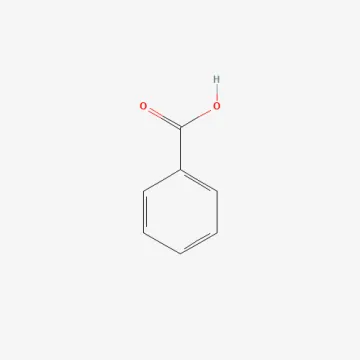
Description
Mode of action
Benzoic acid and its derivatives are recognized in agriculture as systemic herbicides acting primarily through an auxin-mimetic mode of action. They interfere with plant metabolism by mimicking endogenous growth hormones.
The core mechanism involves disrupting cell division within the meristematic tissues of target weeds. This causes uncontrolled growth, stem twisting (epinasty), and eventual vascular collapse of the plant.
As fungicides, these compounds interfere with the enzymatic pathways of pathogenic fungi, effectively inhibiting the growth of mycelium and the production of reproductive spores.
These substances are characterized by high systemic mobility within the plant, allowing them to be absorbed through foliage or roots and translocated to the growing points where their activity is maximized.
Environmental factors such as temperature, humidity, and the metabolic rate of the plant significantly influence the efficacy of these compounds. They work best during periods of active, vigorous plant growth.
What it targets
The group is widely used to control broad-leaved weeds in cereal crops, maize, and pasture lands. They are particularly effective against persistent perennial species that are difficult to manage with contact herbicides.
In terms of fungicidal application, derivatives of benzoic acid are employed to treat specific diseases in horticultural crops, targeting pathogens that cause blight, rot, and various leaf spots.
These chemicals are essential components in resistance management strategies, as they provide a unique mode of action that differs from common photosynthetic or amino acid synthesis inhibitors.
Target weeds often include members of the Asteraceae and Convolvulaceae families, which are known for their competitive pressure on field crops during the vegetative phase.
- Cirsium arvense (Canada thistle)
- Convolvulus arvensis (Field bindweed)
- Chenopodium album (Common lambsquarters)
- Amaranthus retroflexus (Redroot pigweed)
- Ambrosia artemisiifolia (Common ragweed)
Rates and timing
Application rates are determined by the weed spectrum, the developmental stage of the crop, and local environmental conditions. Always consult the specific product label for precise dosage requirements.
For herbicidal control, the ideal timing is when weeds are in the seedling to early rosette stage, ensuring maximum absorption and systemic distribution of the active ingredient.
Fungicidal applications should be initiated as a preventative measure or at the earliest sign of disease, following strict intervals to ensure adequate coverage and protection.
Water quality and the addition of surfactants can influence the performance of benzoic acid derivatives. Proper calibration of spraying equipment is essential to ensure uniform application.
Pre-harvest intervals (PHI) must be strictly observed to ensure that chemical residues in the final harvested produce remain below established regulatory safety limits.
Restrictions
Due to the high biological activity of these compounds, crop injury due to spray drift is a significant concern. Buffer zones must be maintained when applying near sensitive areas or susceptible non-target crops.
Weather conditions play a critical role in safety and efficacy. Avoid spraying during temperature inversions or in high-wind conditions to prevent the contamination of surrounding land.
Operators must adhere to safety protocols, utilizing appropriate personal protective equipment (PPE) such as chemical-resistant gloves, goggles, and respiratory protection during mixing and application.
Storage should be in a cool, ventilated, and secure facility, keeping products in original containers to prevent accidental contamination of soil or water sources.
Soil persistence varies among different derivatives; therefore, long-term crop rotation plans should account for potential residual activity to avoid damaging follow-on sensitive vegetable or legume crops.
Regulatory
Status in the European Union
Approved in the EU
- CAS number
- 65-85-0
- Approved from
- 01.09.2017
- Approval until
- 31.08.2032
- ADI
- 5.0 mg/kg bw/day
- ARfD
- Not appl.
- AOEL
- 5.0 mg/kg bw/day
Hazard classification (CLP)
Eye Dam. 1 - H318STOT RE 1 - H372Skin Irrit. 2 - H315
EU legislation
EU status is for reference only and does not replace national registration in your country.
Content graph
Connections · Benzoic acid
Most often together:
Marketplace
Products · 2
