
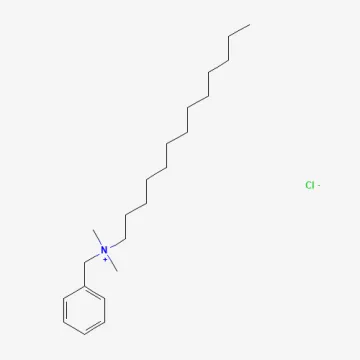
Benzalkonium chloride
Description
Mode of action
Benzalkonium chloride belongs to the chemical class of quaternary ammonium compounds (QACs). It is a cationic surfactant that possesses a pronounced antiseptic effect.
The mechanism of action is based on the interaction of the substance molecules with the phospholipids of the pathogen cell membranes. This leads to the disorganization of the lipid layer, disruption of membrane permeability, and rapid loss of intracellular contents.
The substance demonstrates high activity against a wide spectrum of microorganisms, including Gram-positive and Gram-negative bacteria, as well as certain types of fungi.
Unlike systemic drugs, benzalkonium chloride acts by contact and rapidly causes the death of pathogens on treated surfaces.
Due to its chemical structure, it effectively destroys biological films that often create persistent infection hotspots in protected soil.
What it targets
The primary purpose of benzalkonium chloride in agronomy is disinfection, rather than direct protection of growing plants against diseases.
It is used for treating packaging containers, storage facilities, warehouses for fruits and vegetables, and equipment for produce sorting.
It is employed for the disinfection of greenhouses and hotbeds before the start of the season to destroy pathogens of fungal and bacterial diseases in the soil and on structures.
The substance helps control the development of mold and pathogenic microflora in conditions of high humidity inside production facilities.
It is widely used in aquaculture and hydroponic systems to maintain the purity of nutrient solutions and prevent the spread of phytopathogens.
Rates and timing
Application rates depend on the concentration of the active ingredient in the final product and the specific disinfection task.
For preventive treatment of empty greenhouses, aqueous solutions with a concentration of 0.1% to 0.5% are typically used, depending on the bacterial load level.
When disinfecting tools and inventory, the exposure time ranges from 15 to 30 minutes, after which it is recommended to rinse the surfaces with water.
Timing of operations is linked to technological cycles: treatment is carried out in the absence of plants, several days before planting seedlings or storing the harvest.
It is important to consider that the effectiveness of the preparation decreases in the presence of large amounts of organic contaminants, so pre-cleaning of surfaces is mandatory.
Restrictions
Benzalkonium chloride is toxic to aquatic organisms, so it is necessary to avoid the entry of solutions into open water bodies and groundwater.
The product must not be applied directly to the vegetative parts of plants due to the high risk of chemical tissue burns.
When working with concentrated solutions, the use of personal protective equipment (gloves, goggles, and respirators) is required to prevent irritation of mucous membranes.
The substance does not have a long-term protective effect when exposed to open air under direct sunlight, as it undergoes partial degradation.
Mixing with anionic surfactants should be avoided, as this leads to an immediate loss of the preparation's fungicidal and antiseptic properties.
Status in the European Union
Not approved in the EU
- CAS number
- 8001-54-5
- Category (EU)
- HB - Herbicide
- ADI
- 0.12 mg/kg bw/day
- ARfD
- 0.12 mg/kg bw
EU status is for reference only and does not replace national registration in your country.