
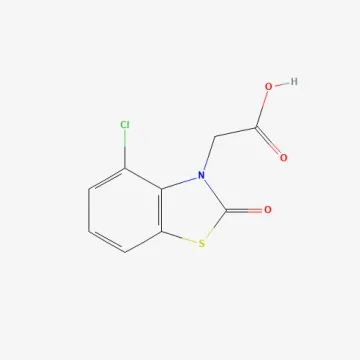
Benazolin
Description
Mode of action
Benazolin belongs to the chemical class of benzoic acid derivatives. It is a systemic herbicide of the auxin type, characterized by high selectivity for various crops.
The active substance penetrates the plant primarily through the foliage and is rapidly translocated via the phloem to the meristematic tissues.
By mimicking the action of natural plant hormones, it triggers abnormal growth patterns and disrupts cell division processes in susceptible weed species.
Exposure to benazolin leads to severe distortion of stems and leaves, effectively draining the weed's energy reserves and inhibiting further development.
This systemic disruption ultimately destroys the vascular system, resulting in tissue necrosis and the eventual death of the weed plant.
What it targets
Benazolin is widely used to control a broad range of broadleaf weeds that compete with agricultural crops for nutrients and sunlight.
It is particularly effective against problematic species such as Galium aparine (cleavers), Polygonum species, Stellaria media, and Capsella bursa-pastoris.
The herbicide targets weeds from the Polygonaceae and Brassicaceae families, which are often significant threats to overall yield potential.
It is frequently incorporated into herbicide programs or tank mixes to provide broad-spectrum weed control and manage resistance issues.
Note that benazolin does not effectively control grass weeds, necessitating the use of specialized herbicides in fields with mixed weed populations.
Rates and timing
Application rates for benazolin depend on the growth stage of the weeds and the specific environmental conditions at the time of treatment.
The highest efficacy is achieved when plants are in their active growth phase, as metabolic processes are most susceptible to the herbicide's action.
It is essential to follow the dosage instructions provided by the manufacturer to ensure optimal results and crop safety.
Correct nozzle calibration and maintenance of spraying equipment are critical to achieving uniform coverage on the target foliage.
Farmers should conduct a physical compatibility test if mixing benazolin with other pesticides to avoid the formation of precipitates.
Restrictions
Strict adherence to safety protocols is mandatory when handling benazolin, including the use of protective clothing and respirators.
Operators must avoid spraying during windy conditions to prevent drift, which could damage nearby sensitive crops or non-target vegetation.
Environmental factors such as extreme temperature fluctuations or frost can reduce the efficacy of the herbicide and should be avoided.
Proper storage is essential; keep the chemical in original packaging in a cool, dry, and locked facility away from unauthorized access.
All disposal of chemical waste and empty containers must comply with local environmental regulations and safety standards.
Status in the European Union
Not approved in the EU
- CAS number
- 3813-05-6
- Category (EU)
- HB - Herbicide
EU status is for reference only and does not replace national registration in your country.