

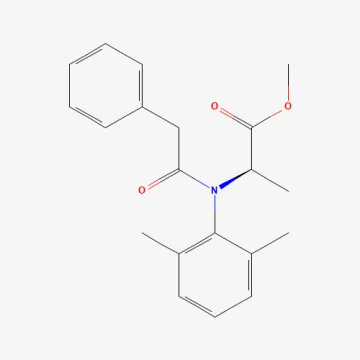
Description
Mode of action
Benalaxyl-M belongs to the phenylamide chemical class and acts as a systemic fungicide with both protective and curative properties. As an optically active isomer of benalaxyl, it provides enhanced biological efficacy even at lower application rates.
The mechanism of action involves inhibiting ribosomal RNA synthesis and blocking nucleic acid synthesis within the pathogen's cells. This disruption effectively stops mycelial growth and suppresses fungal sporulation.
The active substance is quickly absorbed by the plant through roots or leaves and is distributed acropetally throughout the growing plant tissue. This systemic movement ensures protection for new growth that emerges post-application.
Unlike other phenylamides, Benalaxyl-M shows significant stability within the plant and offers a prolonged protection period. It is highly effective at suppressing early-stage infections by penetrating plant tissues within hours of spraying.
It is frequently formulated in mixtures with contact fungicides like mancozeb or copper-based compounds. This approach is critical for managing resistance and ensuring consistent disease control across various field conditions.
What it targets
Benalaxyl-M is used exclusively for controlling diseases caused by fungi from the Oomycetes class. This includes pathogens responsible for late blight, downy mildew, and various types of rot.
Primary crops for this substance include vegetables and industrial crops highly susceptible to oomycete pressure: potatoes, tomatoes, cucumbers, onions, grapes, and sunflowers.
The chemical is effective against late blight (Phytophthora infestans) on potatoes and tomatoes, as well as downy mildew (Peronospora spp.) on cucumbers and onions. It also yields significant results in managing downy mildew on grapevines.
It helps in controlling root and crown rot diseases caused by Pythium and Phytophthora species. This makes it a valuable asset for seed treatments and soil application strategies.
- Late blight in potatoes and tomatoes.
- Downy mildew in vegetables.
- Grapevine downy mildew.
- Root rot in seedlings.
Rates and timing
Application rates for Benalaxyl-M vary based on the level of disease pressure, crop stage, and local weather conditions. Generally, products based on this active ingredient are applied every 10 to 14 days.
For preventive treatments, lower dosages are sufficient. However, if visible symptoms are present or if climatic conditions are conducive to fungal development (such as high humidity), the dosage should be adjusted according to the manufacturer's label.
Adherence to application frequency is vital, typically limiting use to no more than 2–3 times per season. This is an essential resistance management strategy to maintain the product's long-term effectiveness.
When used in tank mixtures, it is crucial to follow the correct mixing sequence to prevent precipitation. Spray solutions should be prepared immediately before use and agitated continuously during the application process.
Pre-harvest intervals (PHI) depend on the specific crop and generally range from 15 to 30 days. Strictly observing these timelines is necessary to ensure safety and avoid chemical residues in agricultural produce.
Restrictions
The primary concern with Benalaxyl-M is the risk of resistance development if used continuously in monoculture. It is strongly advised not to apply the product more than twice consecutively without rotating to a fungicide with a different mode of action.
The substance is ineffective against powdery mildew, rusts, and other fungal diseases caused by non-oomycete pathogens. Applying this product to control such diseases will not provide the desired agricultural outcome.
Personal Protective Equipment (PPE), including respirators, chemical-resistant gloves, and protective clothing, must be worn during handling. Direct contact with skin or mucous membranes should be avoided due to potential irritation.
Special care is required near water bodies, as Benalaxyl-M can be toxic to aquatic organisms. Prevent any runoff into drainage systems or natural water sources to protect the environment.
The product must be stored in a cool, dry place out of reach of children and livestock, away from food and feed. Packaging disposal must comply with local environmental and waste management regulations.
Regulatory
Status in the European Union
Approved in the EU
- CAS number
- 98243-83-5
- Approved from
- 01.05.2014
- Approval until
- 30.09.2027
- ADI
- 0.04 mg/kg bw/day
- ARfD
- Not appl.
- AOEL
- 0.06 mg/kg bw/day
EU legislation
EU status is for reference only and does not replace national registration in your country.
Content graph
Connections · Benalaxyl-M
Most often together:
Marketplace