
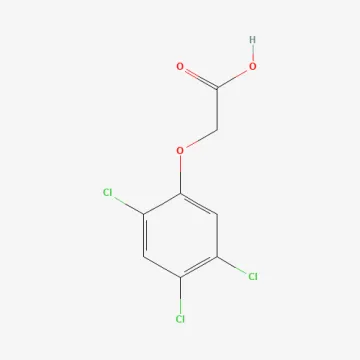
2,4,5-T
Description
Mode of action
2,4,5-T (2,4,5-trichlorophenoxyacetic acid) is a systemic herbicide belonging to the phenoxy carboxylic acid class. It acts as a synthetic auxin, a group of chemicals that mimic the natural plant growth hormones.
Upon application, the substance is absorbed through the leaves and translocated throughout the plant. It interferes with the hormonal regulation of plant growth, leading to uncontrolled cell division and eventual collapse of the plant's vascular system.
Symptoms of the herbicide action include twisting and curling of stems and leaves, rapid development of abnormal growth tissues, and subsequent necrosis of the plant structure.
The efficacy of 2,4,5-T is primarily due to its ability to disrupt the nucleic acid metabolism. This leads to the total exhaustion of the plant's food reserves and systemic physiological failure.
Because of its chemical stability, the substance remains active within the plant tissues for a significant duration, ensuring a deep penetration into the root system of perennial woody weeds.
What it targets
Historically, 2,4,5-T was specifically designed to control broad-leaved weeds that were resistant to other herbicides. It was widely used for brush and woody plant control in non-cropland areas.
The chemical was highly effective against a variety of shrubs and trees, including species like maple, oak, and willow, which are notoriously difficult to eliminate using lighter chemical treatments.
It served as a powerful defoliant in forestry and military operations. By stripping plants of their foliage, it enabled the clearance of large areas of dense, woody vegetation.
In agricultural settings, it was occasionally utilized for pasture improvement by suppressing the growth of unwanted woody scrub and tough perennial weeds that reduced grazing productivity.
- Control of woody and shrubby vegetation.
- Management of persistent perennial broad-leaved weeds.
- Industrial vegetation control on roadsides and utility rights-of-way.
Restrictions
The production and use of 2,4,5-T have been banned globally. The primary reason is the presence of 2,3,7,8-tetrachlorodibenzo-p-dioxin (TCDD) as a toxic byproduct during the synthesis process.
TCDD, commonly known as dioxin, is one of the most toxic synthetic compounds ever created. It is a potent carcinogen and endocrine disruptor that persists in the environment for decades.
The accumulation of dioxins in the food chain poses severe risks to human health, including reproductive disorders, developmental damage, and immune system suppression.
Soil contamination by 2,4,5-T residues is extremely hazardous, requiring intensive remediation efforts. The substance is strictly prohibited for any use in modern agricultural practices.
Regulations emphasize the total elimination of 2,4,5-T from all stock and usage, as it represents a significant ecological and public health hazard that cannot be managed safely.
Status in the European Union
Not approved in the EU
- CAS number
- 93-76-5
- Category (EU)
- HB - Herbicide
- ADI
- 0.03 mg/kg bw/day
EU status is for reference only and does not replace national registration in your country.