
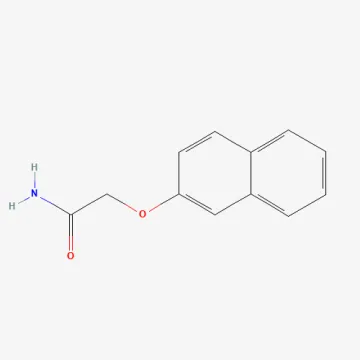
2-Naphthyloxyacetamide
Description
Mode of action
2-naphthyloxyacetamide belongs to the class of synthetic auxins, acting as a structural analog of natural plant hormones. Its chemical composition allows it to penetrate plant tissues effectively, influencing cellular processes such as elongation and differentiation.
Unlike natural hormones, this compound maintains its activity within the plant for a longer period, ensuring a sustained growth-promoting effect. It enhances the allocation of nutrients toward developing reproductive organs, even under suboptimal conditions.
The primary function of this active ingredient is to inhibit the abscission layer formation in flower stalks. By doing so, it prevents the premature shedding of young fruit during periods of environmental stress.
Upon absorption, it triggers metabolic pathways that support fruit development, often facilitating parthenocarpy. This capability is essential for sustaining production when pollination efficiency is low or irregular.
The compound acts as a stabilizing agent that strengthens the physical connection between the fruit and the mother plant. This results in higher retention rates and more consistent fruit development across various clusters.
What it targets
This compound is primarily used in greenhouse vegetable production, specifically for crops such as tomatoes, peppers, and eggplants. It is also applied in floriculture to improve flower bud development and size.
The target for application is the flowering stage, specifically when the plant is most vulnerable to shedding its fruit due to heat, cold, or physiological imbalances. It helps bridge the gap in development during stressful periods.
Its use is highly effective in scenarios where natural pollination is hindered, such as in controlled environments with poor insect activity. It ensures that the reproductive output remains stable throughout the season.
It addresses issues related to physiological immaturity in modern hybrids, which may occur due to light deficiencies in greenhouses. By stimulating the plant, it ensures a better load of fruit per plant.
Applying this substance helps mitigate the negative effects of temperature fluctuations, especially during spring cycles. It maintains the fruit's integrity while the plant adjusts its internal resources during climate shifts.
Rates and timing
Application rates are determined by the specific crop and the stage of growth. Generally, it is applied as a fine mist to the flower clusters to ensure complete coverage of the floral structures.
Timing is critical, as applications must coincide with the peak flowering phase of the target clusters. Early applications are typically prioritized to secure the initial setting of the fruit.
Over-application can lead to adverse effects, including deformation of foliage or the fruit itself. Agronomists must strictly adhere to the dilution rates specified by the product manufacturer to avoid phytotoxicity.
The frequency of application is strictly regulated, usually limited to one or two treatments per cluster. Proper intervals must be maintained to ensure the plant's metabolic pathways are not overloaded.
When preparing the spray solution, use water with an appropriate pH level to prevent degradation of the active molecule. Poor water quality can drastically reduce the efficacy of the treatment.
Restrictions
Operators must wear appropriate personal protective equipment (PPE) during handling and application, including gloves, respirators, and eye protection. Preventing direct exposure is a safety priority.
Applications must be timed to avoid interference with beneficial insects, particularly bumblebees used for pollination in greenhouses. Strict compliance with pre-harvest intervals is mandatory for food safety.
Store the chemical in a cool, dry place, away from light and inaccessible to unauthorized persons. The container should be tightly sealed and labeled according to local chemical handling regulations.
In case of accidental exposure, immediately rinse the skin or eyes with clean water for several minutes. If ingestion occurs or if symptoms develop, seek medical attention immediately with the product label available.
All waste, including leftover solutions and empty containers, must be disposed of in accordance with environmental protection standards. Preventing drainage into soil or waterways is essential to preserve ecosystem health.
Status in the European Union
Not approved in the EU
- CAS number
- 35368-77-5
- Category (EU)
- HB - Herbicide
EU status is for reference only and does not replace national registration in your country.