
Why the cultivator “jumps” and loosens poorly: the main reasons and solutions
We identify the main reasons why your cultivator “jumps” and cannot cope with loosening the soil. Find out effective tips and solutions to improve the performance of your equipment in Belarus.
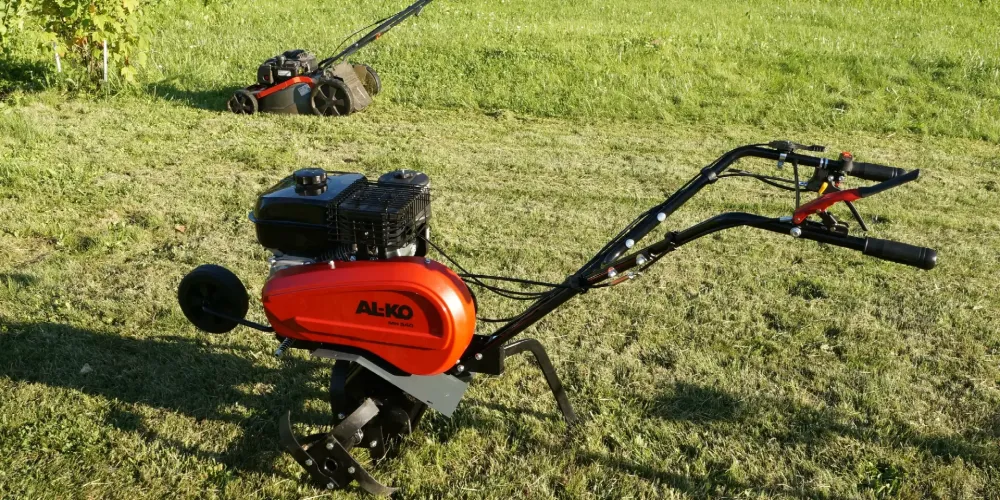
The cultivator rushes forward, jumps in place, pulls the handles out of your hands, and behind it there are furrows with clods, and not a smooth, loose field. After half an hour of such “work”, your back hurts, the engine gets hot, gasoline runs out, and the bed still looks as if a plow had gone through it, and not a neat cultivator. For Belarusian sites with heavy loams and damp spring soil, this is a particularly typical picture.
There are always specific reasons for this behavior: from the settings of the coulter and cutters to a banal attempt to force a light household device to plow virgin soil. In this article, we’ll figure out why the cultivator “jumps” and loosens poorly, how to understand the source of the problem based on the symptoms, what you can really fix yourself, and when it’s better not to risk it without service. Examples and tips are focused on the conditions of Belarus, but are also suitable for soils of similar nature.
How does the problem manifest itself and where to start diagnosing
First, it is important to understand whether you really have the same problem that they say “the cultivator is a goat.” Typical symptoms are:
- the unit bounces and tries to jump forward, you literally have to hang yourself on the handles;
- the cutters do not go deep, they only scratch the top layer, after passing the soil is striped, with large clods;
- the opposite situation: the device suddenly dives, nods, and strives to stand upright;
- strong vibration, it becomes difficult to maintain direction, the cultivator “walks” from side to side.
Before getting into the gearbox and motor, look at the operating conditions:
- soil type: virgin soil, fallow with roots, already cultivated garden, sand, clay, loam;
- humidity: dusty-dry crust or, conversely, sticky wet clay;
- the actual depth of entry of the cutters is not “according to the passport”, but according to the mark;
- gear and speed, position of transport wheels, if any.
Simple starting checklist:
- Stop the engine and place the cultivator on a level area.
- Inspect the cutters and opener: there are no obvious bent parts or incorrect assembly.
- Assess whether your machine is too light for the task: a light cultivator and virgin soil are almost guaranteed to lead to “jumping.”
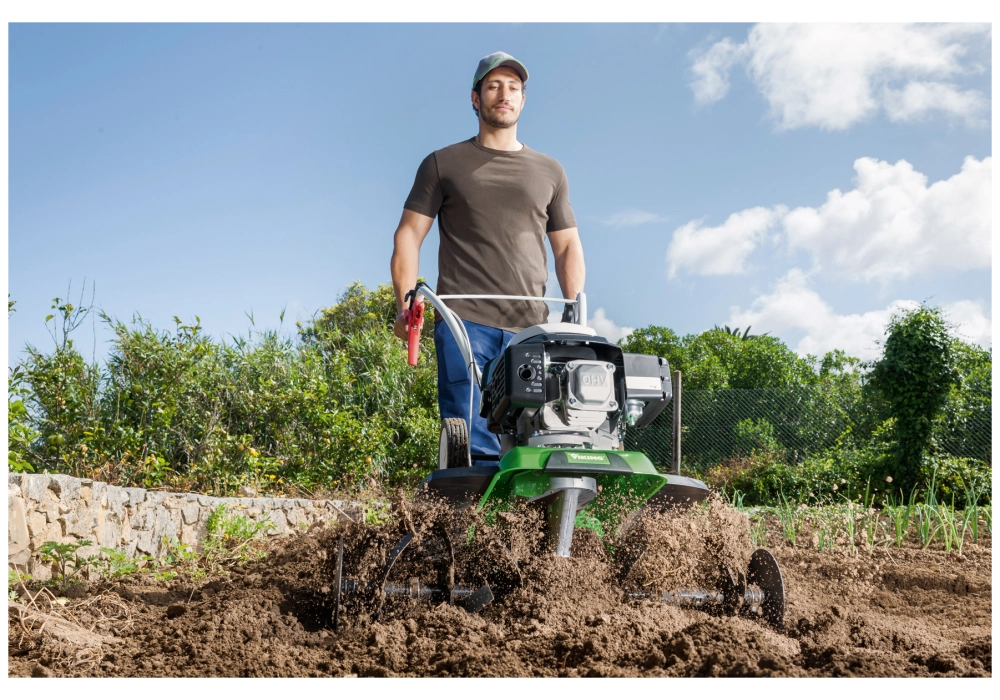
Why the cultivator jumps and loosens poorly: reasons by node
Understanding why the cultivator “jumps” and loosens poorly: the reasons are rarely associated with “defective equipment”. Most often, conditions and settings are to blame.
1. The soil and operating mode do not correspond to the capabilities of the cultivator
Lightweight household cultivator with 2–3.5 hp motor. physically not designed for virgin soil, dense clay or deposits with perennial roots. In such areas, instead of cutting into the soil, it begins to be pushed away by the cutters and jump up - something like if you try to chop a stump with a kitchen knife. On overdried soil, cutters also tend to “hit” the crust rather than cut it; on Belarusian loams flooded with moisture, they become clogged with mud and slip. When you try to use the cultivator as a plow “from scratch” in an overgrown area, the roots additionally catch the knives, further intensifying the jerks.
2. Incorrect working depth and coulter adjustment
The coulter is a depth limiter and an anchor for the cultivator. If it is raised too high, the device literally runs forward, the cutters go a couple of centimeters and break out, hence the trembling and small jumps. If the coulter, on the contrary, is very deep, the cultivator pecks down, stands on its “nose”, the operator instinctively raises the handles, and the result is a swing: the nose is up, the tail is down, the unit is thrown up. Plus, a common mistake is trying to immediately reach the maximum depth in one pass: even a powerful walk-behind tractor on clay begins to dig and twitch.
3. Problems with cutters: assembly, wear, type
Improper assembly of cutters is one of the leading requests in service centers. If the sections are “mirrored” or the left and right sides are mixed up, the knife does not cut into the ground, but seems to row backward, throwing the cultivator forward. Worn, dull or bent knives work even worse: instead of a clean cut, they hit the ground, creating vibration. On virgin soil, standard “crow’s feet” designed for loose soil can only slide along the turf. For virgin soil, more aggressive cutters or even a separate plow are needed, especially on heavy Belarusian clays.
4. Engine speed and rpm
If the gear is selected too high, the cultivator tends to move faster than the cutters can dig into the ground. The result is a “ski” effect: the device carries forward, the cutters only slightly touch the surface and bounce on uneven surfaces. At too low speeds, on the contrary, there is not enough torque, the blades get stuck, the engine “chokes”, and jerking occurs. Skewed in the other direction - full revolutions on a rocky or heavily compacted area: the cutters hit the clods, pushing the cultivator away, rather than crushing them.
5. Weight and weight distribution of the cultivator
A light machine weighing up to 35–40 kg on hard soil will always be less stable than a heavy walk-behind tractor weighing 70–90 kg. The mass is needed so that the cutters bite into the ground, and do not throw the body upward. Sometimes it’s more honest to admit: the tasks of your site are better suited to a full-fledged walk-behind tractor (you can study powerful machines for difficult soils at the link: https://smartbalance.by/belarus) than a light cultivator, especially if every year you have to open up virgin strips for potatoes.
6. Wheels, gearbox and torque transmission
A typical mistake is transport wheels forgotten in the lower position. As a result, the device rides on wheels, and the cutters barely touch the ground, break off and cause bouncing. A weakened drive belt leads to slipping: sometimes the cutters spin at full speed, sometimes they almost stop - jerking and jerking occurs. Backlash in the gearbox, wear of bearings and gears give rise to hum, vibration and a feeling of “beating”, which many take for “improper operation of the engine”, although the source is in the mechanics.
In sum, in most cases the reason is not that the model is “bad”, but that it is incorrectly configured or is not used for the site’s tasks.
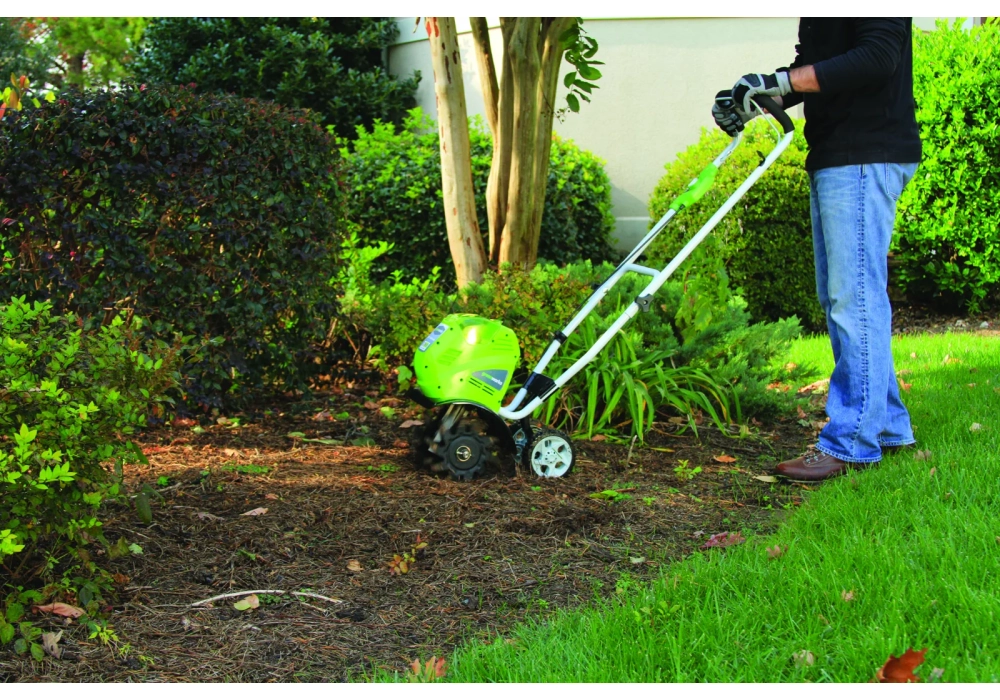
Step-by-step solutions: what you can do yourself
Setting the depth and coulter
Start with minimal depth. Place the coulter so that the cultivator barely enters the ground 5–7 cm, walk a short section and look at the mark. Then lower the opener one hole lower and repeat. Usually 2-3 passes are enough: the first is opening the crust, the second is deepening, the third is bringing it to the desired looseness. This approach significantly reduces the “goat” and the stress on the hands.
Checking and correcting the position of the cutters
Put the device on a flat surface and look from the side: the cutting edge of the knives should seem to “raise” the earth towards itself when moving forward, and not push away from itself. If it visually seems that the knife is “repulsing” the soil, reassemble the sections according to the diagram from the instructions specifically for your model. Do not rely on photos “from the Internet” - the arrangement of segments differs for different brands.
Operating mode and processing technique
On heavy loams of Belarus, for the first pass, select a lower gear and medium engine speed. Do not pull the cultivator towards you: let it work, only slightly guiding it. If the machine tends to pull forward, gently press the handles down - this will increase the depth of the cutters. If, on the contrary, he nods, slightly pull the handles towards you and slightly lift the opener.
Weighting and additional accessories
In dense gardens, weights on the hubs and lugs often turn a “jumping” cultivator into an obedient tool. An additional 10–20 kg of weight allows the cutters to work more stable, especially when processing potatoes and beets between rows. For Belarusian conditions, this is almost a mandatory option, if the site is not sandy.
In-house maintenance
Check the belt tension regularly: when pressed, it should not sag by more than 8–10 mm. Periodically move the cutter shaft with your hands (with the motor turned off!) - there should be no strong play or knocking. If the cutters are ground down, bent, or vibration increases from season to season, it is better to contact a service center: working with a damaged gearbox can be much more expensive than timely replacement of parts.
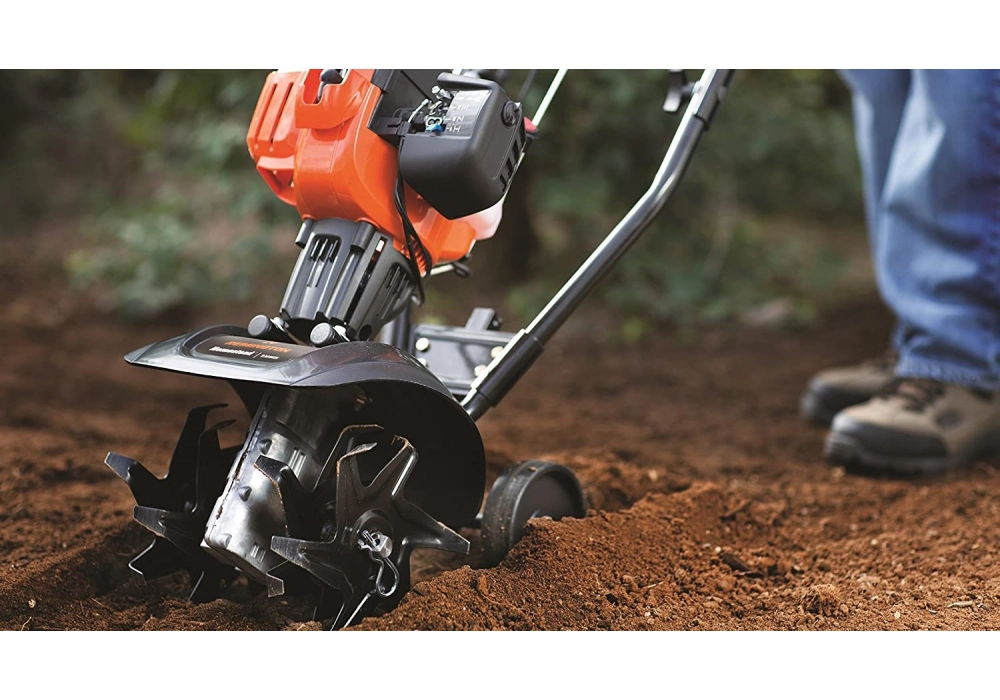
How to choose a cultivator that will work smoothly
In order not to return every season to the question of why the cultivator jumps and loosens poorly, it is important to initially select the equipment for the ground and the task.
- Power and processing width. A weak motor on wide cutters is a guaranteed recipe for jerks. For greenhouses and already developed beds, lightweight models of 2–3.5 hp are suitable. with a small processing bandwidth (you can compare such devices in the catalog: https://smartbalance.by/kultivatory). For virgin lands, it is more logical to take powerful units.
- Weight and ergonomics. Compare not only horsepower, but also weight. A heavy but balanced cultivator with height- and side-adjustable handles is easier to control and works smoother than a lightweight “beast” without adjustments.
- Configuration and service. It is useful to immediately provide for different types of cutters, weights, lugs, openers. It is important that the local dealer in Belarus has spare parts, belts, cutters and clear service - this quickly solves issues with vibration, jumping and gear wear.
If the cultivator “jumps” and loosens poorly, this is not a death sentence for the technology. Correct diagnostics, careful adjustment and the right choice of model for the nature of your site allow you to turn hard and nervous work into a predictable and fairly comfortable process.
Editorial team agronom.info
Materials are prepared by the portal's agronomists and editors. We use only trusted sources: Ukrainian agricultural universities, variety registries, open scientific publications.
Related articles
Not yet comments. Be the first!
Comments · 0