
Temnocerus longiceps
Temnocerus longiceps
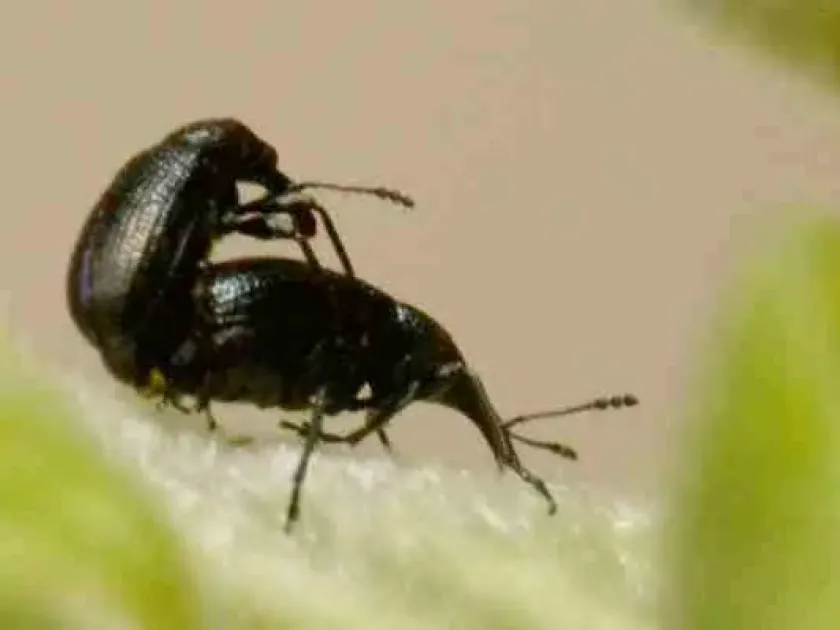
Description
How to identify
Temnocerus longiceps is a member of the Attelabidae family, commonly known as leaf-rolling weevils. This beetle is easily recognized by its elongated rostrum (snout), which is a characteristic feature of this species.
Adult beetles are typically small, with a body length of a few millimeters. Their color is usually metallic blue or green, providing excellent camouflage against the lush foliage of host plants.
The life cycle involves complete metamorphosis, consisting of the egg, larval, pupal, and adult stages. Each stage is strictly tied to the biological cycles of the host plant, ensuring the best survival conditions.
Adults typically hibernate in the soil or leaf litter under the host trees. They emerge in the spring when temperatures rise, feeding on the first buds and leaves of the season.
This species is quite host-specific, primarily targeting trees of the Rosaceae family. This specialization helps in predicting their appearance and planning early control measures in orchards.
What it damages
Temnocerus longiceps primarily damages trees in the Rosaceae family, including apple, pear, and various ornamental or wild shrub species, causing significant stress to the host plants.
Both adults and larvae feed on leaves and young buds. Extensive feeding can lead to a drastic reduction in photosynthetic area, which negatively affects tree growth and potential fruit yield.
The most severe damage occurs early in the growing season. The rolling of leaves into tubes destroys the leaf structure, causing them to dry out and fall prematurely, which stunts the development of young shoots.
In addition to direct damage, the feeding punctures provide entry points for secondary pathogens, such as fungi and bacteria, which can lead to localized infections and dieback of branches.
In nurseries and young orchards, the pest is particularly harmful. By destroying terminal buds, the beetle prevents proper crown formation, forcing the tree to grow in an undesirable shape.
Signs of infestation
The first indicator of an infestation is the presence of tiny holes and pin-pricks on the leaves. These are signs of adult feeding activity that occurs immediately after they emerge from hibernation.
The most diagnostic sign is the appearance of tightly rolled leaves, formed by the adult female. These 'tubes' protect the larvae, which feed on the leaf tissue inside until they reach maturity.
Affected leaves eventually turn brown, shrivel, and look withered. If a tree is heavily infested, it will show noticeable signs of stunted growth and a scorched appearance during the peak season.
If you suspect an infestation, you can shake a branch over a white cloth. The beetles often drop and play dead, making them easy to identify against the light background.
The presence of fine waste (frass) inside the rolled leaf structures confirms that larvae are actively feeding inside, requiring immediate intervention to save the foliage.
Control measures
Cultural control is essential. Regularly raking and removing fallen leaves and debris from under the trees helps eliminate the overwintering sites, significantly reducing the population for the next year.
Mechanical control, such as manually collecting and destroying the rolled leaf tubes, is highly effective in small gardens. This prevents the next generation of adults from emerging.
Chemical control should be timed correctly. Applying insecticides early in the season, just as the buds begin to open, is the most effective way to kill adults before they start laying eggs.
Integrated Pest Management (IPM) practices, including the use of pheromone traps or beneficial predators, can help maintain the beetle population below the economic threshold without heavy chemical use.
- Apply contact insecticides during the early spring bud-burst phase.
- Use sticky bands on tree trunks to trap adults moving up the tree.
- Maintain orchard hygiene by pruning and burning heavily damaged branches.
Taxonomy
- Latin name
- Temnocerus longiceps
- Order
- Coleoptera (beetles)
- Family
- Attelabidae
- EPPO code
- COENLO
Discussion
No discussions yet — be the first.