
Hungarian rose beetle
Rhynchites hungaricus
Description
How to identify
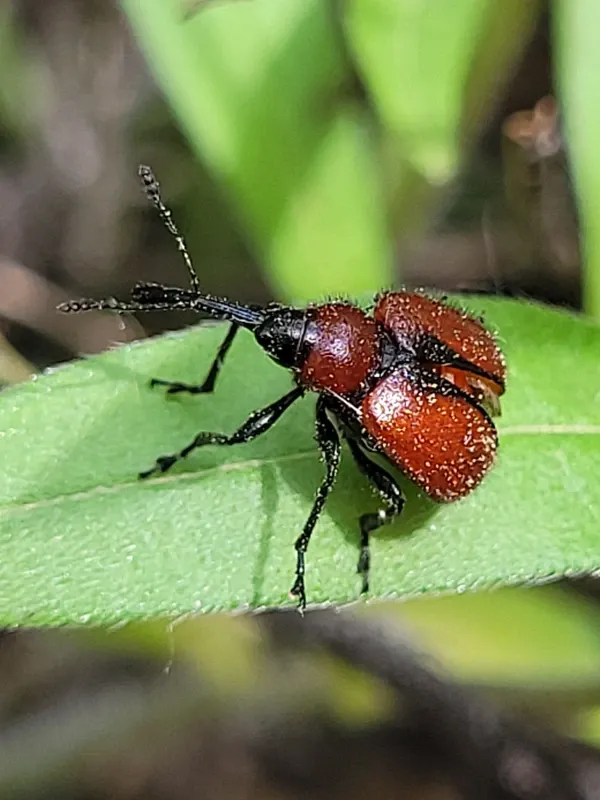
The Hungarian rose beetle (Rhynchites hungaricus) is a member of the Attelabidae family within the Coleoptera order. Adult beetles measure between 4 and 6 mm in length and possess a distinctive metallic red to purple coloration.
Their bodies are densely covered in fine hairs, giving them a slightly matte appearance under close inspection. The long, slender rostrum (snout) is a key diagnostic feature used by the female to penetrate plant tissues for oviposition.
The larvae of this species are legless, curved, and white in color. They complete their development inside the flower buds, making them difficult to detect during the early stages of the infestation.
The life cycle involves overwintering as adults, primarily in the soil or under debris. Emergence occurs in spring when temperatures become favorable, marking the beginning of the active feeding and mating period.
Pupation takes place in the soil, highlighting the importance of soil management as a key factor in disrupting the life cycle of the beetle and reducing future population numbers.
What it damages
The primary hosts of this pest are plants belonging to the Rosaceae family. Rose bushes, both decorative and wild species, are the most susceptible to damage caused by both adults and larvae.
Adult beetles feed on leaves and young buds, creating small puncture wounds and irregular holes. This feeding activity impairs the plant's ability to produce healthy, open blossoms.
The larvae are particularly destructive as they feed on the internal reproductive organs of the buds. This causes the buds to wilt, become malformed, and eventually drop off the plant prematurely.
Severe infestations can lead to substantial economic losses in flower production, with some plants losing the vast majority of their buds if left untreated during the critical growth phase.
The feeding activity also stresses the plant, making it more vulnerable to secondary infections, such as powdery mildew or various forms of rot, which can further impact the overall health of the bushes.
Signs of infestation
The earliest sign of an infestation is the appearance of tiny pin-prick-like holes on the surface of unopened flower buds. These marks are often surrounded by dark, necrotic tissue.
Deformed, stunted, or drooping buds that fail to open are a clear indicator of larval presence inside. When opened, these buds often show extensive internal tissue destruction.
Lace-like damage or small, circular holes on the leaves indicate active feeding by adult beetles. Significant leaf damage can occur during the early spring period if populations are high.
The presence of prematurely fallen buds beneath the rose bushes is a reliable indicator that the larvae have completed their development and have exited to move into the soil for pupation.
During the early morning hours, adult beetles can often be spotted on the stems or buds. When disturbed, they characteristically drop to the ground and remain motionless to avoid detection.
Control measures
The most critical cultural practice is the diligent collection and destruction of all infested, fallen, or wilting buds to prevent larvae from completing their life cycle and returning to the soil.
Tilling or deep hoeing of the soil around the base of the rose bushes in late autumn and early spring helps to expose pupae and overwintering adults to cold and natural predators.
Chemical control involving systemic or contact insecticides should be applied shortly after the beetles emerge from hibernation, specifically before the buds begin to open significantly.
Manual collection in the early morning, when the beetles are less active and prone to dropping, can be an effective strategy for managing low-level populations in smaller gardens.
- Application of biological pesticides containing entomopathogenic fungi.
- Removal of wild rose species near cultivated areas to reduce habitat.
- Consistent monitoring of bud health during the spring growing season.
Taxonomy
- Latin name
- Rhynchites hungaricus
- Order
- Coleoptera (beetles)
- Family
- Attelabidae
- EPPO code
- HOMHHU
Discussion
No discussions yet — be the first.