
Japanese fruit weevil
Rhynchites heros
Description
How to identify
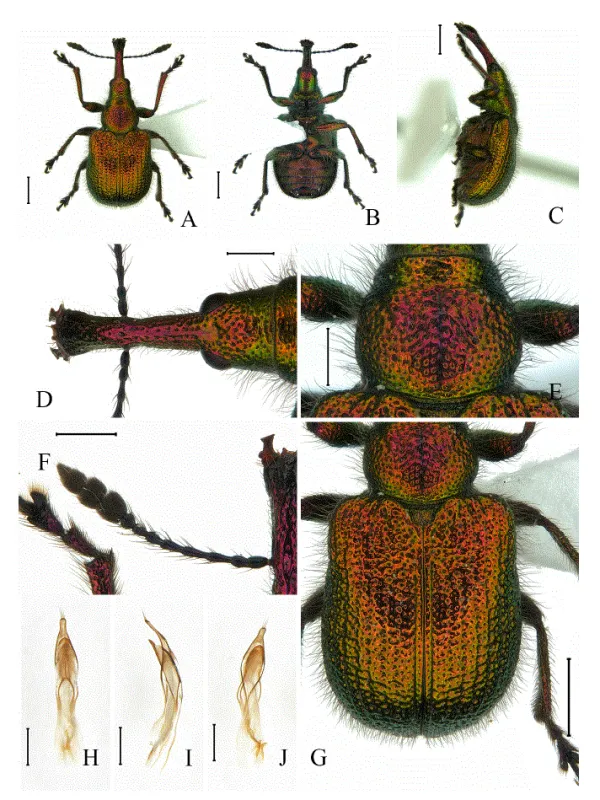
The Japanese fruit weevil (Rhynchites heros) belongs to the order Coleoptera and the family Attelabidae. Adult beetles are 6–8 mm long, featuring an elongated rostrum and a dark, metallic-colored exoskeleton.
The larvae are legless, cream-colored with a brown head, and characterized by a curved body shape. They develop entirely within the fruit, staying hidden from direct observation.
These weevils are active flyers but possess a defensive behavior of feigning death, dropping from branches to the ground when disturbed or touched.
The life cycle is univoltine, meaning one generation per year. Adults overwinter in the soil or under debris, emerging in early spring as soon as trees begin to bud.
Females are responsible for the main damage during the reproductive phase, using their rostrum to bore small, deep holes in fruits to deposit their eggs.
What it damages
The species primarily attacks stone fruits and pome fruits, including pears, apples, peaches, and plums. It causes significant damage to both fruit quality and tree health.
Adults feed on tender shoots and buds, causing them to wilt, deform, or even die, which weakens the overall vigor of the tree and reduces leaf surface area.
The larvae feed on the internal pulp of the fruit, leading to internal rot and causing the fruit to lose its nutritional value and marketability.
Heavy infestations result in substantial fruit drop before harvest, as the damaged fruit is unable to mature properly due to structural tissue destruction.
The entry holes made by females during oviposition serve as open wounds for secondary fungal infections, which further accelerate the decay of the remaining fruits.
Signs of infestation
Key signs of infestation include small, precise, circular holes on the surface of young fruits, often surrounded by a light-colored halo or necrotic ring.
Early-season fruit drop of immature, small fruits is a primary indicator. Inspecting these fallen fruits will typically reveal the feeding tunnels of the larvae.
Deformed or scarred fruits are common symptoms, as the plant tries to heal the puncture wounds made by the female during the egg-laying process.
Small, irregular, or circular holes in leaves, caused by the adult weevils' supplementary feeding, can be seen throughout the canopy in spring.
Detection of the adults themselves is possible by examining the underside of leaves or branches in the early morning, as they remain relatively sluggish before temperatures rise.
Control measures
The most important cultural control method is the immediate collection and disposal of all fallen fruits, as this removes the larvae before they can pupate in the soil.
Cultivating the soil beneath the canopy in autumn and late winter disrupts the overwintering sites, exposing the adults to environmental factors and natural predators.
Shaking the branches early in the morning over a cloth or plastic sheet allows growers to capture and destroy the adults manually, which is effective for small gardens.
Applying registered insecticides during the pre-blossom and post-blossom stages is essential to protect the developing fruit from egg-laying and larval establishment.
Installing sticky bands or mechanical barriers on tree trunks can reduce the number of climbing adults, limiting their access to the fruits in the upper canopy.
Taxonomy
- Latin name
- Rhynchites heros
- Order
- Coleoptera (beetles)
- Family
- Attelabidae
- EPPO code
- RNCHHE
Discussion
No discussions yet — be the first.