
Pear fruit weevil
Rhynchites giganteus
Description
How to identify
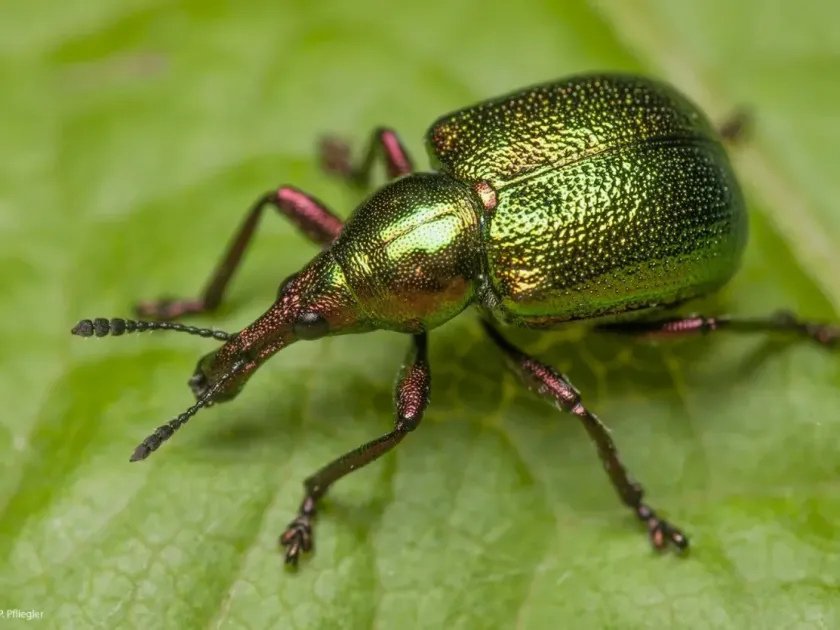
The pear fruit weevil (Rhynchites giganteus) is a beetle belonging to the Attelabidae family. It is characterized by a long, slender rostrum and a dark, brownish-black body with a subtle metallic sheen.
Adult beetles grow to a length of 6–9 mm. Their elytra are covered with fine punctures and sparse hairs, giving them a matte appearance. They possess a hard, protective exoskeleton.
The larvae are legless, C-shaped grubs with a creamy-white body and a distinct brown head. They develop primarily inside the fruit, making them hard to spot until significant damage occurs.
The insects overwinter as adult beetles, mostly in the soil at a depth of up to 15 cm. Some may hibernate under fallen leaves or within bark crevices on the trunk.
They emerge in early spring when soil temperatures reach 10–12°C, aligning their life cycle with the budding and flowering period of pear trees.
What it damages
The primary host for this pest is the common pear. During outbreaks, the weevil may also target apple trees and other Pomoideae species, though it shows a strong preference for pears.
The larval stage causes the most severe damage. The female drills a hole into the young fruit to lay an egg and then cuts the fruit stalk, causing the fruit to wither and fall prematurely.
Once the fruit falls, the larva continues to feed on the decomposing tissue, eventually exiting the fruit to pupate in the soil. This leads to substantial yield loss.
Adult beetles also cause significant harm by feeding on buds, young leaves, and flowers in early spring. This weakens the tree and reduces its reproductive potential early in the season.
High populations can devastate an entire orchard's yield if left unmanaged, as each female is capable of damaging multiple fruits through the egg-laying process.
When it appears
Adult activity begins in early spring, coinciding with the swelling of buds. The beetles emerge and immediately start feeding on the tree's green tissues.
The mating and egg-laying phase occurs during the fruit set period, which lasts several weeks. This window is critical for identifying and controlling the pest population.
The larval development period lasts about one month. Upon completion, the larvae drop to the ground and burrow into the soil to undergo pupation.
Pupation takes place during mid-summer. Once transformed into adult beetles, they remain in the soil cells throughout the autumn and winter months.
The pest's life cycle is perfectly synchronized with the pear tree's phenology, allowing it to survive effectively within commercial and domestic orchards.
Signs of infestation
The first signs of infestation are small puncture marks on leaves and buds, indicating where adult beetles have been feeding after emerging from winter dormancy.
Early fruit drop in June is a major indicator. If you find small pears lying under the tree, examine them for a distinct entry hole made by the female weevil.
Cutting open a fallen fruit often reveals internal feeding tunnels and discoloration. In advanced stages, the internal tissue becomes soft and begins to rot.
Shaking the tree branches over a white sheet in the early morning is an effective way to detect the presence of adults, as they are sluggish and fall easily when disturbed.
Stunted fruit growth, premature browning, and abnormal fruit shapes are secondary signs that an orchard is struggling with a high infestation level.
Control measures
Cultural control is essential. Regularly collecting and destroying fallen fruit is the most effective way to kill larvae before they exit and enter the soil.
Deep cultivation of the soil around the tree base in autumn or early spring helps destroy pupal cells and exposes the overwintering adults to adverse weather.
Chemical control should be applied before the egg-laying phase. Insecticide applications are most effective when adult beetles are actively feeding on leaves and buds.
- Use systemic insecticides to target adults before they mate.
- Install sticky bands on tree trunks to monitor and capture climbing insects.
- Maintain orchard hygiene by clearing debris where adults might hide.
Integrating chemical and physical methods is the best strategy for sustainable management. Monitoring trap counts helps determine the exact timing for necessary applications.
Taxonomy
- Latin name
- Rhynchites giganteus
- Order
- Coleoptera (beetles)
- Family
- Attelabidae
- EPPO code
- RNCHGI
Discussion
No discussions yet — be the first.