
Glossy snout beetle
Rhynchites fulgidus
Description
How to identify
The Glossy snout beetle (Rhynchites fulgidus) is a member of the Curculionidae family, commonly known as weevils, which are notorious agricultural pests.
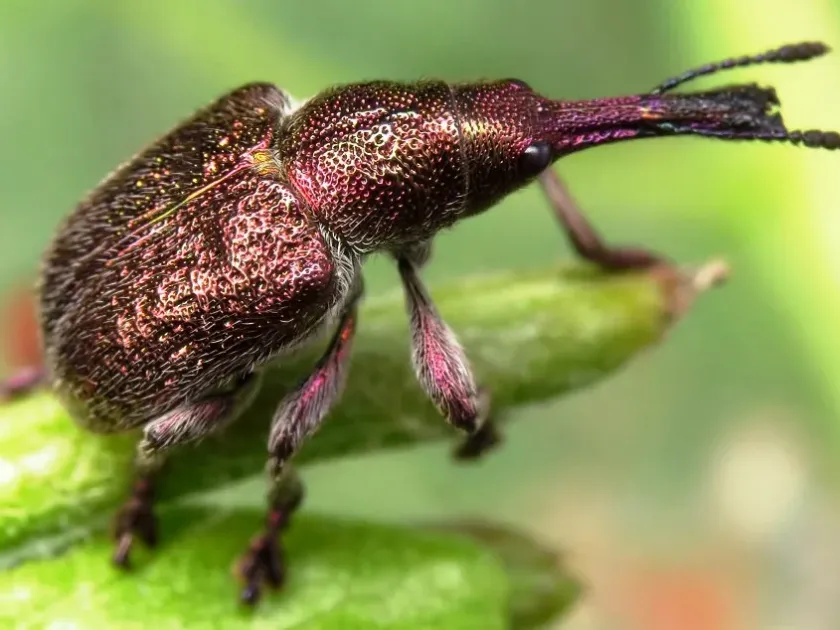
Adult beetles are relatively small, typically measuring between 4 to 6 millimeters in length. They are characterized by a metallic green or gold-green shiny exoskeleton.
Like other weevils, they possess a long, distinct snout (rostrum) used for piercing plant tissues, which is a key diagnostic feature for visual identification.
The larvae are legless, white to yellowish in color, and have a prominent dark head capsule. They spend their entire developmental phase feeding inside fruits or tender plant shoots.
The species undergoes a complete life cycle, meaning they transition through egg, larval, pupal, and adult stages, with each phase having a specific impact on the host plant.
What it damages
This beetle primarily attacks pome and stone fruits, including apple, pear, plum, and cherry trees, which are staples in both commercial and domestic orchards.
Adults cause damage by feeding on buds, young foliage, and developing blossoms, which can significantly reduce the tree's vigor early in the season.
Females inflict direct damage to fruitlets by puncturing them to lay eggs. This action leads to malformed fruit and premature drop before the harvest period.
Once hatched, the larvae consume the pulp and seeds of the fruit, rendering them completely inedible and causing significant economic loss to fruit production.
Severe infestations can lead to a drastic reduction in crop yields, as the combination of larval feeding and adult damage destroys a large percentage of potential harvest.
When it appears
Adult beetles emerge in early spring, typically correlating with the bud-burst stage of fruit trees as temperatures begin to rise consistently.
The peak activity period for feeding and mating occurs throughout May. During this time, females are highly active in selecting suitable sites for oviposition.
Larval development inside the fruit takes several weeks. After feeding is complete, the larvae emerge from the fruit and drop to the ground to pupate in the soil.
The species typically completes one generation per year, with the adult stage being the primary form that overwinters in the soil or protected crevices.
Environmental conditions, particularly warm and dry springs, tend to accelerate the life cycle and increase the feeding intensity of the adult population.
Signs of infestation
The earliest signs of an infestation include small punctures and irregular holes appearing on the surface of young leaves and newly opened buds.
Fruitlets exhibiting signs of deformation, discoloration, or unexpected shriveling are primary indicators that females have utilized them for egg-laying.
Massive premature fruit drop is a common symptom. When fallen fruits are examined, they often reveal clear larval exit holes or internal galleries filled with waste.
Wilting of young shoots or withered petioles indicates where a female beetle has damaged the plant to deposit eggs, restricting the flow of nutrients.
Spotting the adult beetles is possible during the early morning hours, as they often retreat or fall from the foliage when disturbed by the presence of a person.
Control measures
An effective control strategy involves a combination of mechanical removal and timely application of agricultural practices to minimize the beetle population.
Mechanical control includes shaking the beetles off branches onto a sheet during cool morning hours when their mobility is significantly lower.
Sanitation is crucial; collecting and destroying fallen fruit regularly prevents larvae from migrating to the soil to pupate and continue the next cycle.
Autumn soil cultivation under the tree canopy exposes overwintering pupae and larvae to predators and freezing temperatures, effectively reducing the carry-over population.
Chemical control via selective insecticides should be applied during the pre-blossom and post-blossom phases, ensuring compliance with local safety regulations and harvest intervals.
Taxonomy
- Latin name
- Rhynchites fulgidus
- Order
- Coleoptera (beetles)
- Family
- Attelabidae
- EPPO code
- RNCHFU
Discussion
No discussions yet — be the first.