
Apple fruit rhynchites
Rhynchites cinnamomi
Description
How to identify
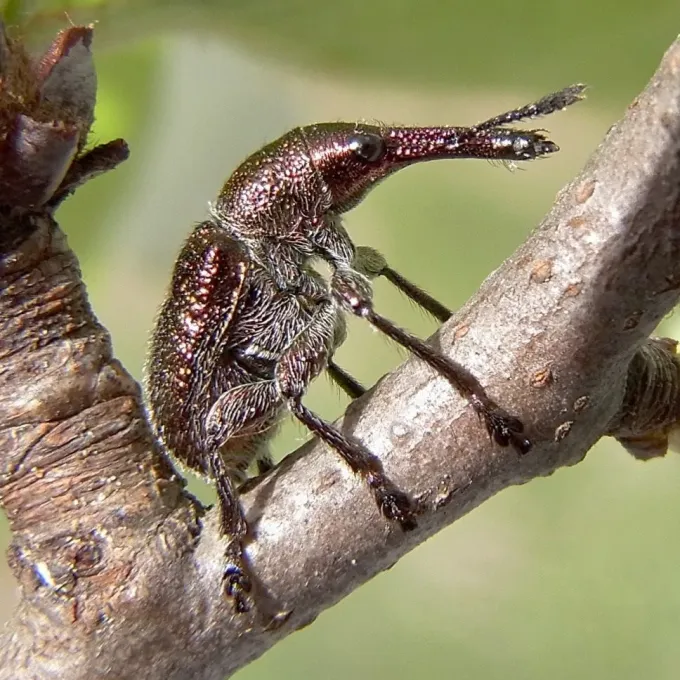
The apple fruit rhynchites (Rhynchites cinnamomi) is a small beetle belonging to the Attelabidae family. It typically measures 2.5 to 3.5 mm in length and displays a characteristic copper-red or metallic bronze coloration, often with a fine dusting of hairs on its body.
This beetle features a prominent, elongated rostrum (snout) which is essential for its feeding and egg-laying habits. Its body structure is adapted to penetrate the tough skin of developing fruits and the tissues of young plant shoots.
The life cycle involves the adult stage overwintering in the soil. Upon the arrival of spring temperatures, they emerge and migrate into the orchard canopy to feed on the tender growth of host trees.
The female displays a unique reproductive behavior: she bites through the pedicel (fruit stalk) of the developing fruit after laying an egg inside. This action causes the fruit to wither and fall, which serves as a protective nursery for the developing larva.
Understanding their behavior is crucial, as their rapid reproduction and specialized feeding habits can lead to significant population surges if left unchecked during the critical early stages of the growing season.
What it damages
This pest is a significant threat to various pomaceous and stone fruit trees, including apples, pears, plums, and cherries. Both adults and larvae contribute to the destruction, targeting different stages of plant development.
Adults damage the trees by feeding on buds and young leaves, creating small holes and necrotic areas. However, the most severe damage is caused by the females during the oviposition process, leading to premature fruit drop.
When the pedicel is bitten, the fruit ceases to grow and falls to the ground. This results in a direct loss of yield, which can be devastating for commercial orchards, sometimes reaching 50% loss under heavy infestation.
The larvae feed on the internal tissues of the fallen fruit, completing their development within the decaying matter. Consequently, any fruit that is attacked essentially becomes a loss for the farmer.
Young trees are particularly vulnerable to the leaf-feeding behavior of adults, which can reduce their photosynthetic capacity and stunt growth. Monitoring for fruit drop is therefore the most important step in assessing damage levels.
When it appears
The seasonal activity begins in early spring as soon as ambient temperatures consistently exceed 10°C. This coincides with the bud-burst and flowering phenology of most host trees.
The period of peak damage occurs throughout May and June, corresponding with the stage where young fruits are forming on the trees. This is when the female activity is most intense and the economic impact becomes visible.
By mid-summer, most larvae have left the fallen fruit to pupate in the soil. While adult activity drops during the height of summer, a second, smaller generation may occasionally emerge toward the late season.
Weather conditions, particularly rainfall and temperature fluctuations, significantly dictate the timing of emergence. A late spring can delay their cycle, requiring growers to extend their monitoring periods.
As autumn approaches, the adults burrow into the soil to depths of up to 15 cm. They remain in a state of diapause throughout the winter, waiting for the cycle to restart the following spring.
Signs of infestation
Early symptoms of an infestation include minute, needle-like punctures on young leaves. Growers often overlook these initially, as they do not immediately threaten the overall tree health.
The most alarming sign is the sudden and unexplained mass dropping of immature fruit. If these fallen fruits are examined, small entry holes or signs of internal larval burrowing will be visible.
If you inspect the tree canopy in the early morning, you might spot the beetles. They are known for "death-feigning," where they drop off the branch to the ground immediately upon sensing a disturbance.
Evidence of cut or partially severed fruit stalks is another indicator. This reflects the female's specific method of preparing the environment for her offspring by inducing fruit drop.
Finally, late-season skeletonized leaves indicate the presence of a new generation of beetles. This serves as a warning that the pest population remains established in the area and necessitates preventive measures.
Control measures
Effective management requires a multi-pronged approach that combines cultural practices with chemical interventions. Timing is critical to prevent the females from reaching the stage of oviposition.
Cultural control is centered on the prompt collection and destruction of fallen fruit. By removing this debris, the grower eliminates the shelter and food source for the larvae, effectively breaking the life cycle.
Tilling the soil under the canopy in both spring and autumn helps to physically disturb or bury the beetles that are either preparing for overwintering or attempting to emerge.
Chemical control should be applied strategically, primarily before and immediately after the flowering stage, to target the adults before they can deposit their eggs.
- Application of systemic or contact insecticides during the pink bud stage.
- Usage of sticky bands around tree trunks to monitor and capture migrating adults.
- Implementation of quarantine checks for new nursery stock to prevent introducing the pest.
Taxonomy
- Latin name
- Rhynchites cinnamomi
- Order
- Coleoptera (beetles)
- Family
- Attelabidae
- EPPO code
- RNCHCI
Discussion
No discussions yet — be the first.