
Rhynchites caeruleus
Rhynchites caeruleus
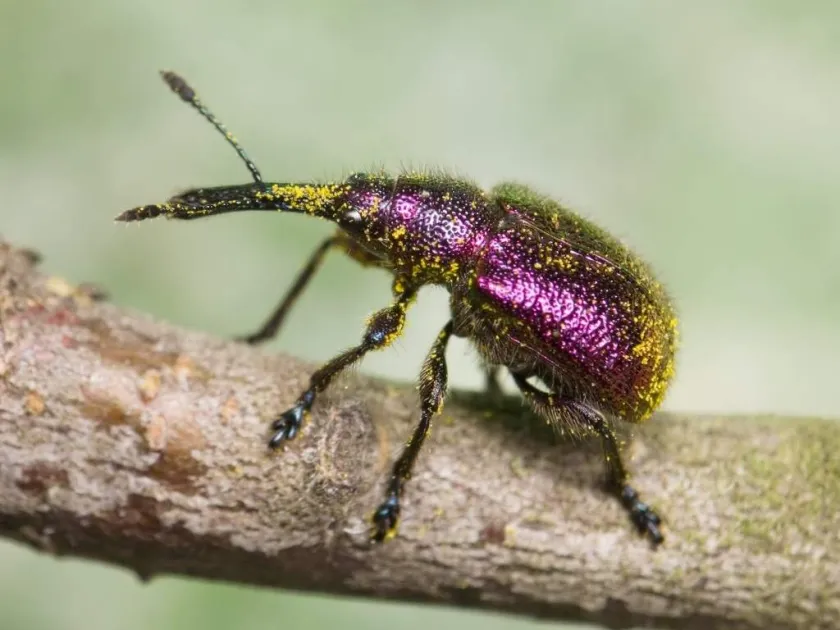
Description
How to identify
Rhynchites caeruleus, commonly known as the apple fruit weevil, belongs to the family Curculionidae. It is a small beetle, approximately 5–6 mm long, characterized by a metallic blue, green, or bronze-purple coloration.
The insect's body is covered with fine, sparse hairs. A key morphological feature is its elongated rostrum (snout), which the female uses to drill into plant tissues for feeding and oviposition.
The larva is a legless, C-shaped grub with a brown head. It develops primarily inside the developing fruit, which makes it difficult to detect during the early stages of infestation.
Adults overwinter in the soil or protected crevices of tree bark. They emerge in early spring, synchronized with the onset of the fruit tree's vegetative development.
Due to their coloration, they can be difficult to spot against the foliage, often remaining unnoticed until significant damage to the buds or young leaves becomes apparent.
What it damages
This pest primarily infests pome and stone fruits, including apples, pears, plums, and apricots. It causes damage to buds, young leaves, flower stalks, and developing fruitlets.
The most severe damage occurs when the female drills into a young fruitlet to lay an egg and subsequently gnaws through the fruit stalk. This action causes the fruitlet to wither and drop prematurely.
Larval feeding inside the fruit destroys the internal tissues, leading to rot and mummification. Infested fruits are generally unmarketable and often serve as a source of secondary fungal infections.
Early-season feeding on buds and blossoms can reduce the potential fruit set before the fruits even begin to develop, directly impacting the orchard's yield potential.
In cases of high infestation, this weevil can destroy the majority of the crop. Proper monitoring and threshold-based intervention are essential for commercial orchards to prevent severe losses.
When it appears
The activity of Rhynchites caeruleus is strictly seasonal, beginning when adults emerge from their overwintering sites during the green tip stage of the host trees.
Feeding continues throughout the flowering period, with the beetles targeting buds and young foliage. Once fruitlets begin to develop, the focus shifts to egg-laying activities.
Larval development takes place within the fruit for several weeks. Once the fruit drops to the ground, the mature larvae exit the fruit and burrow into the soil to pupate.
Pupation occurs in the soil during mid-summer. A portion of the new generation may emerge as adults by late summer, but most remain in the soil as pupae or adults to overwinter.
The life cycle is univoltine (one generation per year), which simplifies management planning but requires consistent monitoring throughout the spring and early summer period.
Signs of infestation
Early signs of infestation include small, deep punctures on leaves and buds, which eventually result in ragged holes as the tissues grow. Beetles may be observed falling from branches when disturbed.
On the fruitlets, one can identify dark circular scars or punctures created by the female's snout. These spots are often associated with necrotic tissue and slight depressions.
A significant indicator is the mass shedding of fruitlets in June. If these dropped fruits are cut open, they often reveal dark tunnels or the presence of the cream-colored larvae.
Mummified fruits remaining on the tree or scattered on the orchard floor are clear evidence of past infestation, indicating that larvae have successfully completed their development.
- Buds that fail to bloom or show necrosis at the base.
- Premature dropping of green fruitlets with visible snout punctures.
- Distorted growth of young leaves and shoots caused by mechanical feeding.
Control measures
Sanitation is a cornerstone of management. Collecting and removing fallen fruitlets immediately prevents larvae from reaching the soil and completing their life cycle.
Cultivating the soil beneath the canopy in late autumn or early spring disrupts the overwintering sites and exposes pupae to predators and environmental stresses.
Mechanical control, such as shaking the trees over sheets in the early morning while the beetles are sluggish, can be effective in smaller orchards or organic operations.
Chemical control involves the application of registered insecticides during the pre-blossom and post-blossom phases, specifically targeting the period before egg-laying starts.
Integrated Pest Management (IPM) strategies, including the use of pheromone traps (if available) or selective insecticides, help maintain populations below economic injury levels while minimizing impact on beneficial insects.
Taxonomy
- Latin name
- Rhynchites caeruleus
- Order
- Coleoptera (beetles)
- Family
- Attelabidae
- EPPO code
- RNCHCA
Discussion
No discussions yet — be the first.