
Rhynchites
Rhynchites
Description
How to identify
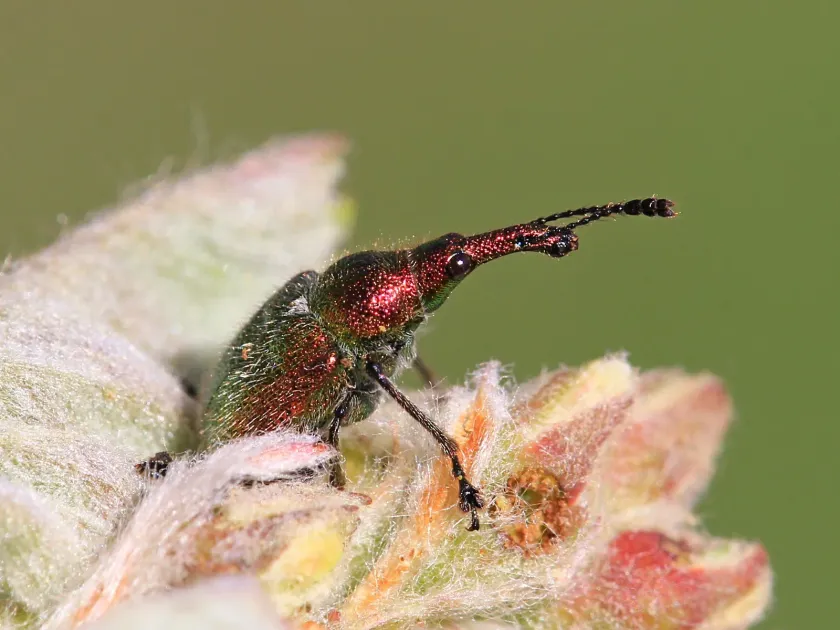
Rhynchites auratus, commonly known as the apple fruit weevil, is a significant pest belonging to the Curculionidae family. Adult beetles are small, measuring about 2.5 to 3 mm in length.
The adult beetle is distinguished by its metallic green or bronze-red color, which gives it a shimmering appearance in the sunlight. Its body is covered with fine, dense hairs.
The larvae are typically white or cream-colored, C-shaped, and possess a distinct brown head. They are rarely seen as they complete their life cycle inside the fruit tissues.
The eggs are small, oval, and whitish. They are laid by females into small punctures made in the young fruit, often disguised with excrement to avoid predators.
One of the most notable behaviors of adult weevils is their tendency to drop from the tree and feign death (thanatosis) when they feel disturbed or threatened.
What it damages
This pest targets a wide range of fruit crops, including apples, pears, cherries, and plums. It can cause significant economic losses in commercial and private orchards.
Adult beetles damage the tree by feeding on developing buds, young leaves, and blossoms. This feeding activity leads to stunted growth and reduced photosynthetic capacity.
The larvae are responsible for the most severe damage. They tunnel through the flesh of the fruit and feed around the pit or core, causing the fruit to rot from within.
Infested fruit typically drops from the tree prematurely (early fruit drop). This results in a direct reduction in the total harvest yield for the season.
Furthermore, the punctures made during feeding and egg-laying act as entry points for various bacterial and fungal pathogens, potentially leading to secondary infections in the tree.
When it appears
The species overwinters as either an adult beetle or a larva, buried in the soil at a depth of about 10–15 cm. They emerge when soil temperatures begin to rise in early spring.
Spring activity starts during the bud-break stage of the host trees, which usually coincides with the return of warmer weather in late April or early May.
Mass emergence of adults into the tree canopy occurs during the flowering period, as they feed heavily to prepare for the reproductive phase of their life cycle.
The reproductive period, including egg-laying, generally spans from late spring through the early summer months, depending on the climatic conditions of the region.
By late summer and early autumn, the larvae finish their development, emerge from the fallen fruit, and burrow back into the soil to begin the overwintering process.
Signs of infestation
Early signs of an infestation include small circular punctures on the leaf surfaces and developing buds, which appear as if they were made with a needle.
Developing fruit may show small dark spots or indentations. These marks indicate where the female has deposited her eggs beneath the skin of the fruit.
Significant premature fruit drop during the late spring or early summer is a primary indicator of larval development inside the fruit.
When cutting open a fallen piece of fruit, one can find internal browning, tunnels, and the presence of the cream-colored larvae near the core.
Wilting of terminal shoots and the drying of buds in early spring are further signs that adult weevils have been feeding on the tree's vital structures.
Control measures
Mechanical control is highly effective in home orchards, where shaking the tree over a sheet early in the morning can dislodge the immobile beetles.
Sanitation is critical; all fallen fruit must be collected and destroyed immediately to prevent larvae from escaping into the soil and completing their life cycle.
Cultivating the soil around the base of the trees (trunk circle) in autumn helps to disturb the overwintering larvae and expose them to harsh weather conditions.
Chemical control should be timed before the flowering stage, using approved insecticides to eliminate the adult weevil population before egg-laying begins.
- Use systemic insecticides for more efficient long-term protection.
- Install sticky bands on tree trunks to capture climbing beetles.
- Maintain orchard hygiene by removing dead or diseased wood.
Taxonomy
- Latin name
- Rhynchites
- Order
- Coleoptera (beetles)
- Family
- Attelabidae
- EPPO code
- RNCHSP
Discussion
No discussions yet — be the first.