
Pselaphorhynchites
Pselaphorhynchites
Description
How to identify
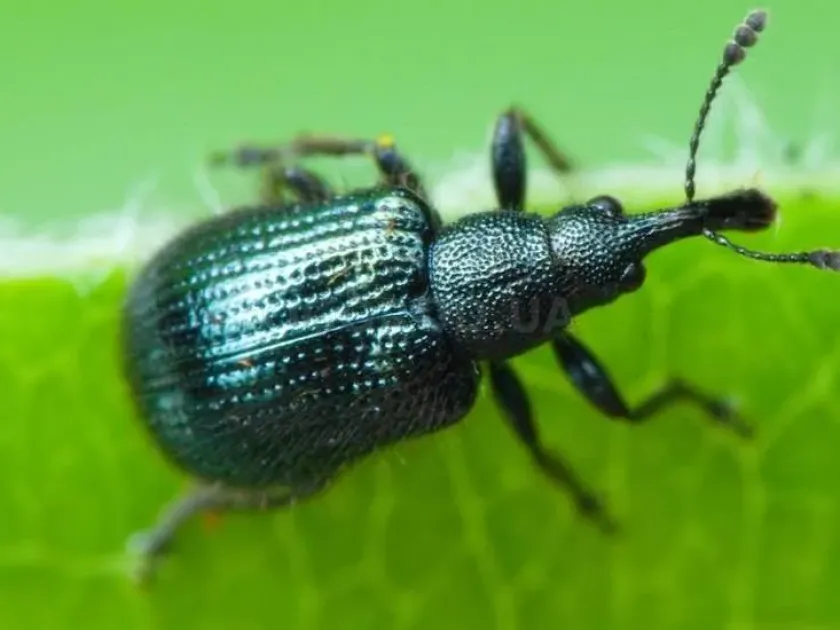
Pselaphorhynchites, commonly known as the fruit tree weevil or bud weevil, is a small beetle belonging to the Rhynchitidae family. The adult beetle typically measures between 2.5 and 3 mm in length.
The appearance of this beetle is distinctive, characterized by a metallic blue-green or golden-green coloration. The head is elongated into a long snout, which is a signature trait of this beetle family.
The body is covered with sparse hairs. The larvae are legless, white in color, and have a curved shape, making them difficult to spot once they have burrowed into plant tissues.
This species belongs to the order Coleoptera. Adult beetles overwinter in the soil at a depth of 10 to 15 centimeters, which provides them with excellent protection against harsh winter temperatures.
In spring, as soil temperatures rise to 10-12 degrees Celsius, the adults emerge. Their activity is highly temperature-dependent, with peak movement observed on warm, sunny days.
What it damages
Pselaphorhynchites primarily attacks fruit-bearing crops, including apple, pear, plum, cherry, and sweet cherry trees. During years of high population density, it can destroy a significant portion of the fruit set.
The most severe damage occurs early in the growing season when adults feed on swelling buds. This feeding causes the buds to dry out and drop, leading to a substantial decrease in the potential harvest.
During the flowering and fruit-setting stages, female beetles damage the fruit pedicels. As a result of the damaged tissue, the pedicel dries out, and the young fruitlets drop prematurely to the ground.
Larvae developing inside the fruit or dropped plant parts complete the destruction from within. This ensures the fruits either fail to develop or become malformed and prone to rot.
In commercial orchards, if left uncontrolled, this pest can reduce yields by 30-50%, making it a critical economic factor for orchard management plans.
When it appears
The damage period begins in early spring as soon as snow melts and daily temperatures rise. The first peak of activity coincides with the bud-burst stage of the host trees.
Throughout the spring, adults mate and lay eggs, a process that continues until the fruitlets have reached a certain size. This stage requires the most careful monitoring by orchardists.
The summer period marks the end of larval development. By mid-summer, most damaged fruits fall, and the larvae exit them to burrow into the soil for pupation.
Late summer and early autumn see the emergence of the new generation of young adults. They remain in the soil to overwinter, completing their life cycle until the next season.
Therefore, the primary risk to the crop occurs during the spring and early summer. Regular monitoring during this window is essential to prevent significant harvest losses.
Signs of infestation
The first sign of infestation is the appearance of small holes in the buds, often accompanied by droplets of sap. Shortly after, these buds wither and turn brown.
On young leaves, you may notice characteristic tiny punctures that eventually enlarge into small holes, indicating the presence of adult beetles feeding on tender tissues.
Massive fruit drop in late May and early June is a strong indicator of a high pest population. Examination of fallen fruit often reveals internal tunnels and larvae.
The presence of the beetles themselves on trees during morning hours is an obvious sign. If shaking the branches over a sheet reveals numerous insects, immediate action is required.
- Bud browning and desiccation in early spring.
- Multiple tiny punctures on emerging leaves.
- Premature dropping of young fruit with damaged stems.
- Presence of white larvae inside fallen fruit.
- Reduced overall vigor and growth of affected trees.
Control measures
Chemical control is the most effective method, involving the application of insecticides during the "green cone" stage and immediately after the flowering period.
Agrotechnical practices, such as cultivating the soil beneath the canopy in late summer, help destroy pupae in the soil and significantly reduce the pest population for the following year.
Sanitation is mandatory: collecting and destroying all fallen fruit is crucial. Since larvae develop within the dropped fruit, removing it from the orchard breaks the life cycle.
In smaller orchards or home gardens, manually shaking beetles off branches onto a cloth during the early morning—when they are sluggish due to cold temperatures—can be highly effective.
Using sticky bands on tree trunks can limit the movement of insects, although this method is typically used in conjunction with other management strategies to ensure comprehensive protection.
Taxonomy
- Latin name
- Pselaphorhynchites
- Order
- Coleoptera (beetles)
- Family
- Attelabidae
- EPPO code
- PSLRSP
Discussion
No discussions yet — be the first.