
Phialodes rufipennis
Phialodes rufipennis
Description
How to identify
Phialodes rufipennis is a member of the ground beetle family (Carabidae), order Coleoptera. Unlike many of its predatory relatives, this species is known as a phytophagous beetle, capable of causing damage to cultivated agricultural crops.
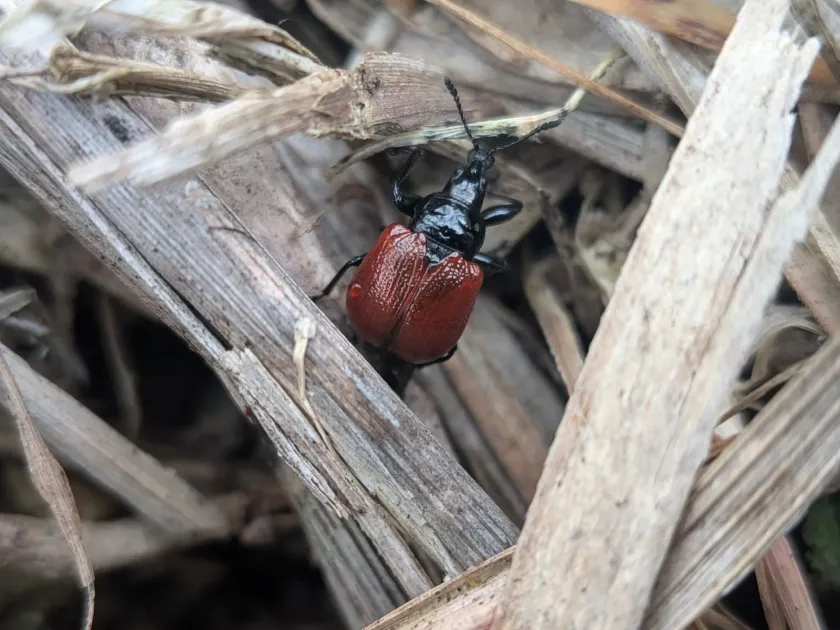
The adult beetle measures approximately 10–12 mm in length. It is distinguished by its elongated body and striking reddish-brown elytra, which contrast with the darker head and pronotum.
The head and thorax are generally dark brown or black, often exhibiting a slight metallic luster, which helps in differentiating this species from other similar carabids found in fields.
The larvae develop in the soil and are equipped with a well-developed chewing mouthpart system, allowing them to feed on plant tissues, including roots and subterranean stalks.
Adult beetles are nocturnal and tend to remain hidden under soil debris or within soil crevices during daylight hours to avoid heat and predation.
What it damages
This pest primarily targets cereal crops, including wheat, barley, and rye. It can cause significant economic losses by attacking the plants during various growth stages.
In addition to cultivated grains, Phialodes rufipennis feeds on various wild grass species, which serve as alternate hosts and breeding grounds when crops are not available.
Adult beetles damage the developing ears of grain crops, feeding on the kernels during the milk and dough stages, leading to a decrease in yield and grain quality.
The larvae are particularly dangerous to young plants, as they feed on seedlings and root systems, often causing stunted growth or complete loss of the plant in severe cases.
Outbreaks of this beetle can result in thinning of crop stands, requiring farmers to take immediate action to prevent further yield depletion.
When it appears
Adult activity begins in the spring when soil temperatures rise, signaling the end of hibernation and the start of the reproductive cycle for the beetles.
The highest population density is typically observed during the stem elongation and heading phases of cereals, when the beetles migrate into the fields.
During hot and dry summer weather, the activity of adults may temporarily decrease, but they continue to forage during the cooler night hours.
The larval development cycle is quite long and occurs largely within the soil profile, heavily dependent on soil moisture and ambient temperature conditions.
As autumn approaches, the beetles prepare for the winter, burrowing deeper into the soil or seeking shelter in nearby non-crop vegetation to survive the cold season.
Signs of infestation
The presence of Phialodes rufipennis is often first detected by characteristic chewing damage on the grain ears, which can be distinguished from other pests.
Observing the edges of fields near non-cultivated areas often reveals the initial migration patterns and concentration points of the beetle population.
Active monitoring at night using light traps or inspecting the soil surface can confirm the presence of adult beetles in the crop canopy.
Wilting seedlings and thin, patchy stands in the field during the spring months are common indicators of larval feeding activity on the root systems.
Regular field scouting and documentation of damaged plants are essential for identifying the extent of the infestation and timing necessary interventions.
Control measures
Crop rotation remains the most effective long-term strategy for reducing Phialodes rufipennis populations by disrupting the life cycle of the pest.
Deep autumn plowing is a critical mechanical control measure, as it exposes the soil-dwelling larvae and pupae to predators and adverse weather conditions.
Managing weed populations, particularly wild grasses around field perimeters, helps to eliminate secondary food sources and hiding spots for the beetles.
When infestation levels exceed economic thresholds, the application of registered insecticides is recommended to protect the crop during the most vulnerable development stages.
Consistent monitoring and early detection are vital for successful management, ensuring that control measures are applied at the right time to minimize crop loss.
Taxonomy
- Latin name
- Phialodes rufipennis
- Order
- Coleoptera (beetles)
- Family
- Attelabidae
- EPPO code
- PIADRU
Discussion
No discussions yet — be the first.