
Phialodes
Phialodes
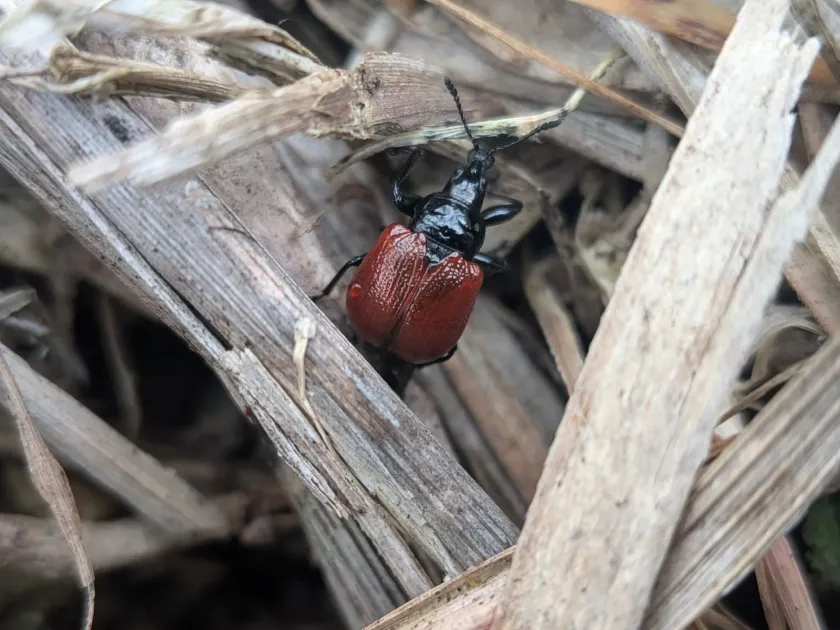
Description
How to identify
Phialodes is a genus of insects belonging to the order Coleoptera and the family Curculionidae (weevils). This is a specialized group of beetles, morphologically adapted to feeding on specific host plant species.
Adult beetles are characterized by an elongated snout, known as a rostrum. Their coloration usually ranges from dark brown to gray, providing excellent camouflage against tree bark or leaf surfaces in their natural habitat.
The biology of this genus follows the classic patterns of the Curculionidae family. It exhibits distinct sexual dimorphism, and its life cycle comprises four distinct stages: egg, larva, pupa, and adult (imago).
The larvae are typically legless and whitish in color, leading a cryptic life inside plant tissues. Pupation generally occurs within the soil or inside the damaged plant parts, providing a layer of protection against environmental stressors.
Unlike many generalist weevils, members of the genus Phialodes possess a high degree of host specificity, making them significant subjects for phytosanitary monitoring in their respective geographic ranges.
What it damages
Damage is inflicted by both adult beetles and larvae. Adults feed on vegetative plant organs, creating holes in leaves and stems, which reduces the total photosynthetic capacity of the host plant.
Larvae cause the most severe damage by tunneling through roots, stems, or fruits. This disruption of the vascular system prevents the flow of nutrients and water, eventually leading to the wilting and stunted growth of the plant.
The range of host plants includes various woody and herbaceous species, depending on the specific distribution of the Phialodes species. In some cases, they pose a serious threat to forestry and ornamental plants.
The severity of the infestation is often correlated with the population density. High numbers of the pest can lead to premature leaf drop, fruit deformation, and a significant decrease in the marketability of the crop.
Damaged plant tissues become highly susceptible to secondary infections, including fungal and bacterial pathogens that exploit the entry points created by the beetles' feeding activities.
When it appears
The life cycle of Phialodes is synchronized with the phenological phases of its host plants. Adult activity typically begins in early spring, coinciding with rising temperatures and the onset of sap flow and bud break.
Peak pest activity occurs during the first half of summer, which is the primary period for mating, oviposition, and larval development. It is during this timeframe that the pests are most visible in fields and orchards.
The development of a single generation may span several months. In favorable climatic conditions, Phialodes can produce one or more generations per year, depending on ambient temperatures.
Preparation for winter involves adult beetles or larvae migrating into the soil or sheltered crevices under bark, where they enter diapause until the following spring season.
Monitoring for the presence of the pest is conducted through regular field inspections during critical vegetative phases, starting from early leaf formation through to the maturation of the crop.
Signs of infestation
The first sign of infestation is the appearance of characteristic "window-pane" holes on leaves caused by adult feeding. During inspection, beetles can often be observed; they typically exhibit a defense mechanism of dropping to the ground and playing dead.
The presence of tunnels filled with frass (insect excrement) inside stems or branches is a clear indicator of larval infestation. Externally, this appears as swellings, distortions, or twisted growth of shoots.
If the root system is affected, the plant may show sudden wilting of specific branches or the entire plant, even when soil moisture is adequate. This is a classic symptom of damaged transport vessels.
In cases of mass reproduction, one may notice specific bud damage where buds fail to open or develop asymmetrically, which negatively impacts the potential harvest.
To confirm the presence of Phialodes, agronomists often use branch-shaking techniques over a white cloth or deploy pheromone traps to accurately assess the local population density.
Control measures
Agrotechnical measures include deep autumn plowing (tillage), which disrupts overwintering sites in the soil and reduces the larval population, as well as the removal and destruction of crop residues.
Practicing crop rotation is essential to break the feeding cycle of this host-specific pest, preventing the buildup of populations in a single field over successive growing seasons.
Chemical control involves the application of systemic and contact insecticides during the period of mass emergence of adults, aiming to eliminate them before the oviposition process begins.
Biological control methods, including the use of entomopathogenic fungi and nematodes, are effective in suppressing larval development within the soil without harming beneficial non-target organisms.
- Field spatial isolation.
- Regular phytosanitary monitoring.
- Application of bio-insecticides during the growing season.
- Removal of weed reservoirs.
Taxonomy
- Latin name
- Phialodes
- Order
- Coleoptera (beetles)
- Family
- Attelabidae
- EPPO code
- PIADSP
Discussion
No discussions yet — be the first.