
Black-necked weevil
Paracentrocorynus nigricollis
Description
How to identify
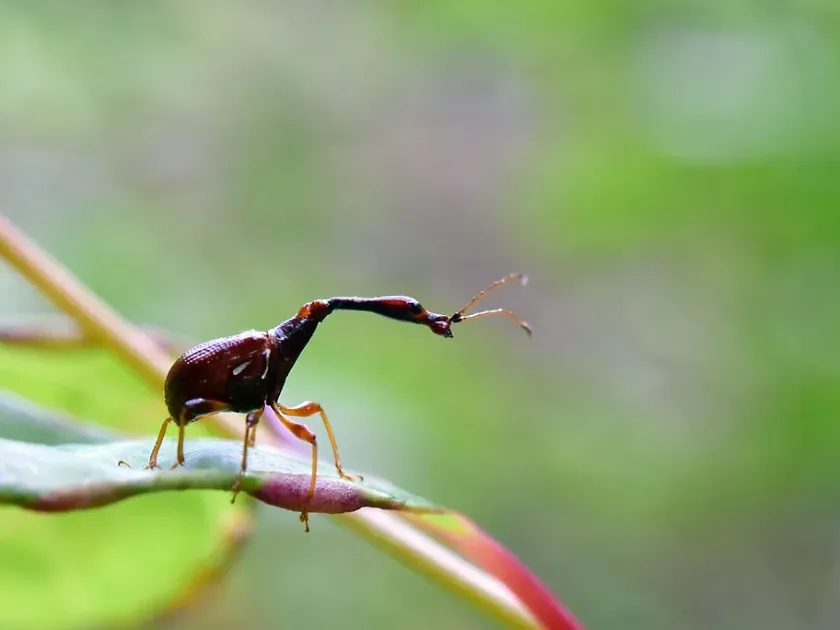
The black-necked weevil (Paracentrocorynus nigricollis) belongs to the family Rhynchitidae (leaf-rolling weevils), order Coleoptera. It is a small beetle characterized by a distinct, elongated snout or rostrum.
The adult insect is typically dark blue or black with a metallic sheen, allowing it to blend into the foliage of host plants. The average length of the adult is between 5 and 7 millimeters, making them difficult to spot without close inspection.
The larvae are white, legless, and have a curved, C-shaped body. They are exclusively found inside the rolled-up leaves created by the female, which serve as their primary food source and shelter during development.
The life cycle involves complete metamorphosis, consisting of egg, larva, pupa, and adult stages. The insect is highly specialized and its lifecycle is strictly synchronized with the phenology of its host plant, specifically the grapevine.
Adult beetles are capable of flight, which enables them to rapidly infest surrounding vineyard areas once they emerge in the spring.
What it damages
The black-necked weevil primarily targets grapevines, causing damage to both buds and leaves. Adult weevils feed on developing buds, often destroying them before they fully open.
As the season progresses, the weevils shift their feeding to the leaves. The most characteristic damage occurs when females roll the leaves into tight, cigar-like structures to protect their larvae.
The larvae consume the leaf tissue from within the rolled structure, leading to necrosis and premature leaf drop. This reduction in the leaf canopy severely hampers the plant's photosynthetic capacity.
In cases of heavy infestation, the cumulative damage to the foliage can weaken the vine, making it more susceptible to environmental stress, winter damage, and secondary fungal infections.
Yield reduction is a direct consequence, as the vine struggles to accumulate the necessary sugars in the berries due to the damaged leaf apparatus.
When it appears
The emergence of adult weevils begins in early spring as temperatures rise, typically coinciding with the bud-break stage of the grapevine. The peak activity period usually occurs in May and June.
During these months, females are most active in rolling leaves to deposit eggs. The developmental period of the larvae lasts until mid-summer, after which the adults gradually disappear.
Pupation takes place in the soil beneath the host plants, where the insect remains until the transformation into the adult stage is complete, or it may enter a state of dormancy until the following season.
Adults overwinter in the upper soil layers or under debris, showing high resilience to cold temperatures. Their ability to hibernate allows them to survive until the next growing season.
Understanding these seasonal patterns is essential for planning chemical or mechanical interventions at the most vulnerable stage of the pest's lifecycle.
Signs of infestation
The most diagnostic sign of an infestation is the presence of tightly rolled leaves, commonly referred to as "cigars," hanging on the vines or lying on the ground beneath them.
Close inspection of the leaves often reveals small, circular feeding holes caused by the adults. If buds are attacked early, they will show localized browning and signs of irregular feeding pits.
In infested areas, a noticeable reduction in the density of the green canopy can be observed. The withered, brown, and rolled leaves are very distinct against the healthy green backdrop of the vineyard.
To confirm presence, one can gently shake the vine over a white collection tray in the early morning; the beetles, which are lethargic at this time, will often drop off the vine.
Finding the larvae inside the rolled leaves provides definitive confirmation of the pest and justifies the need for control measures.
Control measures
Cultural control is highly effective: growers should regularly collect and destroy fallen leaves and plant debris to remove overwintering sites for the weevils.
Autumn tillage (deep plowing of inter-rows) helps destroy pupae and adults residing in the soil, effectively reducing the population for the following spring.
Chemical control involves the application of appropriate contact or systemic insecticides during the bud-break phase, specifically targeting adults before they begin the egg-laying and leaf-rolling process.
Mechanical control, such as hand-picking and destroying the rolled leaves, is a practical and environmentally friendly approach for small-scale vineyards or garden settings.
Encouraging the presence of natural predators, such as predatory beetles and insectivorous birds, is a key component of an Integrated Pest Management (IPM) program to keep populations below economic injury levels.
Taxonomy
- Latin name
- Paracentrocorynus nigricollis
- Order
- Coleoptera (beetles)
- Family
- Attelabidae
- EPPO code
- PCENNI
Discussion
No discussions yet — be the first.