
Bronze rhynchitid
Neocoenorrhinus minutus
Description
How to identify
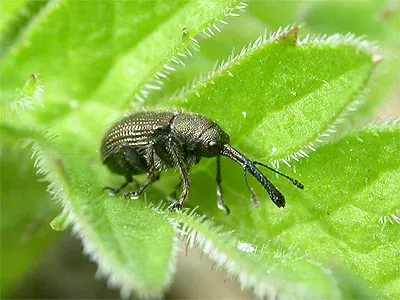
The bronze rhynchitid (Neocoenorrhinus minutus) is a small beetle belonging to the Rhynchitidae family within the order Coleoptera. Adult beetles are typically 2.5 to 3.5 mm in length and display a distinct metallic bronze or greenish sheen.
The body is covered in fine, short hairs, giving it a somewhat matte appearance depending on the angle of light. The head features a prominent, elongated rostrum (snout), which is slightly shorter and thicker in males than in females.
Larvae are legless, C-shaped, and creamy white with a brownish head capsule. They are exclusively internal feeders, developing inside buds, flowers, or developing fruit, which makes them difficult to monitor.
Adults are capable of strong flight, enabling them to spread rapidly throughout an orchard. They are most active during the warmer parts of the day when the temperature is favourable for movement.
The species overwinters primarily as adult beetles. They seek shelter in the upper layers of soil or under debris, emerging in early spring as temperatures rise above 8–10°C.
What it damages
This beetle is a serious pest of pome and stone fruits, specifically targeting apple, pear, plum, and cherry trees. The damage occurs during different stages of the tree’s development.
Early spring activity involves feeding on developing buds, where beetles chew deep holes. This often destroys the flower buds entirely, leading to a significant loss of potential fruit yield.
During the blossom stage, adults feed on floral parts, including stamens and pistils, preventing pollination. This leads to flower abortion and early fruit drop before development begins.
Once fruitlets are formed, females lay eggs inside the small fruit. They often girdle or bite the fruit stalk, causing the fruitlet to drop prematurely to the ground.
Once the fruitlet is on the ground, the larvae finish their development inside, feeding on the decaying tissue. This cycle perpetuates high pest pressure in the following year if sanitation is neglected.
When it appears
Emergence from overwintering sites typically begins at the green bud stage of fruit trees. This initial feeding is the most critical time for monitoring and early control measures.
The peak period of adult activity coincides with the flowering stage. During this time, the beetles are highly mobile and mate, followed by an intensive period of egg-laying on the young fruitlets.
After the fruitlet drop phase in early summer, the lifecycle becomes largely subterranean or hidden within fruit debris on the orchard floor, where larvae develop into the next generation.
The new generation of adults usually emerges in late summer to early autumn. These beetles feed for a short time on leaves before searching for hibernation sites to survive the winter.
Understanding these phenological stages is crucial, as control measures applied during the wrong period will result in ineffective suppression of the population.
Signs of infestation
The first sign of infestation in spring is the presence of small, puncture-like holes in buds. These wounds may exude sap, which can darken as it oxidizes in the air.
Leaf damage appears as a series of small, irregular holes or 'shot-holes' in the leaf blades. In cases of high infestation, this can cause leaf curling or premature drying of leaf margins.
The most alarming sign is the sudden drop of young fruitlets in June. If these dropped fruits are inspected, one can often find small entry holes and internal feeding channels created by the larvae.
Wilting of the fruit stalk shortly after flowering often indicates that a female beetle has damaged the stalk during or after oviposition, ensuring the fruit drops for larval development.
- Punctured buds and shoots in early spring.
- Ragged or 'shot-holed' leaf appearance.
- Premature fruit drop of small fruitlets.
- Internal tunnels in fallen orchard fruit.
Control measures
Sanitation is the cornerstone of control. Regularly collecting and disposing of fallen fruit prevents larvae from completing their development and reduces the population for the next season.
Cultivating the soil beneath the canopy in late summer or autumn disrupts the life cycle by bringing overwintering adults or pupae to the surface, exposing them to predators and cold.
If economic thresholds are exceeded, chemical control using systemic or contact insecticides may be necessary. Applications should be timed for the pre-blossom or post-blossom periods.
Monitoring using sticky traps or manual jarring of branches onto a collection sheet can help growers assess the population density and determine the necessity of insecticide applications.
Promoting a healthy orchard ecosystem by encouraging natural predators such as birds and ground beetles can provide supplemental control, although this is rarely sufficient as a stand-alone measure.
Taxonomy
- Latin name
- Neocoenorrhinus minutus
- Order
- Coleoptera (beetles)
- Family
- Attelabidae
- EPPO code
- COENAE
Discussion
No discussions yet — be the first.