
Neocoenorrhinus interpunctatus
Neocoenorrhinus interpunctatus
Description
How to identify
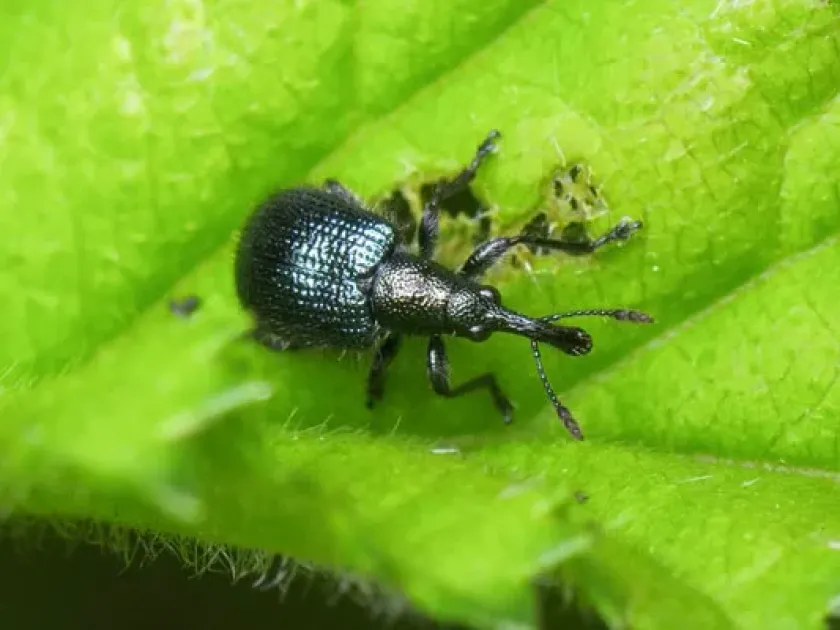
Neocoenorrhinus interpunctatus is a small beetle belonging to the family Rhynchitidae (often referred to as leaf-rolling weevils) in the order Coleoptera. Adult beetles are characterized by a distinct metallic sheen, typically bronze-green or bluish, and a punctated surface on their elytra.
The insect measures approximately 3–4 mm in length and possesses a typical elongated snout. The larvae are legless, curved, and white in color, living primarily inside the plant tissues, which provides them with protection from environmental factors and predators.
What it damages
This pest mainly targets pome and stone fruit trees, including apples, pears, plums, and cherries. It is considered a significant pest in commercial and home orchards due to its early-season activity.
Both adults and larvae cause damage, but adults are particularly destructive during the early spring by feeding on swelling buds. By boring into the buds, they destroy the generative structures, leading to significant yield losses before the tree even begins to blossom.
When it appears
The pest overwinters as an adult in the soil or under debris around the base of the trees. Activity begins as soon as spring temperatures rise, typically coinciding with the initial sap flow in host trees.
The lifecycle is closely synchronized with the budburst phase of fruit trees. Adults emerge, mate, and begin feeding on developing buds, after which females lay eggs, and the resulting larvae continue to feed on plant tissues through the early summer.
Signs of infestation
Evidence of infestation is usually found in the spring. Damaged buds appear hollowed out or shriveled, often failing to open or producing stunted foliage if they survive at all.
- Exudation of sap from feeding punctures on the buds.
- Premature dropping of fruit set and undeveloped flower buds.
- Wilting of young shoots and stems due to larval damage.
- Presence of beetles on twigs, often dropping to the ground when disturbed.
Control measures
Cultural control is a cornerstone of management, involving soil cultivation under tree canopies in autumn and spring to destroy overwintering sites. Cleaning up orchard debris is also essential to reduce the local population.
Chemical control should be timed strictly with the phenological stage of the trees, particularly targeting the 'green tip' stage of buds. Using systemic or contact insecticides can effectively manage the adult population before they can lay eggs or cause severe damage.
Taxonomy
- Latin name
- Neocoenorrhinus interpunctatus
- Order
- Coleoptera (beetles)
- Family
- Attelabidae
- EPPO code
- COENIN
Discussion
No discussions yet — be the first.