
Pear fruit weevil
Neocoenorrhinus germanicus
Description
How to identify
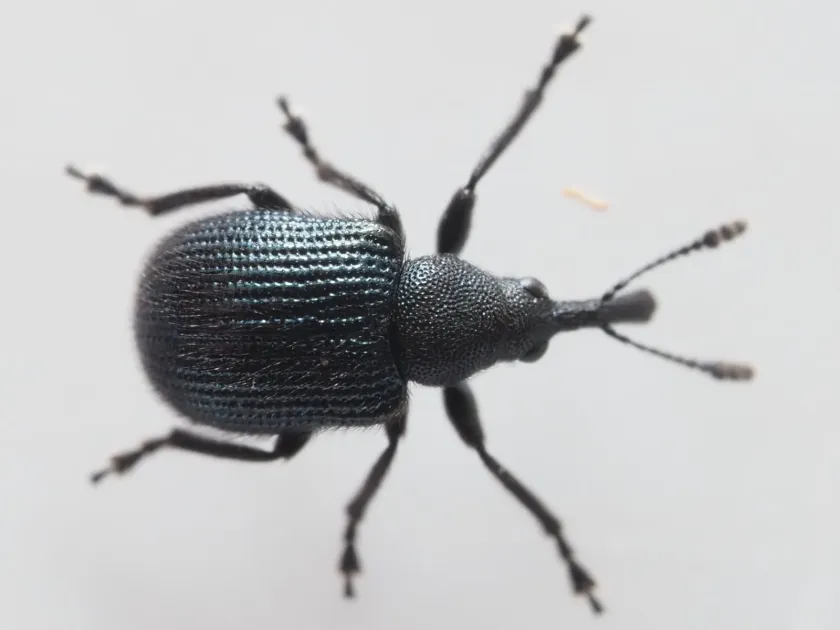
The pear fruit weevil (Neocoenorrhinus germanicus) is a small beetle belonging to the Attelabidae family. Adult beetles measure between 2.5 and 3 mm in length and are distinguished by a metallic blue or greenish coloration with a golden sheen.
They possess a long rostrum (snout), which is characteristic of the weevil group and is used for feeding on plant tissues and oviposition. The body is covered with sparse hairs, making them look somewhat textured under close inspection.
The larvae are legless, white-colored with a brown head, living inside plant tissues. This hidden development makes them challenging to detect until symptoms of wilting appear on the host plant.
Adults overwinter in the soil under the trees or in leaf litter. As soon as temperatures rise in the spring, they emerge and migrate to the tree canopy to begin their feeding cycle and reproduction.
The species is widespread in temperate climates and can be particularly destructive in neglected orchards. Monitoring populations early in the season is vital for maintaining orchard health.
What it damages
The pear fruit weevil primarily attacks pomaceous fruits, including apples, pears, quinces, and several stone fruit species. They cause significant damage by feeding on buds, young leaves, blossoms, and developing fruitlets.
Early in the spring, beetles bore deep holes into the buds, which prevents normal development and leads to premature bud death. This significantly reduces the potential fruit crop.
Females lay eggs in the petioles of leaves or in young shoots. By cutting into these parts, they cause the leaves to wilt and dry out, effectively stunting the growth of affected branches.
Larvae develop within the fallen leaves or fruit tissues, which facilitates the continuation of the pest's life cycle. Their presence also creates entry points for various fungal and bacterial infections.
Severe infestations can lead to a drastic reduction in harvest, as the damaged buds and blossoms simply fail to set fruit. Protecting the canopy during the pre-blossom stage is therefore critical.
Signs of infestation
The first signs of infestation are tiny, needle-like holes on the expanding buds. These holes often weep plant sap, which later darkens, indicating feeding activity by the adults.
Wilting of leaves, particularly those with damaged petioles, is a key indicator of the presence of the pest. These leaves eventually turn brown and fall off much earlier than they should.
Beetles can be detected by shaking branches over a white sheet during the early morning hours, when they are less active and prone to dropping from the twigs.
Dropping of young fruitlets that display tiny puncture marks is a clear symptom of weevil activity. These fruitlets are typically discarded by the tree as a stress response to the damage.
The presence of dried, curled leaves on the ground in late spring suggests that the larvae have completed their development and may have already exited the plant tissues.
Control measures
Effective management requires an integrated approach that combines cultural practices with chemical interventions. Timing the application of pesticides to the early bud-burst stage is essential.
- Application of insecticides such as pyrethroids or organophosphates during the pre-blossom period.
- Consistent removal and destruction of fallen leaves and fruitlets to interrupt the larval life cycle.
- Autumn soil cultivation under tree canopies to disrupt the overwintering sites of the adult beetles.
- Mechanical collection of beetles by shaking them off onto tarps during cool morning weather.
- Sanitary pruning of heavily damaged shoots to reduce the overall population pressure in the orchard.
Taxonomy
- Latin name
- Neocoenorrhinus germanicus
- Order
- Coleoptera (beetles)
- Family
- Attelabidae
- EPPO code
- COENGE
Discussion
No discussions yet — be the first.