
Apple fruit weevil
Neocoenorrhinus
Description
How to identify
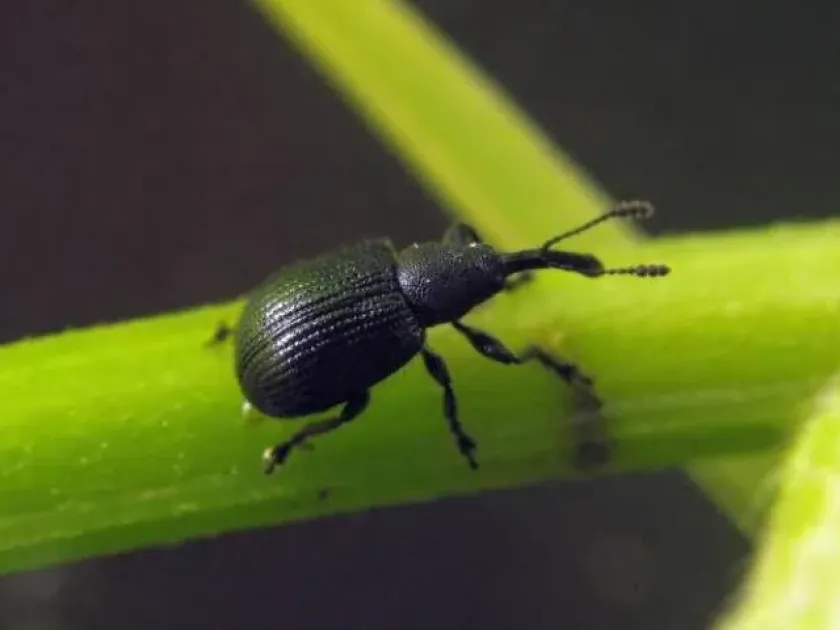
The apple fruit weevil, scientifically known as Neocoenorrhinus, is a small beetle belonging to the Attelabidae family. Adult beetles typically measure between 2.5 and 3 mm in length and possess a brilliant metallic blue, green, or bronze coloration.
The defining feature of this insect is its elongated snout, or rostrum, which is characteristic of the weevil group. The body is covered with sparse hairs, and the elytra display distinct, regular rows of punctures, making the insect identifiable under close inspection.
The larvae are legless, C-shaped, and creamy-white in appearance. They have a well-developed brown head capsule and strong mandibles, which are essential for feeding on the tissues of buds, leaves, and developing fruit.
Pupation occurs in the soil, usually at a depth of up to 15 centimeters. The pupa is free and pale-colored, remaining in the soil until it transforms into an adult beetle, which waits for the appropriate environmental conditions to emerge.
Adult beetles overwinter in the soil or beneath leaf litter. They become active in the early spring as soon as ambient temperatures rise, signaling the start of their migration into the crowns of fruit trees.
What it damages
This weevil primarily targets pome and stone fruits, including apple, pear, plum, cherry, and apricot trees. It is considered a significant threat to orchards due to the damage it causes to reproductive organs.
In early spring, the adult beetles feed on unopened buds, boring into them and causing them to dry out. This damage often results in the weeping of sap or gum from the buds, which is a classic symptom of infestation.
As the season progresses, the weevils attack young leaves, creating small, irregular holes. They also feed on flower stalks, causing the flowers to wilt and drop prematurely, which significantly reduces the potential fruit yield.
The larvae develop inside fallen leaves or damaged fruits, feeding on the fleshy interior. When present in high numbers, they can cause extensive damage to the crop, leading to fruit drop and poor development of remaining fruit.
Damage to the developing fruit often results in deformities or decay, making the produce unmarketable. The cumulative effect of these injuries weakens the tree and makes it more susceptible to environmental stress.
When it appears
The damage cycle begins in early spring when ground temperatures reach approximately 8–10 degrees Celsius. The weevils emerge from their wintering sites and move to the branches as the buds begin to swell.
The most active period for adult feeding and mating coincides with the flowering phase of the trees. During this time, the beetles are highly visible and are actively damaging flower buds and young foliage.
Egg-laying begins shortly after the flowering period concludes. Females create small punctures in young fruit or leaf stalks to deposit their eggs, a process that can continue for several weeks depending on the local climate.
The larval stage lasts throughout the summer. Once the larvae finish feeding in the fallen plant material, they burrow into the soil to pupate, eventually developing into the next generation of adult beetles.
By late summer or early autumn, the new generation of adults is fully formed. Unlike some other pests, they do not emerge to feed, but instead remain in the soil to undergo winter diapause until the following spring.
Signs of infestation
One of the most apparent signs of an infestation is the appearance of sticky sap droplets on unopened buds, often referred to as "weeping buds." This indicates internal tissue damage caused by the weevil's snout.
Small, circular holes appearing in the young leaves shortly after they emerge are another key indicator. The foliage may appear perforated, as if peppered with small-caliber shot, which is typical for weevil activity.
The premature wilting and dropping of flower buds, caused by the cutting of flower stalks by the females during egg-laying, is a major sign that indicates a significant loss of potential yield.
Small, dark spots on developing fruit are common where the female has created a chamber for an egg. As the fruit grows, these spots may turn into depressions or areas of localized decay.
Detecting the adult beetles is possible by placing a white sheet under the tree branches and shaking them, especially during the early morning hours when the insects are less mobile due to cooler temperatures.
Control measures
Sanitation is a cornerstone of control: gathering and removing fallen fruit and leaves from the orchard floor prevents the larvae from completing their development and reduces the population for the next season.
Cultivating the soil beneath the trees in autumn and early spring helps to disrupt the life cycle, exposing overwintering adults and pupae to predators and adverse weather conditions, which leads to higher mortality.
Chemical control, specifically the use of systemic or contact insecticides, is most effective when applied at the bud-swelling stage and immediately after the flowering period ends to catch the adults before they lay eggs.
Mechanical removal by shaking the trees over a collection surface is a viable non-chemical strategy for smaller orchards, provided it is performed during the cooler morning hours when the beetles are sluggish.
- Application of sticky bands to trap ascending beetles on the tree trunks.
- Pruning and destroying severely damaged shoots and flower clusters.
- Encouraging natural predators such as birds and parasitic wasps in the orchard.
- Maintaining tree vigor through proper fertilization and irrigation to improve tolerance to injury.
Taxonomy
- Latin name
- Neocoenorrhinus
- Order
- Coleoptera (beetles)
- Family
- Attelabidae
- EPPO code
- NCOESP
Discussion
No discussions yet — be the first.