
Wickham's weevil
Merhynchites wickhami
Description
How to identify
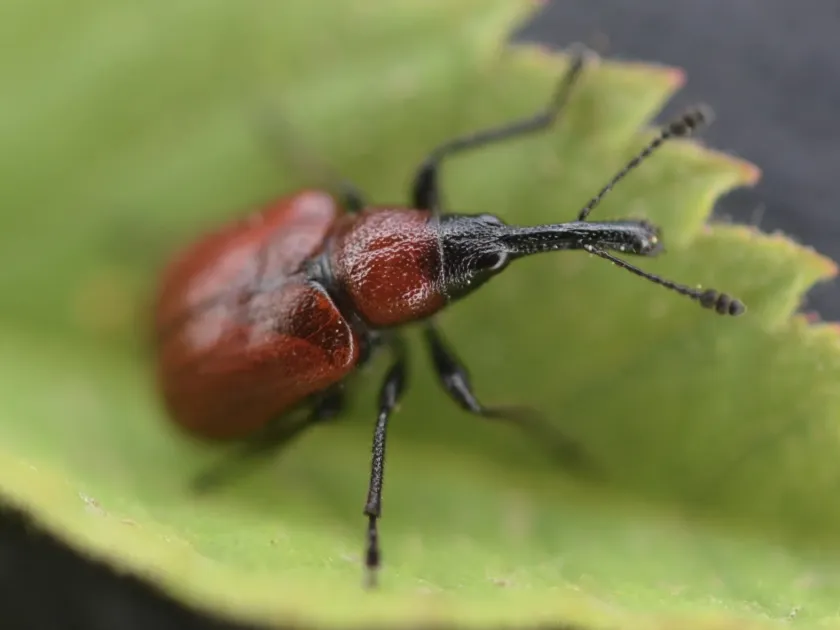
Wickham's weevil (Merhynchites wickhami) belongs to the Rhynchitidae family within the order Coleoptera. This small beetle is easily recognized by its elongated rostrum (snout) which is typical for the weevil superfamily.
The adults are characterized by a metallic sheen, usually in shades of bronze, green, or blue. Their bodies are stout and covered with fine, sometimes sparse, hairs that aid in their identification under magnification.
Larvae of this species are legless, curved grubs, typically white or yellowish in color with a darker head capsule. They spend their entire developmental phase inside plant tissues, making detection difficult.
The life cycle is tightly synchronized with the host plant's growth stages. Overwintering occurs as adults or prepupae in the soil or leaf litter, emerging when temperatures rise in early spring.
Understanding their behavior is crucial, as they are highly host-specific, primarily targeting members of the Rosaceae family in orchard and nursery environments.
What it damages
The primary hosts for Wickham's weevil include common fruit trees such as apples, pears, plums, and cherries. Both adults and larvae contribute to significant economic losses.
Adult beetles feed on emerging buds, young leaves, and shoots, causing physical damage that stunts the growth of the tree and reduces its overall vigor during the critical spring season.
The most severe damage occurs when females oviposit into developing fruitlets. The hatching larvae consume the internal pulp, leading to fruit deformation and premature fruit drop.
In cases of high infestation, the pest can decimate a significant portion of the harvest, rendering the remaining fruit commercially unviable or prone to secondary rot.
Feeding sites serve as entry points for various pathogens, potentially leading to additional fungal or bacterial infections in the damaged areas of the tree canopy.
Signs of infestation
Key indicators of an infestation include the presence of small, characteristic feeding punctures on young leaves and buds observed in the early spring months.
Deformed, shriveled, or prematurely dropped fruitlets found beneath the tree canopy are classic signs that larvae are active within the orchard.
By dissecting dropped fruit, growers may find the larvae or the tunnel systems created by them, which confirms the presence of the pest population.
During the early morning hours, adults can often be found on the foliage; they exhibit a "death-feigning" behavior when disturbed, falling to the ground to escape notice.
Sparse foliage or stunted growth on certain branches may indicate repeated feeding activity by the adults over the course of the growing season.
Control measures
Cultural practices are paramount, specifically the diligent collection and disposal of fallen fruit, which effectively breaks the life cycle by removing larvae before they reach the soil.
Tilling the soil beneath the trees in autumn and early spring disrupts the overwintering sites, exposing larvae and pupae to predators and adverse weather conditions.
The use of sticky barriers applied to tree trunks can help capture climbing adults, preventing them from reaching the susceptible buds and developing fruit in the canopy.
When chemical intervention is necessary, targeted application of appropriate insecticides during the pre-bloom or post-bloom stages can manage population levels while protecting beneficial insects.
Integrating biological control methods, such as encouraging natural bird predators and using microbial agents, can provide a sustainable way to keep populations below the economic injury level.
Taxonomy
- Latin name
- Merhynchites wickhami
- Order
- Coleoptera (beetles)
- Family
- Attelabidae
- EPPO code
- MERHWI
Discussion
No discussions yet — be the first.