
Rose curculio
Merhynchites bicolor
Description
How to identify
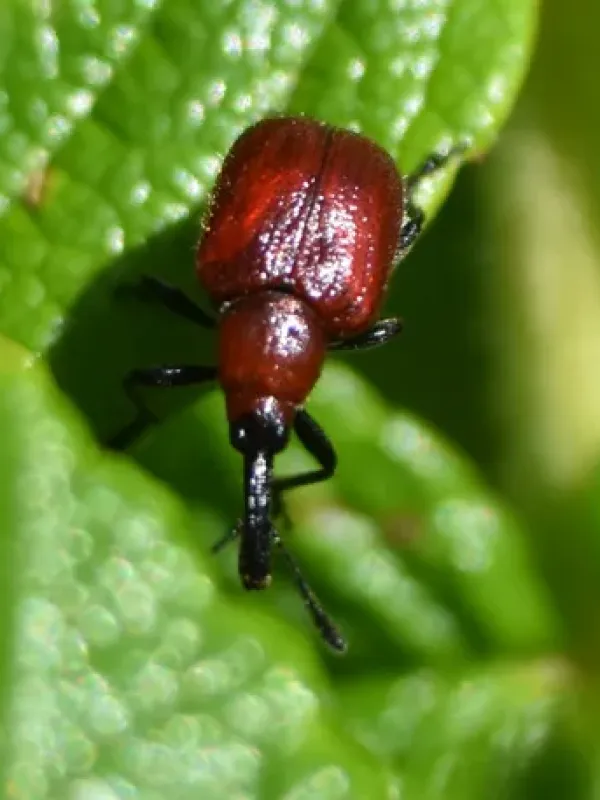
The rose curculio (Merhynchites bicolor) is a weevil species belonging to the Attelabidae family within the order Coleoptera. Adult beetles are easily recognized by their elongated snout and vibrant coloration, typically ranging from bright red to metallic green.
Measuring between 5 to 7 millimeters in length, these beetles have a compact and rigid body structure. When disturbed, they exhibit a characteristic behavior of folding their legs and dropping to the ground, feigning death to escape predators.
The larvae are typically C-shaped, creamy white with a dark, hardened head capsule. They spend their entire developmental cycle inside the plant tissues, which provides them with a stable food source and protection from many external predators.
This species typically completes one generation per year. Adult beetles overwinter in the soil or under layers of leaf litter, emerging in the spring as temperatures rise to begin their reproductive cycle.
Females display highly specialized behavior by inserting their snouts into developing buds or stems to create a cavity for egg-laying. This ensures that the offspring are perfectly positioned to feed on the most nutrient-rich parts of the plant immediately after hatching.
What it damages
Rose curculios primarily target plants within the Rosaceae family, causing significant aesthetic and structural damage. Their favorite hosts include garden roses, wild roses (Rosa rugosa), and occasionally various berry-producing shrubs.
Adult beetles feed on both foliage and buds. Foliage feeding results in small, irregular holes, while bud feeding can be much more devastating, often preventing the flower from opening completely or causing it to deform.
Larval feeding is particularly destructive as it occurs internally. As the larvae tunnel through the developing buds and stems, they disrupt the transport of nutrients and water, causing the buds to wilt, turn black, and die.
In cases of heavy infestations, the rose curculio can destroy a vast majority of the flower buds on a single plant, leading to a complete failure of the expected blooming season and stressing the overall plant health.
The wounds created by both adult feeding and egg-laying serve as entry points for various pathogens. This secondary infection often leads to mold or bacterial rot within the buds, further exacerbating the damage caused by the insects themselves.
Signs of infestation
The first sign of an infestation is the appearance of numerous pin-sized holes on the emerging leaves in early spring. This indicates that adult beetles are actively feeding on the foliage.
A more critical indicator is the presence of drooping or withered buds that appear burnt or blackened. These symptoms are tell-tale signs that larvae are active inside the plant's reproductive structures.
If an infested bud is opened, one might find the white, C-shaped larva feeding among the damaged petals. The interior of the bud usually shows signs of decay, excrement, and dark, necrotic tissue.
During the early morning, adults can be found resting on the underside of leaves or deep within the rose petals. They are relatively easy to spot if you examine the plant closely during these cooler hours.
A sudden, widespread drop of unopened buds from the rose bush is a clear red flag. This indicates that a significant population of the curculio is present and requires immediate management to save the remaining flowers.
Control measures
Cultural management is the first line of defense. Gardeners should prioritize the removal and destruction of all infested buds as soon as they are spotted to break the life cycle of the pest and prevent future generations.
Sanitation practices such as raking and removing leaf litter from under the rose bushes during late autumn are crucial. This eliminates the primary overwintering sites for the adult beetles.
For chemical control, systemic insecticides are effective if applied before the buds open. It is essential to time these applications carefully to avoid harming beneficial pollinators visiting the blooming roses.
Mechanical removal is a practical strategy for smaller gardens. By placing a cloth beneath the bush and gently shaking the stems early in the morning, the beetles will drop and can be gathered and destroyed.
- Regular inspection of buds throughout the growing season.
- Applying entomopathogenic nematodes to the soil to target larvae.
- Using row covers early in the spring to exclude adult beetles.
- Maintaining healthy plant nutrition to promote faster recovery.
Taxonomy
- Latin name
- Merhynchites bicolor
- Order
- Coleoptera (beetles)
- Family
- Attelabidae
- EPPO code
- MERHBI
Discussion
No discussions yet — be the first.