
Oak leaf roller weevil
Lasiorhynchites cavifrons
Description
How to identify
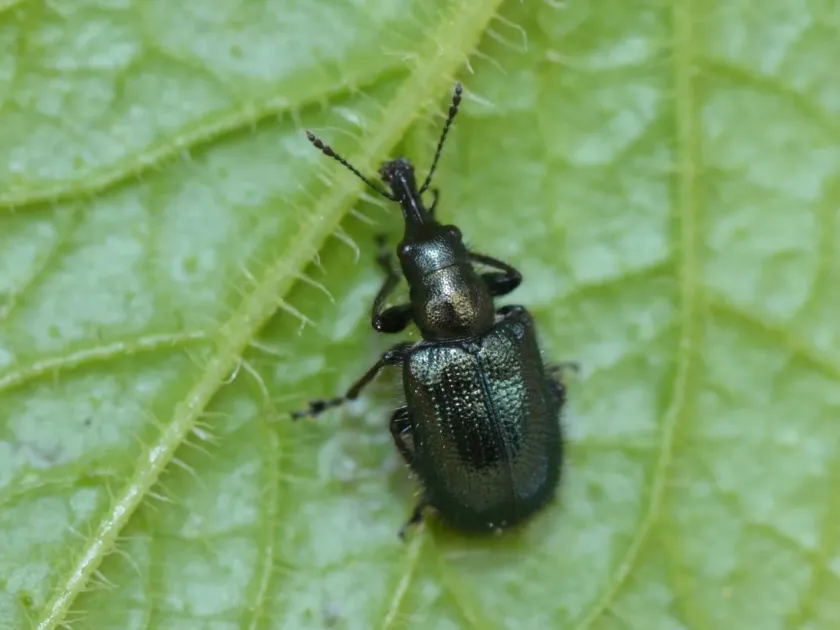
The Oak leaf roller weevil (Lasiorhynchites cavifrons) is a small beetle belonging to the Attelabidae family, commonly known as leaf-rolling weevils.
The adult beetle typically measures 4–6 millimeters in length and exhibits a vibrant metallic color, ranging from golden-green to a rich copper-bronze.
The head is elongated into a characteristic snout (rostrum), which is a diagnostic feature used for both feeding and the manipulation of leaves during the egg-laying process.
The larvae are small, C-shaped, legless grubs with a firm, brown head capsule, specialized for living within the restricted environment of a rolled leaf.
They are distinct from other weevils due to their specific behavior of severing leaf petioles and rolling leaves into tight, cylindrical structures.
What it damages
While originally associated with oak trees, this pest frequently targets fruit-bearing trees such as apples, pears, plums, and various stone fruits.
Adult beetles inflict damage by feeding on budding flowers, tender young shoots, and developing fruitlets, causing punctures and growth deformities.
The most significant impact comes from the larvae, which consume the internal tissues of the rolled leaves, leading to the withering and premature abscission of the foliage.
Heavy infestations reduce the overall photosynthetic capacity of the tree, potentially resulting in reduced fruit size and weakened tree vigor.
Furthermore, the physical damage to shoots and buds can disrupt the normal development of the canopy, impacting the overall health of the orchard.
When it appears
Activity begins in early spring, synchronized with the onset of bud break and rising temperatures, as adults emerge from overwintering sites.
The most critical window for infestation occurs during the flowering and fruit-set stages, as females actively seek fresh foliage for egg-laying.
The process of creating leaf rolls involves cutting the petiole, causing the leaf to wilt slightly, which makes it easier to roll and seal with silk or sticky secretions.
Larval development typically takes several weeks within the leaf rolls, during which the rolls often drop to the ground before the larvae exit to pupate.
While a second generation may appear later in the summer, the spring damage to reproductive organs and young leaves is the most economically significant.
Signs of infestation
The most prominent sign of infestation is the presence of neatly rolled, cylindrical leaf structures hanging from the tips of young branches.
Evidence of feeding can be seen on buds and small fruitlets as small, round holes or larger crater-like marks that eventually turn into corky scars.
Premature wilting and browning of leaf tips, accompanied by sudden drooping, are strong indicators that the petiole has been severed by a female weevil.
Accumulation of fallen leaf rolls beneath the canopy is a clear indicator of a current infestation and the presence of developing larvae.
In cases of severe infestation, one might observe a decrease in fruit quality, characterized by deformation and stunted development due to early-season damage.
Control measures
Sanitation is a primary control method; manually gathering and destroying fallen leaf rolls prevents the larvae from completing their development and pupating in the soil.
Early-morning canopy shaking, where beetles are dislodged onto sheets, can be an effective non-chemical technique during the adult emergence phase.
Chemical control with systemic or contact insecticides is recommended only when thresholds are exceeded, typically during the pre-blossom or post-blossom periods.
Cultivating the soil beneath the canopy in late autumn helps disrupt the overwintering cycle by exposing pupae and adults to harsh winter conditions and predators.
Encouraging natural predators and utilizing biopesticides where appropriate can help maintain the population below economically damaging levels without harming beneficial insects.
Taxonomy
- Latin name
- Lasiorhynchites cavifrons
- Order
- Coleoptera (beetles)
- Family
- Attelabidae
- EPPO code
- LASRCA
Discussion
No discussions yet — be the first.