
Blue-headed weevil
Lasiorhynchites caeruleocephalus
Description
How to identify
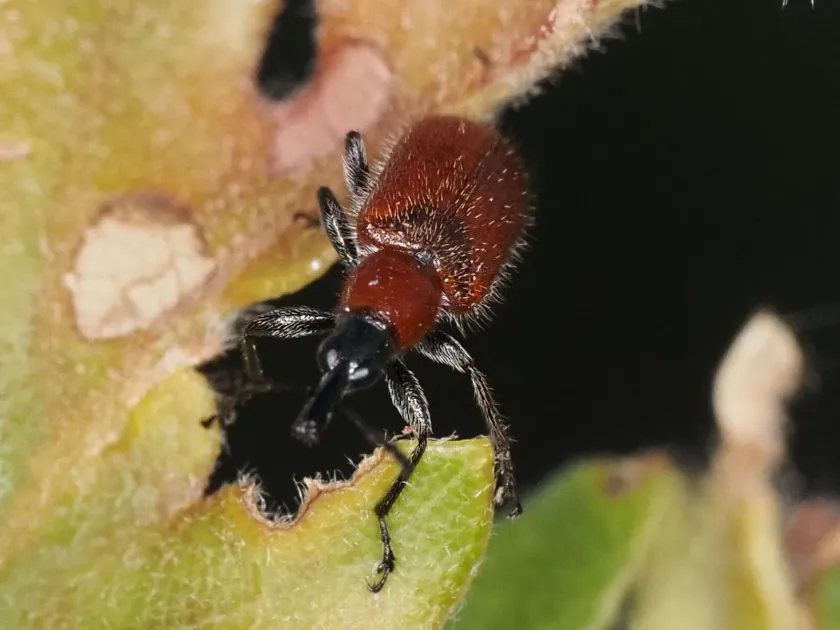
The blue-headed weevil (Lasiorhynchites caeruleocephalus) is a beetle belonging to the family Attelabidae, order Coleoptera. The adult insect is characterized by a metallic blue or greenish-blue head and pronotum, while the elytra are usually bronze or copper-green.
The body length is typically between 4 and 6 mm. The beetle is covered with fine hairs, and females possess a prolonged rostrum, which is essential for piercing plant tissues and rolling leaves into cigar-shaped structures.
The larvae of this species are legless, C-shaped, and creamy-white in color with a brown head capsule. They develop exclusively within the rolled leaf structures created by the female.
Pupation occurs in the topsoil layer, where the pest also overwinters as an adult beetle under plant debris or in the soil near the base of the host tree.
It is widely distributed across temperate regions and is considered a specialized pest that can significantly affect the health of fruit trees if left unmanaged.
What it damages
This pest targets various deciduous fruit trees, particularly those within the Rosaceae family, including apple, pear, plum, cherry, apricot, and peach trees.
In early spring, adult weevils feed on budding leaves and flower buds, chewing holes into them. This activity weakens the tree and reduces the potential yield early in the season.
The most notable damage occurs during the leaf-rolling phase, where females create cylindrical structures from leaves to lay their eggs. The larvae then feed on these tissues, causing the rolled leaves to die.
Mass infestations can lead to severe defoliation, which impairs the tree's photosynthetic capacity and negatively impacts the formation of buds for the following year.
By interfering with the tree's physiological processes, the blue-headed weevil reduces overall tree vigor, making them more susceptible to environmental stressors and other pests.
When it appears
Adult weevils emerge from their overwintering sites in the soil during early spring, coinciding with the bud-break phase of fruit trees, usually in April.
Activity peaks during the flowering period, when the adults feed extensively on the foliage and engage in mating rituals before beginning the oviposition process.
The formation of leaf rolls is most intense during late spring and early summer, primarily in May and June. During this time, the pest is most visible within the orchard canopy.
Larval development takes place inside the leaf rolls over several weeks, after which the larvae drop to the ground to pupate in the soil.
The life cycle concludes with the emergence of the next generation, which feeds briefly before entering dormancy to overwinter in the soil or under leaf litter.
Signs of infestation
Early symptoms include small, punctured holes on young developing leaves and damaged buds that fail to open or appear desiccated early in the spring.
The most diagnostic sign is the presence of tightly rolled leaves, commonly referred to as "leaf cigars," which may hang from branches or litter the ground underneath the tree.
Dissecting these leaf rolls reveals the presence of larvae or evidence of feeding damage, such as necrotic spots and tunnels within the leaf layers.
In cases of heavy infestation, the tree canopy may appear sparse or show patches of yellowing and premature leaf senescence during mid-summer.
- Punctured buds and foliage.
- Cigar-shaped leaf rolls in the canopy.
- Larvae found inside rolled leaf bundles.
- Premature leaf drop in mid-season.
Control measures
Cultural control is essential; this includes the prompt collection and destruction of fallen leaves, which act as a reservoir for the larvae and pupae.
Autumn and spring soil cultivation under the tree canopy helps disrupt the overwintering stage of the weevil and kills the pupae developing in the ground.
If the population threshold is reached, application of insecticides should be timed for the early spring emergence phase, before the females begin the intensive leaf-rolling process.
The use of sticky bands on tree trunks can effectively prevent the movement of adults into the canopy, reducing the need for broad-spectrum chemical sprays.
Biological control, such as encouraging natural predators and parasitoids, can help keep the weevil population at a manageable level without excessive environmental impact.
Taxonomy
- Latin name
- Lasiorhynchites caeruleocephalus
- Order
- Coleoptera (beetles)
- Family
- Attelabidae
- EPPO code
- LASRCO
Discussion
No discussions yet — be the first.