
Lead-gray leaf weevil
Involvulus plumbeus
Description
How to identify
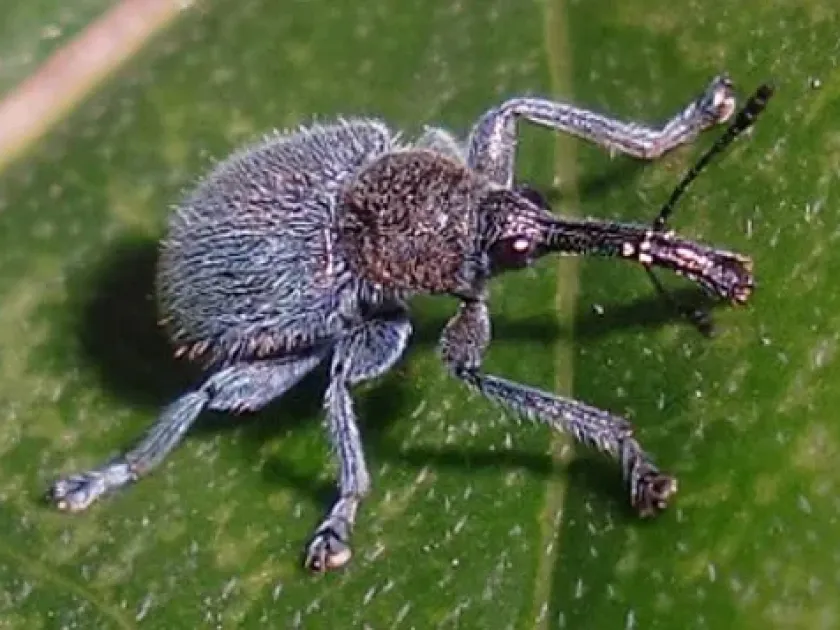
The lead-gray leaf weevil (Involvulus plumbeus) is a small beetle belonging to the family Rhynchitidae. Adult insects typically measure between 3 to 5 millimeters in length.
They are easily recognized by their metallic, lead-gray or dark blue exoskeleton. The body is covered with fine, sparse hairs that provide camouflage against the bark of host trees.
Like other weevils, they possess a distinct rostrum (snout) which is essential for feeding on plant tissues and creating sites for oviposition.
The larvae are legless, curved, and creamy-white with a brown head capsule. They spend their entire developmental phase hidden inside plant matter, such as folded leaves or developing fruit.
These beetles are known for their defensive behavior: when threatened or disturbed, they typically drop to the ground and remain motionless, imitating death.
##damage##Damage is caused by both adult beetles and their larvae. Adults feed on leaf buds, young foliage, and flower buds, chewing characteristic holes that can weaken the tree's photosynthetic capacity.
Larvae feed internally on developing fruit and leaf tissues. This internal feeding often causes the premature drop of young fruit, which is a major concern for fruit growers.
The primary hosts include a wide variety of fruit trees, particularly pome and stone fruits such as apples, pears, plums, apricots, and cherries.
The feeding sites created by the larvae also serve as entry points for various fungal and bacterial pathogens, leading to secondary rot in the fruit.
In cases of severe infestation, the cumulative damage leads to significant yield losses and reduces the overall vigor of the trees, making them susceptible to stress.
##season##Adult beetles emerge from the soil in early spring as soon as ambient temperatures consistently exceed 10 degrees Celsius, coinciding with the budding stage of trees.
The period of peak activity occurs during the blossoming stage of fruit trees, when the beetles actively feed and begin mating and laying eggs.
The oviposition period continues throughout late spring and early summer. Females carefully select young fruit or leaves to house their eggs for the developing larvae.
By mid-to-late summer, the larvae finish their development within the fruit and exit to the soil, where they pupate and transform into the next generation of adults.
The insects overwinter in the soil or under leaf litter near the base of the trees, entering a state of dormancy until the following spring.
##signs##One of the earliest signs of infestation is the appearance of small, round feeding holes on the leaves, which expand as the leaf grows larger throughout the season.
Deformed or curled leaves, sometimes bound together with silk or tissue remnants, are clear indicators that the beetles have been active in the canopy.
The presence of prematurely dropped young fruit in late spring is a critical sign of larval activity. Dissecting these fruits often reveals tunnels and larvae.
Early morning observation of the canopy can often reveal adult beetles feeding on the tips of young shoots, especially on warm, sunny days.
- Circular holes in young foliage
- Premature dropping of fruitlets
- Withered or deformed leaf stems
- Metallic-colored beetles on leaves
- Larval galleries inside fallen fruit
Sanitation is a vital cultural control method; regularly collecting and destroying fallen fruit prevents larvae from successfully transitioning into the soil to pupate.
Cultivating the soil around the base of the trees in autumn and early spring helps disrupt the overwintering stages of the weevil and exposes them to natural predators.
Applying sticky bands or physical barriers to the trunks of the trees can effectively block the movement of adults as they ascend into the canopy after overwintering.
Chemical control involving systemic or contact insecticides may be necessary during the bud-break phase if the population density exceeds economic thresholds.
Encouraging natural biological controls, such as birds and beneficial predatory insects, helps maintain the beetle population at manageable levels in sustainable orchard systems.
Taxonomy
- Latin name
- Involvulus plumbeus
- Order
- Coleoptera (beetles)
- Family
- Attelabidae
- EPPO code
- INVOPL
Discussion
No discussions yet — be the first.