
Deporaus tristis
Deporaus tristis
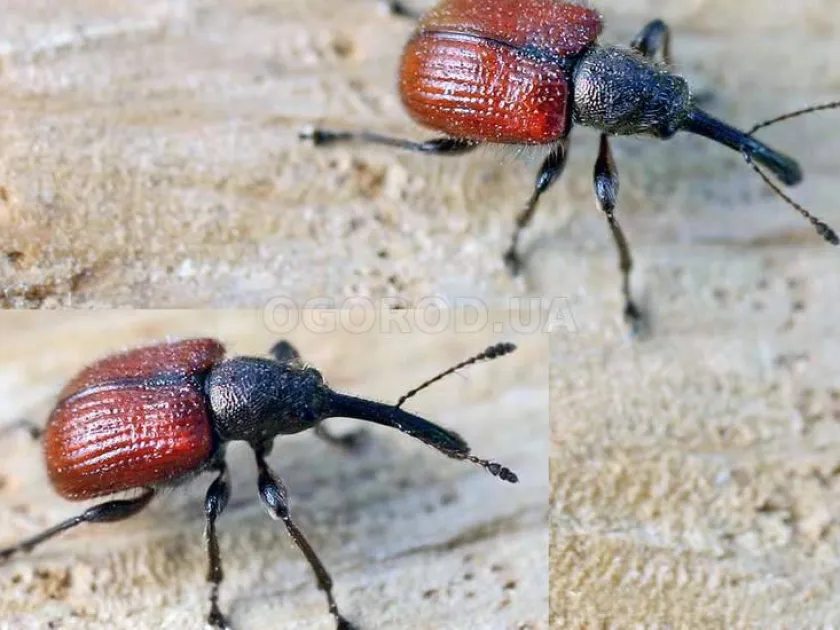
Description
How to identify
Deporaus tristis, commonly known as a type of leaf-rolling weevil, is a small coleopteran belonging to the Attelabidae family. The adult beetle is typically 2.5–3 mm in length, possessing a distinct metallic blue or greenish-blue coloration on its exoskeleton.
The morphology is characterized by a snout-like extension of the head, typical for weevils. The larvae are legless, white in color, and feature a distinct brown head capsule, which allows them to feed securely within the host plant tissue.
What it damages
The pest primarily targets fruit-bearing trees, with a strong preference for pome fruits such as apple, pear, and quince. Occasionally, it can also infest hawthorn and other woody perennials.
Adult beetles inflict damage by feeding on buds, young leaves, and tender shoots. During the oviposition phase, the female nicks the leaf stalks or small branches, causing them to wilt, curl, and eventually drop from the tree prematurely.
Larval damage involves boring into the plant tissue, particularly in dropped leaves and young fruit. This feeding behavior causes significant physiological stress to the tree and reduces the total marketable yield of the orchard.
When it appears
The life cycle begins in early spring, as soon as temperatures rise above 10–12°C. Adult beetles emerge from their overwintering sites in the soil to initiate feeding on swelling buds and young foliage.
The mating and egg-laying period coincides with the flowering stage of host trees. After finishing their development in late spring or early summer, the larvae drop to the ground and burrow into the soil for pupation.
The species completes one generation per year. Adult beetles remain in the upper layers of the soil or beneath leaf litter throughout the winter months, entering a period of diapause until the next growing season.
Signs of infestation
The initial signs of an infestation include small, precise feeding punctures on the surface of developing leaves and buds. Affected buds often fail to open and may turn brown and wither.
A diagnostic sign of Deporaus tristis activity is the presence of curled or rolled leaves hanging from branches. The premature abscission of fruitlets and leaves in the spring is a clear indicator of heavy infestation levels.
Control measures
Cultural control measures focus on orchard sanitation. It is essential to collect and destroy fallen leaves and damaged fruitlets promptly to disrupt the development cycle of the larvae.
Mechanical control is effective in small orchards; shaking the branches early in the morning when the beetles are sluggish allows them to be collected on sheets and disposed of manually.
Chemical control should be applied before the flowering period. Utilizing appropriate insecticides during the green bud stage is critical to minimize the population of adults and protect the developing fruit from injury.
Taxonomy
- Latin name
- Deporaus tristis
- Order
- Coleoptera (beetles)
- Family
- Attelabidae
- EPPO code
- DEPOTR
Discussion
No discussions yet — be the first.