
Gold-copper leaf weevil
Cyllorhynchites
Description
How to identify
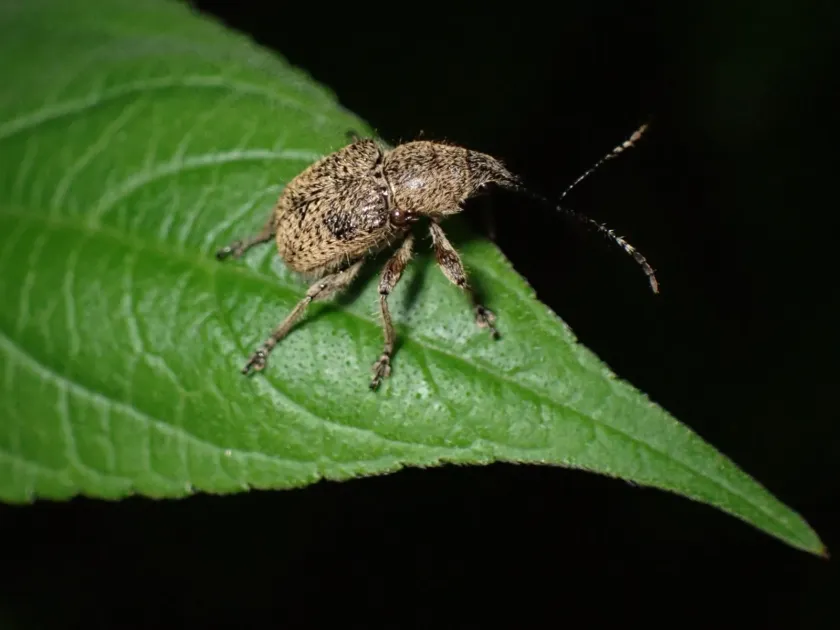
The gold-copper leaf weevil (Cyllorhynchites auratus) is a small beetle, typically measuring 2.5–3 mm in length. Its body exhibits a distinct golden-green or copper-colored metallic luster.
The beetle has a short, broad snout, characteristic of the Attelabidae family. The larva is legless, white-colored with a brown head, and maintains a C-shape while developing.
Adult beetles overwinter in the soil at a depth of up to 15 cm. In spring, as soil temperatures rise, they emerge to begin their active phase of feeding and reproduction.
The life cycle consists of four distinct stages: egg, larva, pupa, and adult. There is usually one generation per year, making it a seasonal pest that requires timely monitoring.
Females use their snouts to damage fruit stalks, a unique behavior that often causes the fruit to fall prematurely, providing a safe environment for the eggs.
What it damages
This pest primarily attacks stone and pome fruits, including apples, pears, plums, cherries, and apricots, causing significant economic damage.
Adult beetles feed on buds, young leaves, and developing fruit, creating punctures and deep holes that deform the plant organs and hamper growth.
Larvae develop inside fallen fruits, consuming the pulp, which destroys the crop and renders the fruit unfit for consumption or market sale.
In severe infestations, losses can reach up to 50-70 percent of the potential harvest if left unchecked by integrated pest management practices.
The damage caused by feeding also introduces pathogens, increasing the risk of secondary infections like fruit rot and other fungal diseases in the orchard.
When it appears
Adults emerge from the soil in early spring, coinciding with the bud-swelling and bud-burst stages of fruit trees.
The peak activity period for adult feeding and mating occurs during the flowering stage and the subsequent formation of young fruit sets.
Egg-laying typically takes place in late spring as the fruits reach a size suitable for larval development.
Larvae feed within the fruit throughout the summer, after which they exit to pupate in the soil for the remainder of the season.
By late summer and early autumn, the new generation of adults is formed and retreats into the soil to hibernate until the following spring.
Signs of infestation
Early symptoms include small punctures or ulcers on buds and tender leaves, which grow as the tissue expands.
Massive premature shedding of young fruit sets is a strong indicator of an active population of gold-copper leaf weevils in the orchard.
Wilting of leaves or small branches caused by girdled stalks is a diagnostic sign of the female's egg-laying activity.
If you shake the branches in the morning, adult beetles often fall off, allowing for an easy estimate of the population density.
- Evidence of larval tunnels inside fallen fruit.
- Stunted or deformed leaf growth near feeding sites.
- Visible metallic beetles on the foliage during warm days.
Control measures
Cultural control is essential; regularly collecting and destroying fallen fruit prevents larvae from completing their development in the soil.
Tilling the soil under the trees in autumn helps expose hibernating stages to predators and harsh weather conditions, significantly reducing the population.
Chemical control involving systemic or contact insecticides should be applied during the budding stage and immediately after flowering to kill adults.
Regular monitoring of the orchard using trap trees or pheromone-based methods can help in timing the applications for maximum efficacy.
Biological control, including the use of entomopathogenic fungi or beneficial nematodes, can be an effective alternative to chemical sprays in sustainable orchards.
Taxonomy
- Latin name
- Cyllorhynchites
- Order
- Coleoptera (beetles)
- Family
- Attelabidae
- EPPO code
- CYLLSP
Discussion
No discussions yet — be the first.