
Apple fruit weevil
Coenorrhinus
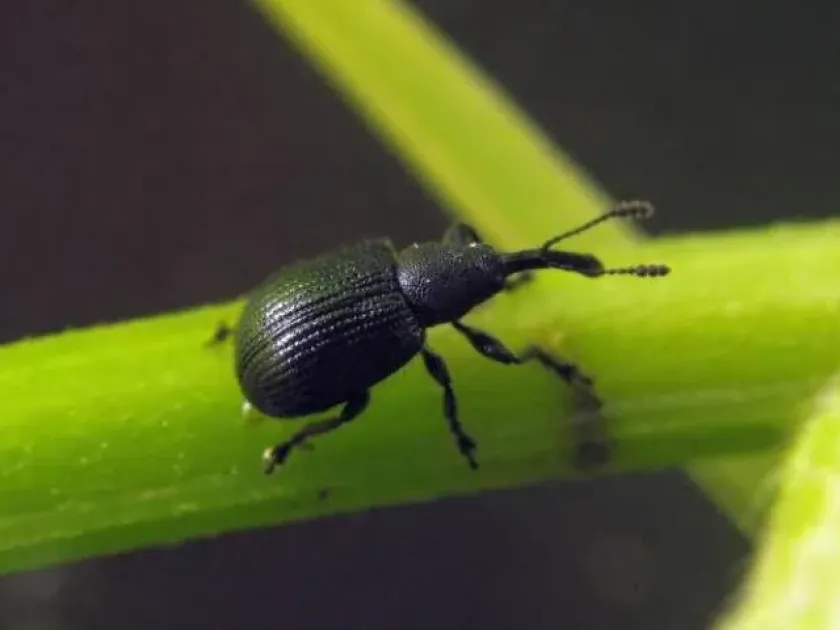
Description
How to identify
The apple fruit weevil (Coenorrhinus pauxillus), also known as the copper-colored weevil, is a significant pest belonging to the Rhynchitidae family.
Adult beetles are small, measuring approximately 3 mm in length, and are easily recognized by their metallic blue, green, or coppery coloration.
The head of the insect is extended into a long, thin snout, which is specifically adapted for piercing buds and young plant tissues for feeding and egg-laying.
Larvae are legless, C-shaped, and creamy-white with a distinct brownish head, typically developing concealed within plant parts like fruits or petioles.
These insects overwinter as adults buried in the soil, emerging in early spring as soon as ambient temperatures consistently reach 10°C.
What it damages
This weevil primarily targets pome fruits, with apple trees being the most frequent host, though it can also infest pear, quince, plum, and cherry trees.
Damage begins in early spring when beetles feed on swelling buds, creating deep punctures that often result in bud desiccation and failure to blossom.
As the season progresses, the weevils skeletonize young leaves, eating away the tissue and leaving only thin, transparent layers that eventually turn brown.
Females cause severe damage by laying eggs in leaf petioles or young fruitlets and then cutting the stalk, leading to premature fruit drop.
Heavy infestations can lead to substantial yield losses, as both the foliage and the potential fruit crop are compromised simultaneously.
When it appears
The activity of the apple fruit weevil coincides with the early phenological stages of fruit trees, usually starting at the green tip stage of apple development.
Peak feeding activity occurs during the period of bud burst and flowering, making this the critical window for monitoring and intervention.
The life cycle is univoltine, meaning there is one generation per year, with the larvae developing throughout the late spring and early summer months.
By mid-summer, the larvae move into the soil to pupate, and the new generation of adults emerges towards the end of the summer, seeking overwintering sites.
Understanding this timeline is essential for orchardists, as most preventive measures must be taken before the trees begin to flower.
Signs of infestation
Small, weeping punctures on swelling buds in early spring are the most reliable early warning sign of weevil presence.
Premature leaf drop and shriveled, blackened tips of young shoots are indicative of the females' egg-laying behavior and stalk-cutting activity.
Finding prematurely fallen fruitlets under the trees in late spring is a clear sign that the weevil population is damaging the developing crop.
Visible "windows" or holes in the leaves where the beetle has consumed the parenchyma tissue are common markers of adult feeding damage.
A general lack of vigor in the tree's canopy, characterized by deformed growth and stunted leaf development, often points to a chronic infestation.
Control measures
Cultural control, such as soil cultivation in the tree rows, is highly effective as it disturbs the overwintering pupae and adults in the topsoil.
Meticulous sanitation, including the prompt removal and destruction of fallen fruit and infested leaves, prevents larvae from completing their life cycle.
Chemical control should be applied before the onset of flowering to protect the buds; systemic or contact insecticides are typically used during this period.
For home gardens, manual collection of the beetles by shaking them off branches onto a cloth early in the morning is a viable organic alternative.
Biological control, including maintaining natural habitats for predatory birds and beneficial insects, helps keep the weevil population at manageable levels.
Taxonomy
- Latin name
- Coenorrhinus
- Order
- Coleoptera (beetles)
- Family
- Attelabidae
- EPPO code
- COENSP
Discussion
No discussions yet — be the first.