
Small grape weevil
Auletobius cassandrae
Description
How to identify
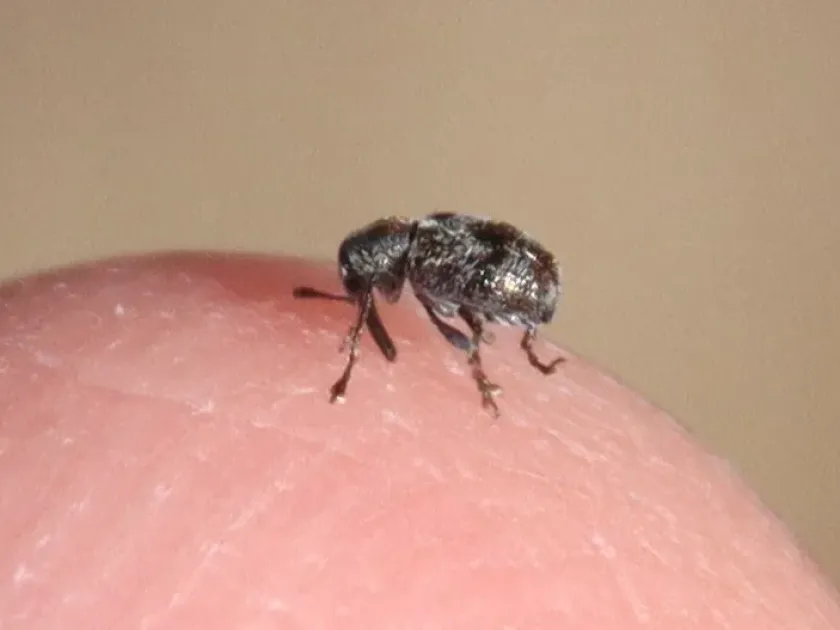
The small grape weevil is a tiny beetle belonging to the Attelabidae family, measuring approximately 2–3 millimeters in length. Its body color is typically dark, often appearing metallic blue or black, which makes it blend in with the dense grapevine foliage.
The beetle possesses a characteristic elongated rostrum (snout) which the female utilizes to puncture leaf tissues during the oviposition process. The surface of its elytra is marked with fine, distinct punctures, and the body exhibits sparse pubescence.
The larvae of this pest are legless, slightly curved, and white or yellowish in color with a darker head capsule. They are rarely seen in the open, as they develop entirely within protected leaf structures.
Pupation typically occurs in the soil, where the insects transform into adults. Adult beetles are known to overwinter in the upper soil layers or under accumulated leaf litter near the vines.
Due to their diminutive size and habit of feigning death by falling off the plant when disturbed, identifying the adults visually during field monitoring requires careful observation.
What it damages
This weevil primarily targets grapevines, though it can occasionally affect related species. Both the adult beetles and the larvae contribute to the overall damage caused to the vine.
Adult beetles feed on developing buds and young leaves, creating small, visible holes. This early-season feeding can hinder the initial growth phase of the shoots, potentially weakening the plant.
The most severe damage is caused by the females during the egg-laying process. The female bites the leaf petiole to induce wilting, then rolls the leaf into a tight cigar-shaped structure, within which the larvae eventually feed.
Larvae develop inside these rolled leaves, consuming the leaf tissue from within, which leads to necrosis and the eventual dropping of the damaged foliage.
If infestations are widespread, the cumulative loss of leaf area significantly reduces the vine's photosynthetic capacity, which negatively impacts the quality and sugar content of the grape harvest.
When it appears
The emergence of overwintering adult weevils typically coincides with the bud-break and early shoot development stages of the grapevine during the spring months.
Peak activity for adults usually occurs during May and June, which marks the primary window for mating and the construction of leaf rolls for egg deposition.
The larval stage occurs throughout the summer, followed by their migration into the soil to pupate. Depending on regional climate conditions, the insect may complete one or two generations per year.
As autumn approaches, the newly emerged adults seek out overwintering sites in the soil or protected organic debris to survive the winter temperatures.
Favorable weather conditions, particularly mild and humid springs, can accelerate the life cycle and increase the success rate of the weevil population in the vineyard.
Signs of infestation
The most distinct sign of an infestation is the presence of tightly rolled leaves on the tips of the grapevine shoots, often referred to as "cigar-shaped" rolls.
Wilting or partially necrotic leaf petioles are a major indicator, as they signal that a female weevil has damaged the vascular tissues to facilitate the rolling process.
- Punctured or hole-riddled young leaves before they become fully rolled.
- Distinctive cigar-like leaf structures hanging from shoots.
- Browning and subsequent premature leaf fall in affected areas.
- Presence of larvae or insect waste inside manually opened leaf rolls.
Regular inspection of vine tips during the spring is crucial for detecting these early signs before the population reaches damaging levels.
Control measures
The most effective mechanical control is the manual removal and destruction of rolled leaves containing larvae, which prevents the next generation from reaching the soil to pupate.
Cultivation practices such as deep soil tilling under the vine canopy can significantly disrupt overwintering sites and kill pupating insects in the soil.
Sanitation in the vineyard, including the removal of weeds and leaf litter, minimizes the available shelters for adult weevils and helps reduce their overall abundance.
Chemical control involving insecticides may be required if population monitoring indicates an infestation exceeding the economic threshold during the peak adult activity phase.
Integrated pest management (IPM) strategies, which combine cultural practices and selective biopesticides, are highly recommended to keep the population managed while preserving vineyard health.
Taxonomy
- Latin name
- Auletobius cassandrae
- Order
- Coleoptera (beetles)
- Family
- Attelabidae
- EPPO code
- AULTCA
Discussion
No discussions yet — be the first.