
Vineyard weevil
Auletes politus
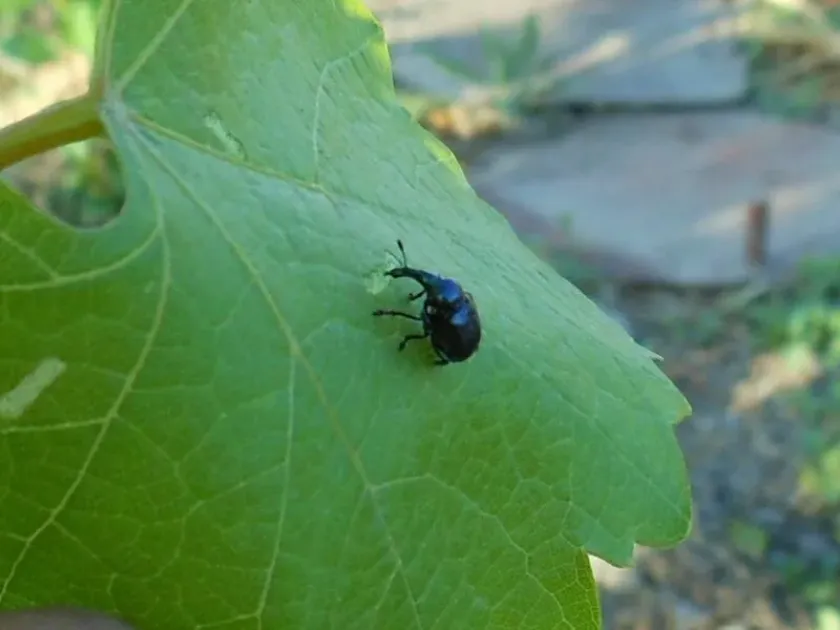
Description
How to identify
The vineyard weevil (Latin: Auletes politus) belongs to the family Rhynchitidae within the order Coleoptera. This small beetle typically measures between 2.5 and 3.5 millimeters in length.
The insect is characterized by a distinct metallic sheen, with body coloration ranging from dark blue to black. A prominent feature is its elongated snout, which is typical of the weevil family.
Larvae are legless, curved, and milky-white with a noticeable brown head capsule. They lead a cryptic life, developing inside protected leaf rolls created by the female.
Adult females exhibit a unique behavior: they carefully chew the leaf petioles or veins to facilitate the rolling of the leaf into a tight, cigar-like structure.
The lifecycle involves complete metamorphosis. Adults typically overwinter in the soil under plant debris or in bark crevices, emerging when warm spring weather arrives.
What it damages
The primary target of the vineyard weevil is the grape leaf. The pest prefers young, tender leaves that are pliable enough for the rolling process.
In cases of heavy infestation, not only the foliage but also young shoots can be damaged, negatively impacting the plant's overall photosynthetic capacity.
The destruction of leaf tissue leads to reduced sugar accumulation in the grapes and slower maturation of the annual shoots during the growth season.
Stressed vines are more susceptible to winter frost damage and secondary fungal infections that gain entry through the damaged leaf tissues.
Economic impact is particularly significant in young vineyards, where foliage loss can delay the establishment and vigor of newly planted grapevines for several years.
When it appears
Activity begins in the spring as soon as temperatures consistently reach 12–15 degrees Celsius, coinciding with the bud-break stage of the vines.
The mass emergence of adults aligns with the rapid expansion of early leaves, which serve as both a food source and the required material for egg-laying.
During late spring and early summer, females are actively forming leaf rolls, providing a protective environment for the developing larvae until they are ready to pupate.
By mid-summer, the population of active adults declines significantly as they transition into a period of dormancy, preparing for the upcoming winter season.
Overwintering takes place in protected areas, typically within the top layer of soil beneath the vine canopy or hidden within the trunk's rough bark.
Signs of infestation
The most recognizable symptom of an infestation is the presence of tightly rolled leaves, often called "cigars," which may hang from the shoots.
Close inspection of the rolled leaves reveals the distinct bite marks made by the female, which disrupt the flow of nutrients within the leaf blade.
Inside the rolled leaf, one can find the larvae, which feed on the leaf parenchyma, leaving behind only a network of dried veins.
High levels of infestation make the vines appear deformed and ragged, a condition easily identified during routine scouting of the vineyard rows.
Eventually, the damaged leaves turn brown and drop prematurely, leading to a reduction in the total leaf area available for photosynthesis.
Control measures
The most effective mechanical control method is the manual collection and destruction of the rolled leaves before the larvae emerge to pupate in the soil.
Cultivation of the soil beneath the vines during late autumn is highly recommended to disrupt overwintering sites and reduce the pest population for the following year.
When infestation exceeds economic thresholds, the application of registered insecticides is recommended, particularly during the early period of adult activity.
Maintaining strong plant health through proper fertilization and irrigation helps the vines compensate for minor foliage loss caused by occasional pest presence.
Biological control strategies, such as the use of entomopathogenic fungi, are increasingly utilized as environmentally friendly components of integrated pest management programs.
Taxonomy
- Latin name
- Auletes politus
- Order
- Coleoptera (beetles)
- Family
- Attelabidae
- EPPO code
- AULEPO
Discussion
No discussions yet — be the first.