
Haplothrips victoriensis
Haplothrips victoriensis
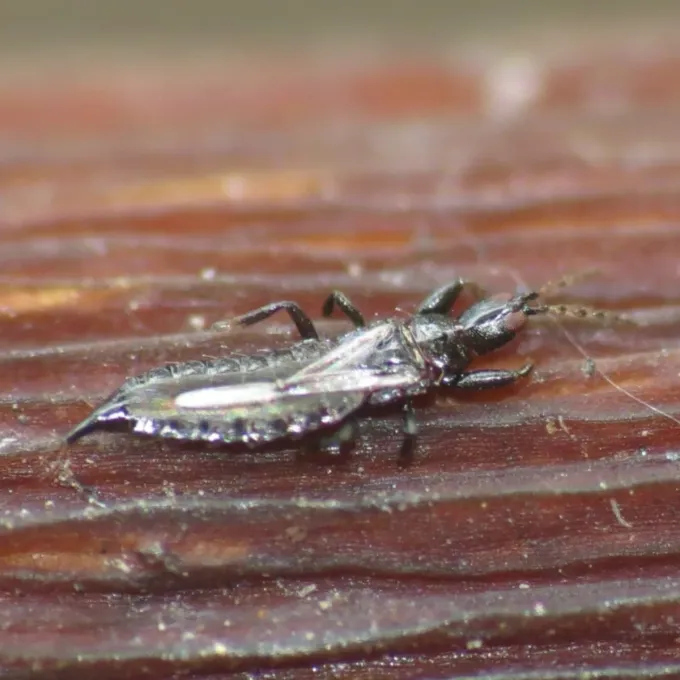
Description
How to identify
Haplothrips victoriensis is a species of thrips belonging to the order Thysanoptera and the family Phlaeothripidae. Adults are small, elongated insects, typically dark brown or black in coloration.
Identification often requires careful inspection of the antennae and specific bristles on the terminal abdominal segments. These features are essential for distinguishing this species from other related thrips.
The larvae are generally paler, often appearing yellowish or reddish as they mature. They undergo a series of developmental stages before transforming into adults, typical of their suborder.
These pests are highly mobile, especially in warm weather, allowing them to disperse quickly across fields. They thrive in environments where cereal grains are cultivated extensively.
Field identification is difficult due to their small size and tendency to hide within plant structures. Laboratory confirmation is recommended for accurate monitoring of population dynamics.
What it damages
The primary hosts for Haplothrips victoriensis are cereal crops, including wheat, barley, and oats. The pests concentrate on the ears and heads of the plants.
By piercing plant tissues and feeding on cell sap, the insects cause significant physiological stress to the crop. This results in reduced nutrient uptake and weakened plant structure.
Damage to the developing grains leads to shriveling and poor quality of the yield. Farmers often observe a decrease in the thousand-grain weight, impacting final harvest results.
Wild grasses often serve as alternative hosts, supporting pest populations when primary crops are not available. This complicates the management of the species.
Severe infestations can cause necrosis of the glumes and spikelets, leading to aesthetic and structural damage that affects the marketability of the harvested grain.
When it appears
The seasonal activity of this species begins in early spring, as temperatures rise. Adults emerge from overwintering sites and move toward young cereal crops.
The most critical period for crop damage occurs during the flowering and grain-filling stages. High populations during this phase cause the most substantial yield losses.
Multiple generations can occur within a single growing season, depending on temperature and moisture conditions. This rapid turnover allows populations to build up quickly.
Overwintering typically happens at the adult stage in protected areas, such as leaf litter, soil crevices, or under bark, ensuring survival through cold months.
As the harvest concludes and temperatures drop, the pests migrate to nearby vegetation or refuge areas to enter diapause, completing the seasonal cycle.
Signs of infestation
Visible signs of infestation include chlorotic spots or streaks on leaves and stems caused by feeding. These spots may expand over time as the population grows.
Careful inspection of the cereal heads often reveals the presence of both adults and larvae hiding beneath the glumes, where they are protected from environmental stress.
- Whitish or yellow spots on the foliage.
- Deformed or shriveled grains within the ear.
- Presence of black frass on spikelets and glumes.
- General stunting of individual plants within the field.
An early sign of a significant infestation is the loss of color or premature browning of the ear, which may be mistaken for drought or disease without closer inspection.
Control measures
Management of Haplothrips victoriensis relies on integrated pest management practices. Key strategies include deep plowing and the removal of weeds that act as pest reservoirs.
Implementing a diverse crop rotation is crucial to disrupt the pest's life cycle. Avoiding continuous monoculture reduces the long-term risk of population outbreaks.
Chemical control should be applied when the economic injury level is reached. It is essential to use registered insecticides and rotate active ingredients to prevent resistance.
Biological control agents, such as predatory bugs and lacewings, play a significant role in suppressing thrips populations naturally within the ecosystem.
Consistent monitoring using sticky traps helps track the movement of the pests, allowing for timely and cost-effective interventions that protect the grain yield.
Taxonomy
- Latin name
- Haplothrips victoriensis
- Order
- Thrips
- Family
- Phlaeothripidae
- EPPO code
- HAPLVI
Discussion
No discussions yet — be the first.