
Amynothrips
Amynothrips
Description
How to identify
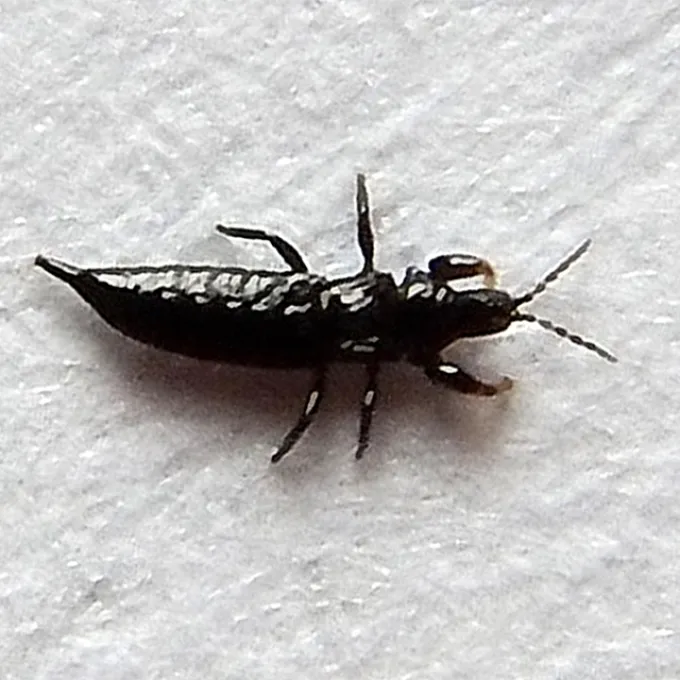
Amynothrips (Amynothrips andersoni) is a specialized species of thrips within the family Phlaeothripidae. Adult insects are characterized by their small, elongated, dark brown to black bodies, measuring approximately 2 mm in length.
As members of the suborder Tubulifera, these insects exhibit specific morphological traits, including a tubular end of the abdomen and fringed wings. Their mouthparts are designed for piercing and sucking plant tissues.
Unlike generalist pest thrips, Amynothrips is a highly specific herbivore. Its biological development includes several stages: egg, larva, prepupa, pupa, and adult, following the process of hemimetabolous metamorphosis.
This insect is primarily recognized in agricultural science for its role in the biological management of invasive weeds. It does not attack common agricultural crops, making it a safe candidate for biocontrol.
Its evolutionary adaptation to a single host plant ensures that its population dynamics are closely linked to the availability and health of its specific food source.
What it damages
The primary host for Amynothrips is alligator weed (Alternanthera philoxeroides), a highly invasive aquatic and semi-aquatic plant species. The insect feeds exclusively on the young tissues of this plant.
By feeding on the sap of apical buds and leaves, the insect causes significant physiological stress to the weed. This feeding behavior often leads to the death of the meristematic tissues.
Heavy infestations result in severe leaf deformation and stunt the longitudinal growth of the stem. The plant's ability to propagate vegetatively is significantly hindered by these feeding activities.
The damage caused by the insect creates entry points for secondary infections and reduces the overall photosynthetic capacity of the weed, ultimately leading to a reduction in its biomass.
In managed environments, the cumulative impact of Amynothrips helps to restore ecological balance by suppressing the dominance of the invasive weed and allowing native flora to recover.
When it appears
Amynothrips activity is temperature-dependent and aligns with the growing season of its host plant. It thrives in warm, humid climates where the growth of alligator weed is most vigorous.
The life cycle is relatively rapid, allowing for multiple generations per year under favorable conditions. This rapid turnover is essential for exerting sustained pressure on weed colonies.
Adults typically overwinter in protected areas, such as leaf axils or under plant debris, where they can survive cooler temperatures. Activity resumes as soon as temperatures rise in the spring.
The summer months generally mark the peak of population growth, coinciding with the rapid vegetative expansion of alligator weed. This is when the most significant biological control impact occurs.
As the environment cools in the autumn, the metabolic activity of the insect decreases, and it enters a state of diapause or reduced movement to endure the winter months.
Signs of infestation
The most visible sign of infestation is the curling and distortion of the terminal leaves of alligator weed. The plants often appear stunted, with tightly packed, malformed apical buds.
Upon closer inspection, necrotic spots can be observed on the leaf surfaces, representing the sites where the thrips have pierced the tissue to feed. These spots may eventually merge, leading to tissue chlorosis.
A reduction in the number of flowers is another key symptom, as the insect concentrates its feeding on the growing tips, which are crucial for floral development.
Small black droplets, representing insect waste (frass), are frequently found on the leaves near the feeding sites, serving as a reliable indicator of active colonization.
- Distortion and curling of apical shoots.
- Presence of microscopic necrotic feeding lesions.
- Noticeable stunting of plant height.
- Presence of adult thrips in protected leaf crevices.
Control measures
In the context of weed management, Amynothrips is considered a beneficial insect rather than a pest to be controlled. The goal is to maximize its population density in infested areas.
The use of broad-spectrum insecticides must be avoided in areas where Amynothrips has been introduced, as these chemicals would eliminate the beneficial control agent.
Biological control programs involve the careful release of these insects into infested waterways or agricultural drainage systems to establish a sustainable population.
Regular monitoring of the weed suppression level is necessary to determine if the population of Amynothrips is sufficient to provide effective long-term control.
Environmental factors such as high humidity and optimal temperatures should be considered when planning for the deployment of this biological agent to ensure successful colonization.
Taxonomy
- Latin name
- Amynothrips
- Order
- Thrips
- Family
- Phlaeothripidae
- EPPO code
- AMYOSP
Discussion
No discussions yet — be the first.