
Black-horned thrips
Haplothrips nigricornis
Description
How to identify
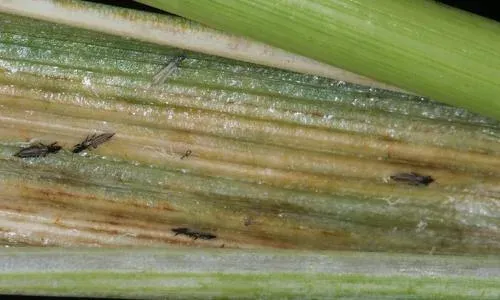
The black-horned thrips (Haplothrips nigricornis) is a small insect belonging to the order Thysanoptera and the family Phlaeothripidae. Adult individuals are approximately 2 mm in length with a dark brown or blackish body.
The name reflects the distinct dark appearance of their antennae, which is a key morphological feature for identification. They possess narrow, fringed wings that allow for flight during favorable weather conditions.
The larvae are typically vibrant red or orange, making them easily distinguishable from the adults. They progress through several growth stages while feeding within the sheltered parts of plant inflorescences.
Professional agronomists monitor the presence of this pest by inspecting grain ears during the booting and heading stages. The use of yellow sticky traps is also a common practice for population density assessment.
As a secretive pest, it thrives in hidden plant structures, which makes it challenging to detect without specialized field scouting during the critical stages of crop development.
What it damages
This pest primarily infests cereal crops, including wheat, barley, and rye. It also inhabits various wild grasses, which can serve as secondary hosts throughout the growing season.
Both adults and larvae feed on plant sap by piercing the tissues of glumes and developing grain. This feeding behavior disrupts the nutrient flow, resulting in shriveled, lightweight grains.
Heavy infestations lead to significant yield losses and reduced grain quality. The physical damage to the ear can cause stunted growth and a characteristic whitening effect known as "white-ear."
Furthermore, the feeding sites create pathways for secondary infections by fungi and bacteria. This can lead to complex disease manifestations that further aggravate the initial damage caused by the thrips.
Economic damage is most pronounced when infestations occur during the flowering and milk-ripening stages, as the plant lacks the capacity to recover from such intense nutrient drainage.
When it appears
The black-horned thrips overwinters as an adult in plant debris, under tree bark, or in the upper layers of the soil. Activity resumes in the spring once temperatures stabilize.
Migration to cereal fields typically coincides with the plant's stem elongation phase. The population builds up rapidly as the crops enter the heading and flowering stages, which are optimal for feeding.
Dry and hot weather patterns significantly accelerate the life cycle of the thrips, leading to multiple generations in a single season. This can cause sudden, explosive population growth in agricultural fields.
As the grain matures and the tissues become harder, the insects move towards late-developing grasses. This transition occurs throughout the summer as the crop loses its attractiveness for feeding.
The overall seasonal cycle is closely tied to the host plant phenology, ensuring that the pest is always present where food resources are most abundant.
Signs of infestation
The most visible sign of infestation is the presence of adult thrips and red larvae tucked beneath the glumes of the ear. Careful inspection often reveals these insects in clusters.
Plants affected by the pest show signs of deformation and irregular development of the ear. In severe cases, the upper parts of the ear may turn white or yellowish due to localized tissue death.
Excrement left by the thrips appears as small, dark dots on the glumes. This provides a clear indication that the insects are actively feeding on the plant tissue.
Decreased grain weight and grain shriveling at harvest time are indirect indicators of high pest pressure earlier in the growing season.
Reduced vigor and a general decline in the plant's health, combined with premature desiccation of the ears, are classic symptoms of a heavy black-horned thrips infestation.
Control measures
Effective management begins with thorough post-harvest tillage. Deep plowing buries crop residues, destroying the overwintering sites of the pest and reducing the initial population for the next season.
Cultural control practices, such as crop rotation and the elimination of weed hosts around field margins, are essential for limiting the pest's spread from nearby areas.
Chemical control should be implemented based on scouting data and economic thresholds. Insecticides are most effective when applied during the early heading stage before the thrips penetrate deep into the ear.
Selection of resistant crop varieties with tighter glume structures can serve as a long-term preventive measure by making it more difficult for the pest to colonize the ear.
- Deep plowing to eliminate overwintering sites.
- Control of wild grass weeds.
- Timely application of systemic insecticides.
- Monitoring with yellow sticky traps.
Taxonomy
- Latin name
- Haplothrips nigricornis
- Order
- Thrips
- Family
- Phlaeothripidae
- EPPO code
- HAPLNC
Discussion
No discussions yet — be the first.