
Anderson's thrips
Amynothrips andersoni
Description
How to identify
Anderson's thrips (Amynothrips andersoni) is a small insect belonging to the order Thysanoptera, family Phlaeothripidae. Adults are typically dark-bodied and slender, characteristic of many species within this taxonomic group.
The life cycle includes the egg, larval, prepupal, pupal, and adult stages. This species is highly host-specific, meaning it relies exclusively on a narrow range of plants for its nutrition and development.
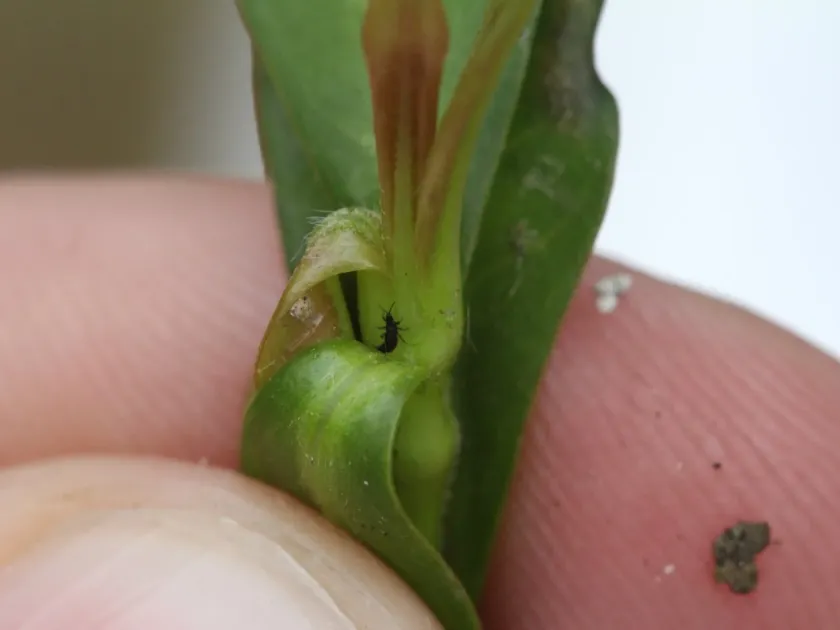
Morphologically, these insects are adapted to survive within confined spaces, such as leaf axils or curled leaf tips of their host plants. Their mobility as adults allows them to disperse effectively within the habitat.
Field identification is challenging due to the minute size of the insect. Verification of the species presence usually requires microscopic examination of the physical features of the specimen.
Environmental conditions, particularly temperature and humidity, significantly influence the reproductive rate and the overall activity period of the population throughout the year.
What it damages
The primary host for Amynothrips andersoni is alligator weed (Alternanthera philoxeroides). This weed is considered an invasive threat in many parts of the world, making the thrips a valuable agent in biocontrol programs.
There is no record of this insect causing damage to agricultural crops. Its extreme host specificity ensures that it does not pose a threat to surrounding vegetation or economic plant species.
Both larvae and adults feed by piercing plant cells and extracting the sap. This feeding action leads to localized cell death and disruption of the plant's nutrient transport system.
By attacking the meristematic tissues at the growing tips of the weed, the thrips effectively stunt plant development and suppress its aggressive vegetative growth.
The long-term feeding impact results in the reduction of the biomass of the target weed, preventing it from overwhelming native habitats and water bodies.
Signs of infestation
The most visible sign of infestation is the curling and distortion of young, developing leaves. This is a defensive reaction of the plant to the feeding damage on the growing points.
Chlorotic spots often appear on the foliage as a result of the insect's piercing-sucking activity. As the damage progresses, these spots may turn brown and necrotic.
A typical symptom is the formation of dense, knot-like leaf clusters at the apical part of the stem, effectively halting vertical growth.
Close inspection of the leaf axils or the interior of curled leaves often reveals the presence of both adults and nymphs, alongside tiny black spots of frass.
In cases of high infestation levels, the overall vigor of the host plant declines significantly, leading to stunted shoots and premature senescence of the affected parts.
Control measures
Since Anderson's thrips is used as a beneficial organism for biological control, standard control measures against it are not recommended or implemented.
The population is naturally managed by environmental variables and the availability of the host plant. There is no need for chemical intervention, as the insect serves a positive ecological role.
Management strategies focus on the strategic introduction or preservation of the thrips population in areas where the alligator weed has become problematic.
Monitoring efforts are conducted to ensure that the thrips population remains active and effective in suppressing the growth of the target invasive weed.
Any research involving the limitation of this species usually occurs only in controlled laboratory settings to understand its interaction with the host plant.
Taxonomy
- Latin name
- Amynothrips andersoni
- Order
- Thrips
- Family
- Phlaeothripidae
- EPPO code
- AMYOAN
Discussion
No discussions yet — be the first.